
2026 Trends for Custom Dining Room Cabinets: Storage, Style, and Entertaining
By / May 14, 2026 May 14, 2026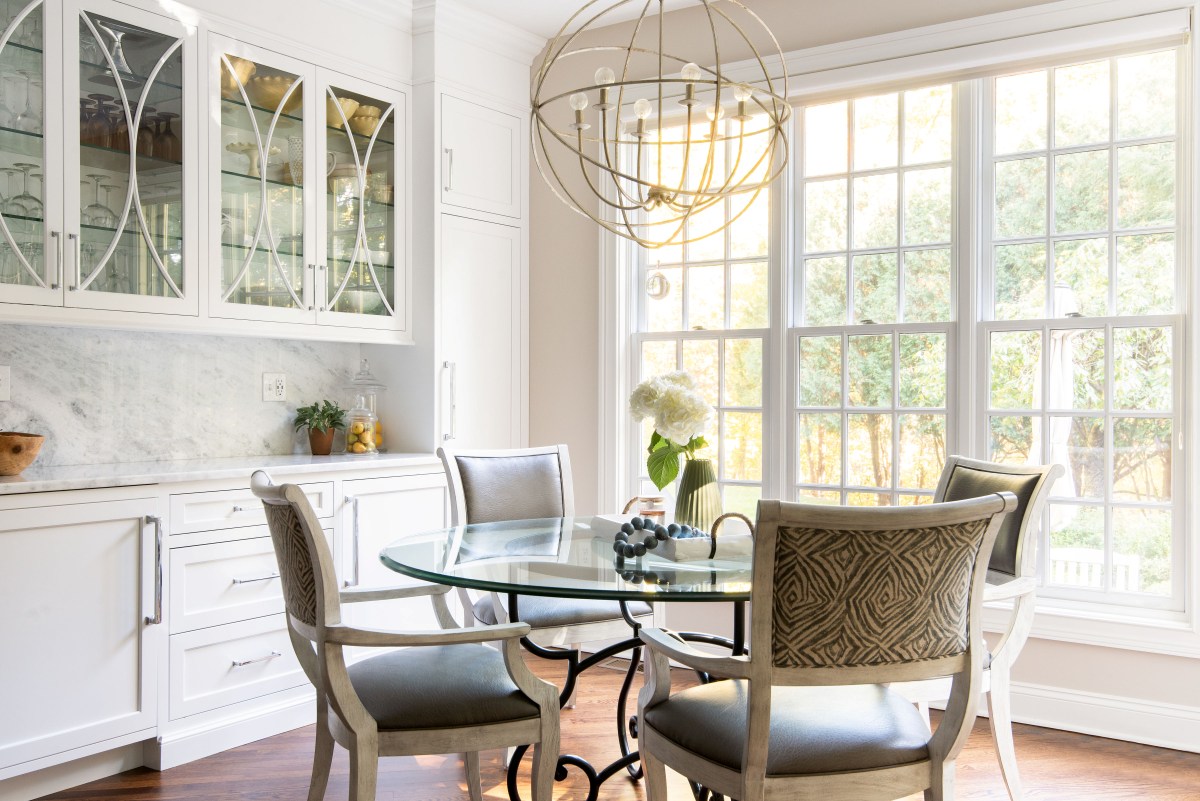
What are the latest trends for custom dining room cabinets? The latest trends for custom dining room cabinets emphasize seamless entertaining and multifunctional storage. High-end homeowners are integrating bespoke dining room bar cabinets, glass-front display shelving, and smart, WiFi-enabled lighting into their layouts. By combining warm wood textures with built-in functionality, these luxury cabinetry solutions transform formal dining rooms into sophisticated, highly tailored hubs for gathering and serving.
Dining room cabinet design has shifted in a meaningful way. What was once a space reserved for formal, freestanding furniture pieces is now being reimagined through built-in solutions that blend storage, display, and entertaining. Today’s dining room cabinetry is thoughtfully considered to become part of the architecture, part of the experience, and often the element that defines how the room functions and feels day to day.
The Rise of the Multifunctional Dining Space
Dining rooms are no longer isolated spaces used only for special occasions. Instead, they’re evolving into multifunctional areas that support dining, entertaining, and relaxing. This shift has made bespoke dining room storage cabinets more important than ever.
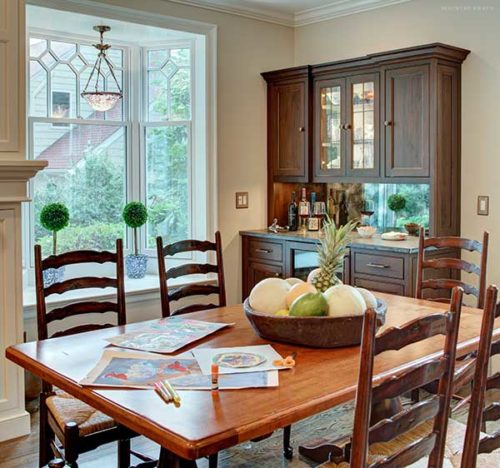
In a Short Hills, NJ project, custom dining room cabinets were used to create a refined, furniture-like focal point while supporting high-end entertaining. The walnut cabinetry, finished in an English Walnut stain, introduces depth and richness that anchors the dining space. Featuring our heavy-duty dovetail construction, the beaded inset doors give the cabinetry a level of detail that feels tailored rather than manufactured. The integration of a built-in beverage fridge with a framed glass front effortlessly converts the run into a discrete dining room bar cabinet, adding convenience for entertaining without losing its refined character.
Creating Continuity in Open Concept Layouts
For homes with open-concept floor plans, dining room built-in cabinets play a critical role in unifying adjacent spaces. Consistency is especially important in luxury homes where the dining room remains visually connected to the kitchen, allowing the cabinetry to support a holistic design.
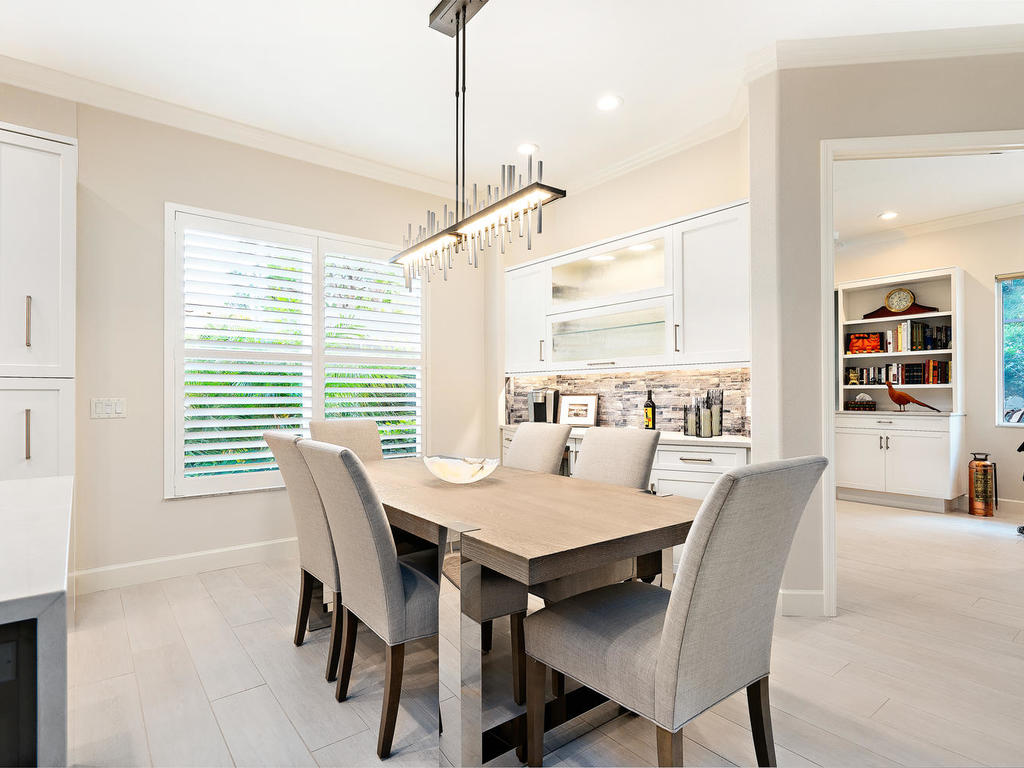
In a Venice, FL project, pristine white cabinetry featuring our TW10 full overlay doors creates a clean and contemporary look that carries from the kitchen directly into the dining area. To elevate an open-concept dining space, luxury homeowners are increasingly utilizing premium materials and design elements, such as:
- Textural Cabinetry™: Kountry Kraft’s innovative laminate panels that provide an authentic, warm wood-grain look to contrast crisp white finishes.
- Integrated Smart Appliances: Panel-faced refrigeration and wine coolers built seamlessly into the dining room serving cabinet.
- High-End Hardware: Matching brass or polished nickel fixtures that carry the design language perfectly from the kitchen to the dining room.
To find the perfect finish to connect your kitchen and dining spaces, explore our extensive Cabinet Wood Types and Finishes.
Architectural Entertainment Centers
Homeowners are redefining what a dining space can be by blending dining, entertainment, and storage into a single cohesive design. Custom cabinetry can span entire walls to incorporate both open shelving and concealed storage, transforming the cabinets into a striking architectural feature rather than a simple supporting element.
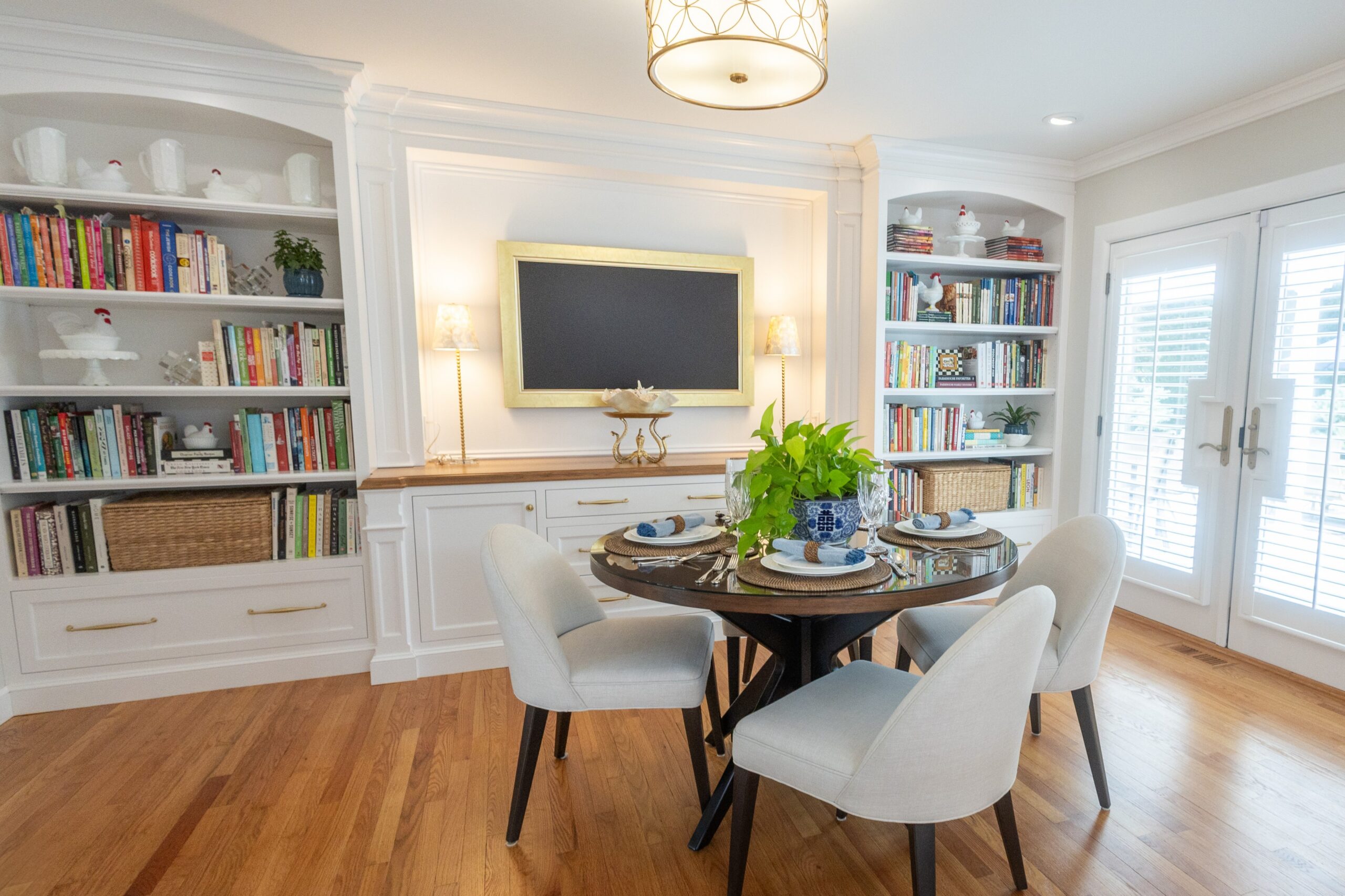
A stunning Cheshire, CT project highlights this trend beautifully. Finished in a crisp Chantilly Lace paint, the cabinetry includes arched shelving that adds softness and visual interest, setting this design apart from more linear dining room built-ins. Subtle illumination within the shelving highlights displayed items and creates a warm ambiance, aligning with the growing demand for dining room built-ins with lighting. At the base, the cabinetry transitions into a buffet with a warm wood countertop, ideal for serving hors d’oeuvres during large gatherings.
Sophisticated Wet Bars and Beverage Centers
Integrating a wet bar directly into your dining room creates a luxurious destination within the home. Utilizing premium American-made materials backed by Kountry Kraft’s 65-year legacy of craftsmanship ensures your investment will withstand decades of daily use and elegant entertaining.
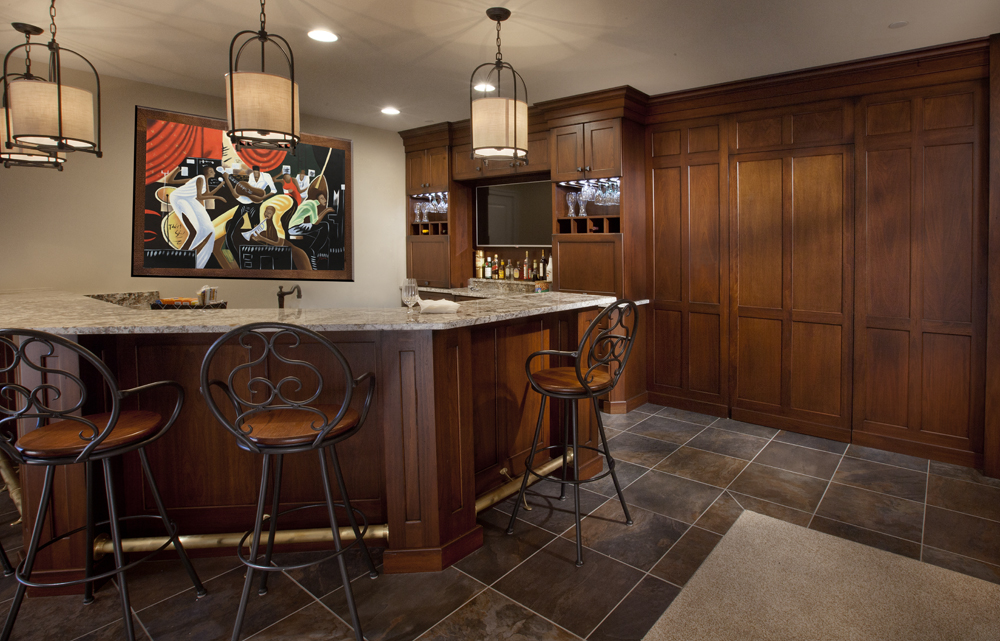
An Ellicott City, MD project showcases how to execute this perfectly. Rich Lyptus wood cabinetry creates a warm, inviting atmosphere that feels both traditional and sophisticated. The inclusion of stemware racks, wine cubbies, and a prep sink transforms the cabinetry into a fully functional wet bar. Partnering with a manufacturer that backs their work with a lifetime warranty means you can entertain with absolute confidence. For more inspiration on integrating a beverage center into your entertaining spaces, browse our Custom Bar Cabinets and Entertainment Centers Gallery.
Frequently Asked Questions (FAQ)
Are built-in dining room cabinets better than a freestanding buffet?
Built-in dining room cabinets are better when you want the storage to feel permanent, tailored, and fully integrated into the home’s architecture. Built-ins maximize wall space, create a luxurious aesthetic, and allow for the integration of smart appliances and custom lighting, whereas a freestanding buffet offers less permanence and customization.
What should I store in a dining room cabinet?
A dining room cabinet should store the items that support dining and entertaining, such as fine china, crystal glassware, serving platters, linens, and bar accessories. Everyday items can be organized in heavy-duty lower drawers, while display-worthy pieces can be highlighted behind glass-front upper cabinets.
Do dining room built-ins need lighting?
While dining room built-ins do not strictly require lighting to function, integrating smart, WiFi-enabled interior or under-cabinet lighting is highly recommended. Lighting adds sophistication, highlights your displayed glassware, and creates a warm, inviting ambiance for evening entertaining.
Ready to transform your entertaining space with custom cabinetry tailored to your lifestyle? Find a Kountry Kraft dealer near you or contact our design experts today to start planning your dream dining room.
Design Ideas with Floor to Ceiling Kitchen Cabinets
By / April 1, 2026 April 1, 2026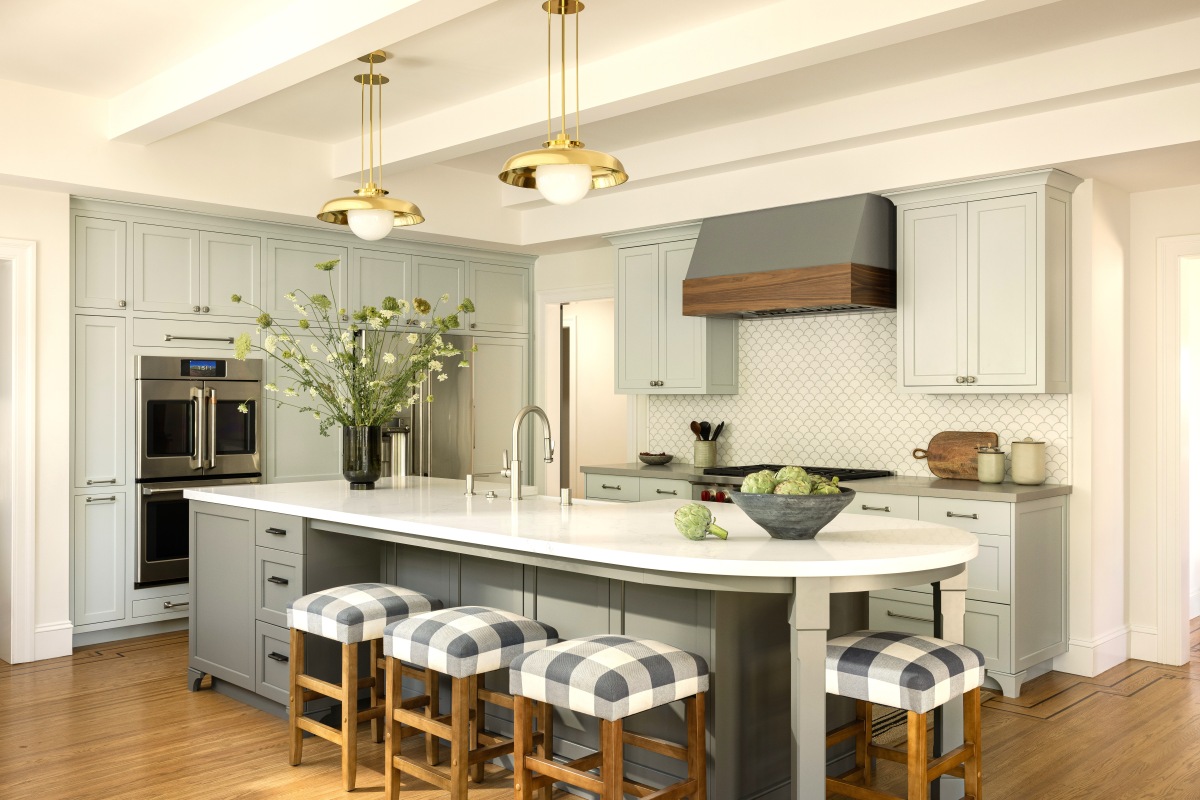
Floor to ceiling kitchen cabinets are full height cabinetry that extend from the floor to the ceiling, maximizing vertical storage while creating a built in architectural look. They are commonly used in custom kitchen design to increase storage, reduce visual clutter, and improve organization without expanding the kitchen footprint. Homeowners often choose full height kitchen cabinets for pantry walls, tall cabinet storage, and kitchen layouts that prioritize clean sightlines and long term functionality.
Why Consider Floor to Ceiling Kitchen Cabinets?
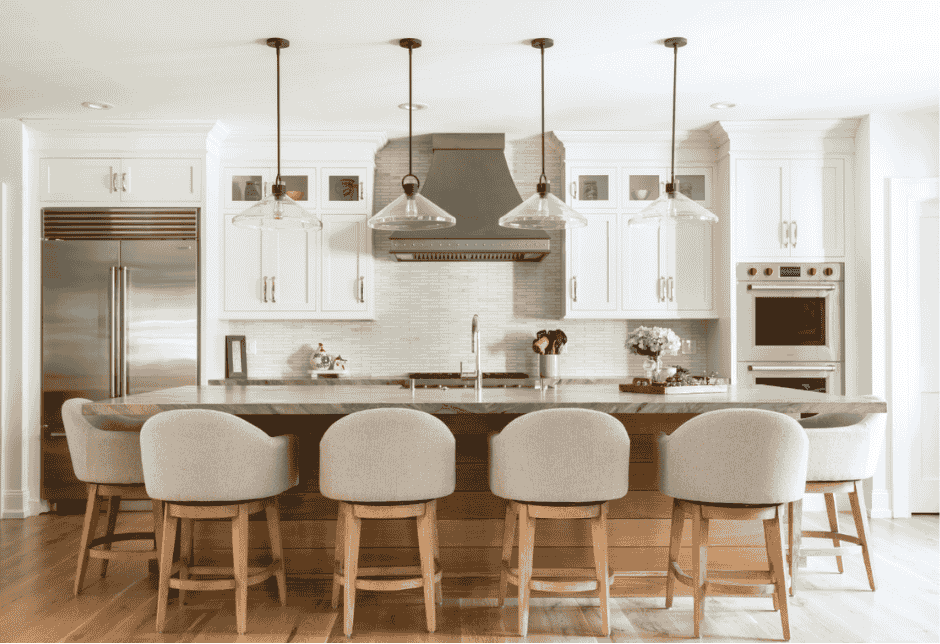
Floor to ceiling kitchen cabinets have a way of making a kitchen feel more complete the moment you walk in because they turn storage into part of the architecture. By carrying cabinetry all the way up, you gain more usable space without changing the footprint, reduce visual clutter, and give the room a clean, built-in feel that looks intentional from every angle. Just as important, that added height helps the kitchen work better by keeping counters clearer and making it easier to organize what you own so the space feels polished, not packed.
Benefits of Floor to Ceiling Kitchen Cabinets
Floor to ceiling kitchen cabinets do more than add height. They change how a kitchen feels and functions by turning vertical space into usable, organized storage while giving the room a more finished, built-in look. The benefits below break down what you gain when cabinetry is planned all the way to the ceiling.
More Usable Storage
The most obvious benefit of floor to ceiling kitchen cabinets is storage, but the real win is how that storage can be organized. Tall cabinet storage gives you zones that can flex with your needs. Daily items stay within reach, while special occasion pieces and seasonal items move up high. When designed well, a tall pantry cabinet or built-in pantry cabinet becomes a system, not a catch all.
A Kitchen that Feels Taller and More Tailored
Bringing kitchen cabinets to the ceiling pulls the eye upward and makes the room feel more spacious. Even in kitchens with standard ceiling heights, ceiling height cabinets visually stretch the walls and give the space a more architectural finish.
Cleaner Sightlines and Fewer Visual Breaks
Full height kitchen cabinets reduce the number of horizontal lines that cut across the room. That detail matters in both modern and traditional designs. In a sleek kitchen, it keeps the look streamlined. In a classic kitchen, it reinforces symmetry and structure.
Intentional, Consolidated Pantry Options
A floor to ceiling pantry can replace a separate pantry room in many homes. With a tall cabinet storage plan, you can keep pantry goods, small appliances, and serving pieces in one clean run. It is also easier to maintain a tidy look because clutter stays behind closed doors.
A Refined, Finished Look
When upper cabinets to ceiling with crown molding are part of the design, the cabinetry looks built-in rather than placed. Crown molding can also help integrate cabinets with trim details elsewhere in the home, which is especially important in traditional kitchens.
Design Ideas with Floor to Ceiling Kitchen Cabinets
Below are four kitchen design examples that show how floor to ceiling kitchen cabinets can change both the look and the function of a space. Each project uses full height cabinetry differently, so you can pull ideas that fit your own style and layout.
Custom Kitchen in Riverside, NJ
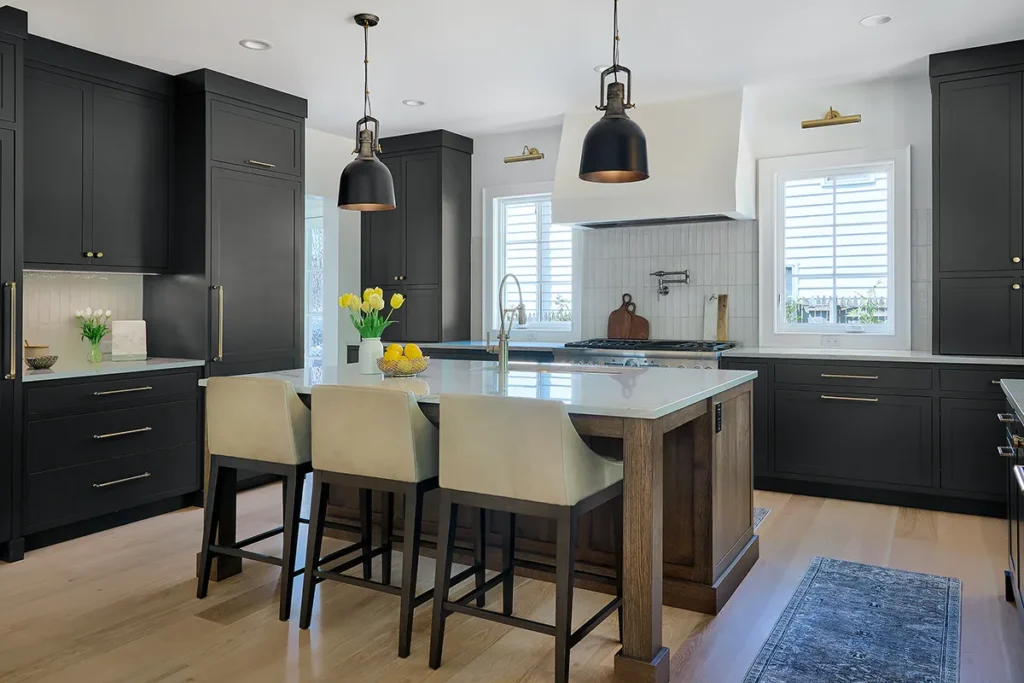
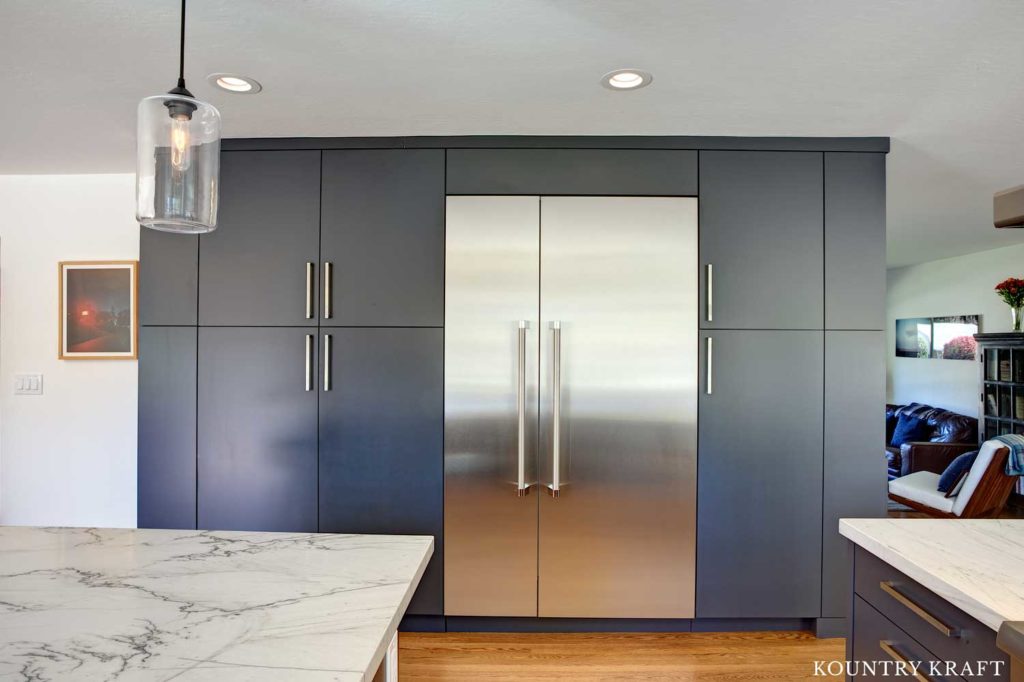
This modern kitchen pairs bold black cabinetry with an inviting island in Rift Cut White Oak. The floor to ceiling cabinetry is a key reason the dark finish feels modern and intentional rather than heavy. When cabinets stop short, dark colors can make the top portion of the wall feel unfinished. Here, the cabinet run continues upward, so the kitchen reads as a single clean composition.
One of the strongest ideas to borrow from this project is how a floor to ceiling pantry becomes a design feature, not just storage. The tall cabinet storage creates a visually quiet wall that lets the island take center stage. It’s also a smart way to keep the room feeling open. Instead of adding more cabinets across every wall, storage is concentrated vertically, which helps the layout stay airy even with generous cabinetry.
If you are planning a floor to ceiling pantry, this kitchen also shows the value of choosing a door style that stays simple. A low profile recessed panel works well at full height because it keeps the wall from looking too busy. This is a good reminder that custom kitchen cabinet height is not only about going taller. It is also about choosing proportions and details that support the overall design.
Custom Kitchen in Whitney, NJ
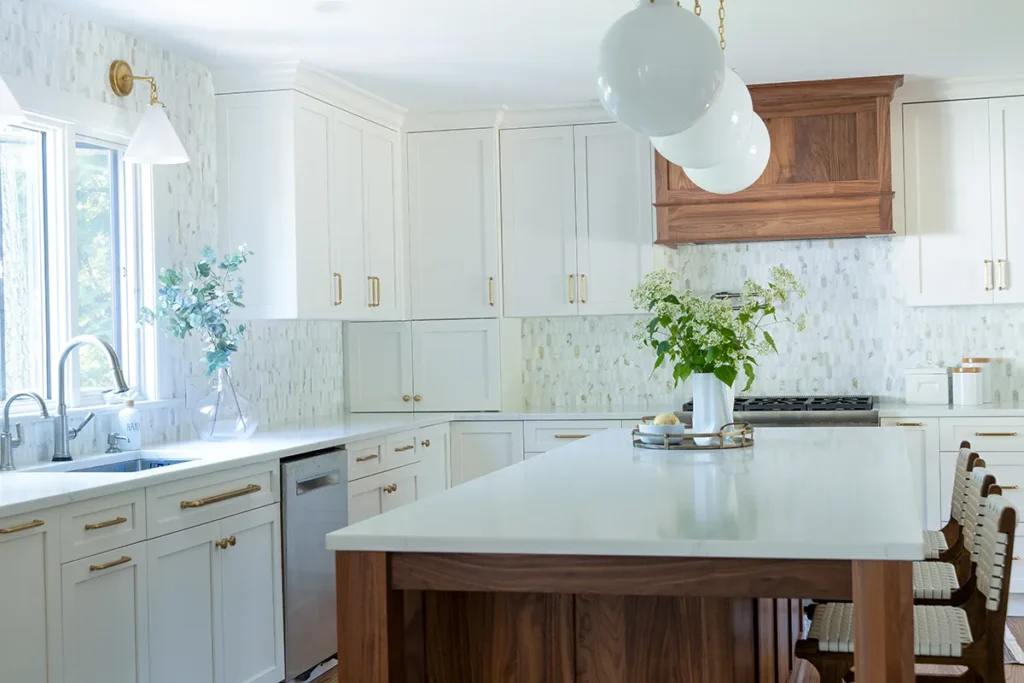
In Whitney, the approach is classic and polished. White Dove cabinetry reaches the ceiling and is finished with crown molding, reinforcing a transitional look that feels refined rather than formal. This is a great example of upper cabinets to ceiling with crown molding being used as a finishing move that ties the entire room together.
The standout takeaway here is how ceiling height cabinets help transitional kitchens reference traditional elements. The crown molding creates a graceful transition at the ceiling line, which makes the cabinetry look built-in and permanent. When you combine that with consistent gold hardware, the tall cabinets become part of the architecture, not just storage boxes on a wall.
This kitchen also highlights a practical benefit that often gets overlooked: ceiling height cabinets can enhance entertaining zones. The bar nook includes glass inlay cabinets and open walnut shelving, and the full height cabinetry around it makes the nook feel like a destination, not an afterthought. If you are considering a built-in pantry cabinet or beverage area, this project shows how tall cabinetry can frame a specialty zone and make it feel purposeful.
Modern Custom Cabinets in Exeter, NH
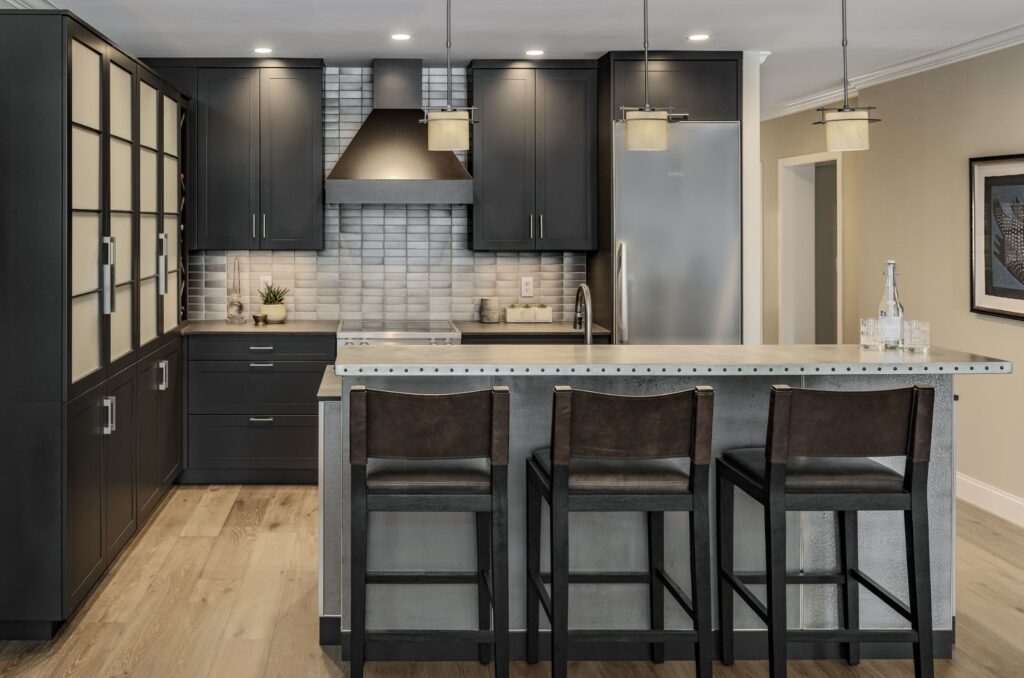
This Exeter, New Hampshire kitchen is a bold modern space anchored by sleek black cabinetry and an industrial inspired island. The floor to ceiling glass front pantry is the detail that keeps the dark cabinetry from feeling flat. Instead of a solid wall of black, the frosted glass panels reflect light and add depth, which is especially valuable when a kitchen has fewer color breaks.
From a functionality standpoint, a tall pantry cabinet like this offers a clear advantage: it creates one dedicated storage hub that supports a clean perimeter. In modern kitchens, clutter is the enemy of the design. A floor to ceiling pantry makes it easier to keep counters open and keep the rest of the kitchen looking crisp. This is where tall kitchen cabinet organization becomes important. You can plan shelves for pantry staples, pullouts for small appliances, and zones for baking, snacks, or entertaining items.
Another idea worth borrowing is the way the pantry cabinetry becomes a light balancing element. The glass front helps break up the darkness while still keeping storage concealed. If you want the benefits of tall cabinet storage but you worry about a wall of solid doors feeling too heavy, a floor to ceiling glass front pantry can be a smart compromise.
Custom Painted Maple Cabinets in Baltimore, MD
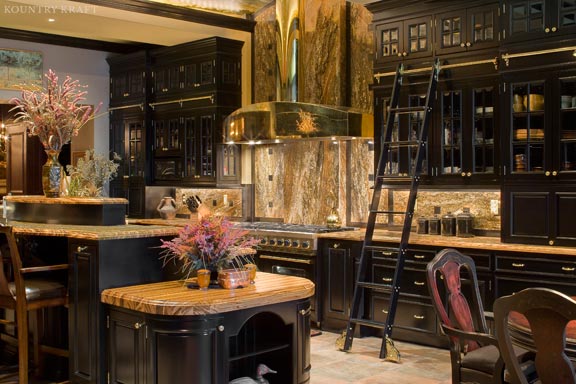
This Baltimore kitchen shows how floor to ceiling kitchen cabinets can support a dramatic, traditional design while still being highly functional. The beaded inset painted maple cabinets are crafted from Hard Maple and finished in black, creating a rich, furniture-like look. With cabinetry on both sides of the range reaching up to the ceiling, the room gains a strong sense of symmetry and presence.
The most distinctive functional feature in this space is the kitchen ladder for tall cabinets. When you invest in ceiling height cabinets, you want the top storage to be usable, not just decorative. A sliding ladder turns upper storage into real, reachable storage, which is ideal for items like serving platters, specialty cookware, or seasonal pieces. It also supports tall kitchen cabinet organization because you can store by frequency of use and still access everything easily.
This project also shows a layout benefit that many homeowners will appreciate: going taller can help you go simpler elsewhere. Instead of filling every wall with cabinetry, the design captures storage vertically around the range area, leaving more free floor space for a table and chairs. That kind of balance matters in kitchens that serve as gathering spaces. Tall cabinet storage helps the kitchen function without making it feel crowded.
Custom Options for Floor to Ceiling Kitchen Cabinets at Kountry Kraft
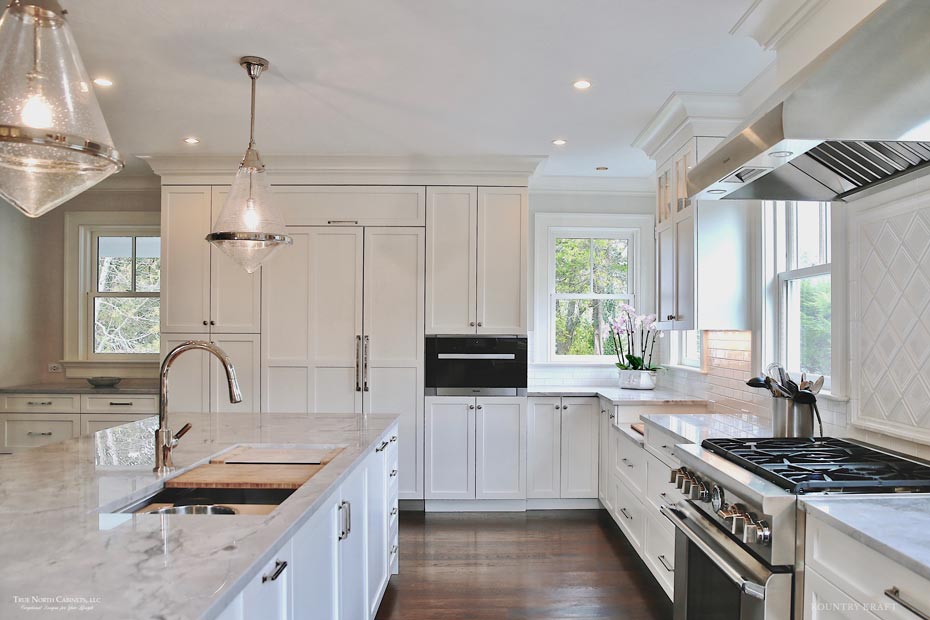
When floor to ceiling kitchen cabinets are designed as fully custom, the benefits go well beyond added height. Kountry Kraft builds cabinetry to fit the exact dimensions of the home, which allows bringing kitchen cabinets to the ceiling to look seamless and function with purpose.
Here are a few custom options that our customers say make a noticeable difference:
Integrated Lighting
Integrated LED strip lighting can be built into cabinet runs to brighten work zones and create a warm glow in specialty areas like beverage nooks or pantry walls. This is especially helpful when tall cabinet storage reduces the amount of open wall space available for decorative lighting.
Specialized Storage
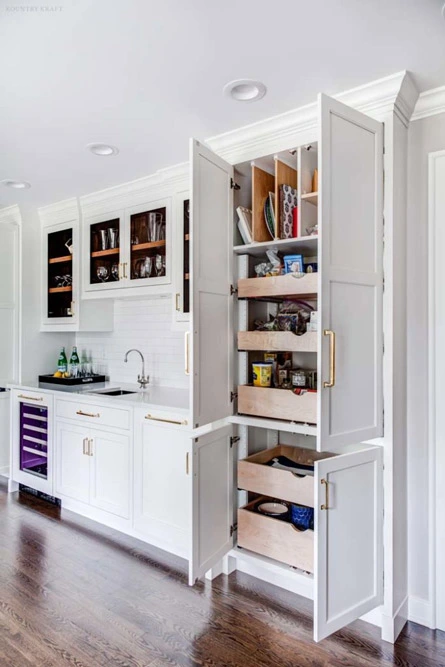
A tall pantry cabinet can include specialized slide out shelves, pullout trays, or tailored configurations that make deep storage easier to access. A floor to ceiling pantry works best when everything has a place, and customized interior storage helps keep that system tidy over time.
Millwork Details
Kountry Kraft can also provide custom millwork details such as crown molding and pilasters. These elements help the cabinets feel like true built-ins, especially when you want upper cabinets to ceiling with crown molding to match the home’s trim style.
Custom Configurations
There is no single correct custom kitchen cabinet height. Some homes benefit from full height kitchen cabinets across multiple walls. Others work best with one tall focal wall, like a pantry run. With custom cabinetry, you can choose where to go full height and how to balance it with windows, hood designs, and other architectural features.
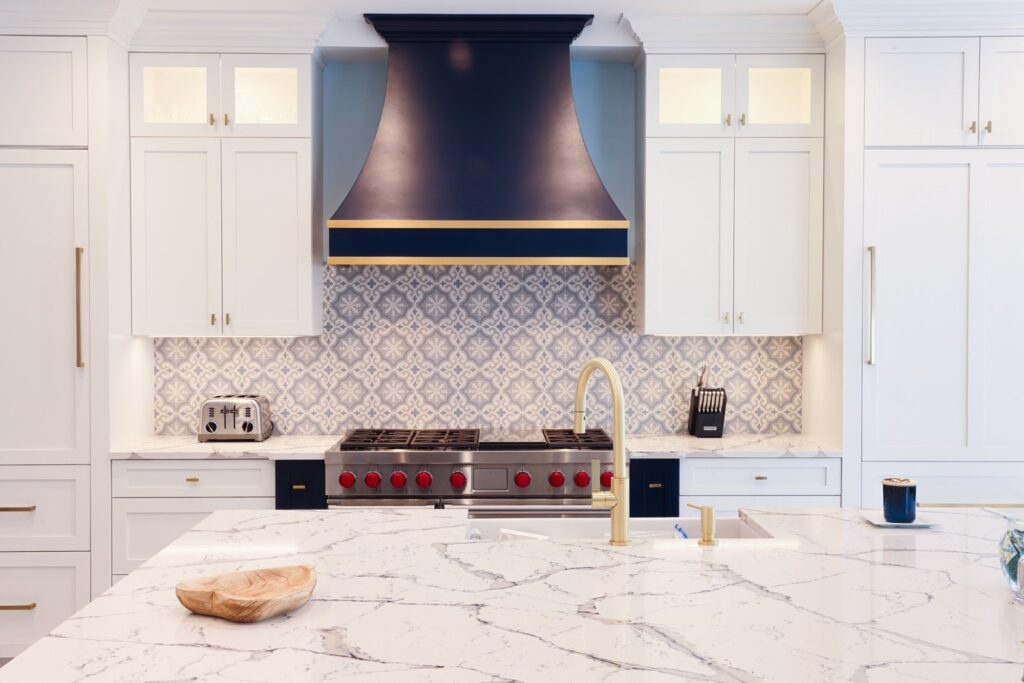
When Floor to Ceiling Cabinets May Not Be the Right Choice
Floor to ceiling kitchen cabinets are not always the best solution for every kitchen. In spaces with very low ceilings, excessive height can feel heavy. In highly decorative kitchens, leaving space above cabinets can allow for layered design elements. Budget can also be a factor, as full height cabinetry requires more material and installation detail.
Explore More About Floor to Ceiling Kitchen Cabinets
Kountry Kraft is a custom cabinetry manufacturer known for building high-quality cabinets that are designed for the way people actually live. From fully customized floor to ceiling kitchen cabinets to tailored pantry solutions, every detail is crafted to maximize vertical storage, enhance the feeling of room height, and eliminate awkward gaps that collect dust and require extra cleaning.
To further explore how floor to ceiling kitchen cabinets can transform your space, contact one of our design experts or use our Find a Dealer Tool to locate an authorized Kountry Kraft Dealer near you. We can’t wait to hear your ideas!
Key Takeaways
- Floor to ceiling kitchen cabinets maximize vertical storage without increasing kitchen size
- Full height cabinets create a built in, architectural appearance
- Tall pantry cabinets improve organization by separating daily and seasonal storage
- Ceiling height cabinets reduce dust collecting gaps above cabinetry
- Custom cabinet height allows better alignment with ceilings, trim, and design style
- Glass front or mixed material tall cabinets can reduce visual heaviness
- Kitchen ladders or step access make upper storage usable in tall cabinet designs
Conclusion
Floor to ceiling kitchen cabinets can help a kitchen feel more complete while improving storage in a practical, lasting way. The best results come from choosing where height matters most, planning the interior storage carefully, and pairing the cabinetry with details that fit the style of the home. When designed well, ceiling height cabinets support cleaner counters, better organization, and a more architectural look without making the kitchen feel crowded.
FAQ: Floor to Ceiling Kitchen Cabinets
Should kitchen cabinets go all the way to the ceiling?
Yes, if you want the most storage and the most finished, built-in look. If you prefer lighter visuals or need budget flexibility, stopping below the ceiling can still work.
Going to the ceiling removes the “in between” zone that often becomes décor space or a dust shelf. It also lets you reserve higher storage for items you use less often, while keeping daily essentials at comfortable reach.
What are the pros and cons of floor to ceiling kitchen cabinets?
The biggest pros are added storage, a taller looking room, and a cleaner, more custom appearance. The main cons are higher cost and the need to plan access to upper storage.
You are essentially trading extra cabinet materials and installation detail for long term function and a more architectural finish. If you commit to ceiling height, it is worth designing the top sections intentionally so they do not become awkward, wasted space.
Do ceiling height cabinets make a kitchen look bigger?
Often, yes, because they draw the eye up and reduce visual breaks. They can also make the kitchen feel more tailored and cohesive.
The effect is strongest when door styles and finishes are kept consistent and the cabinet layout feels balanced. In a smaller kitchen, using vertical storage can also free up counter space, which makes the whole room feel less crowded.
Are floor to ceiling cabinets harder to clean and maintain?
Floor to ceiling kitchen cabinets are usually easier to keep clean overall because you eliminate the top ledge area above cabinets. The tradeoff is that higher doors and trim details may need an occasional wipe down.
Most maintenance comes down to reach. If you have tall ceilings, plan for a step stool or a safe access solution so you can clean upper doors, adjust shelves, and keep everything looking sharp.
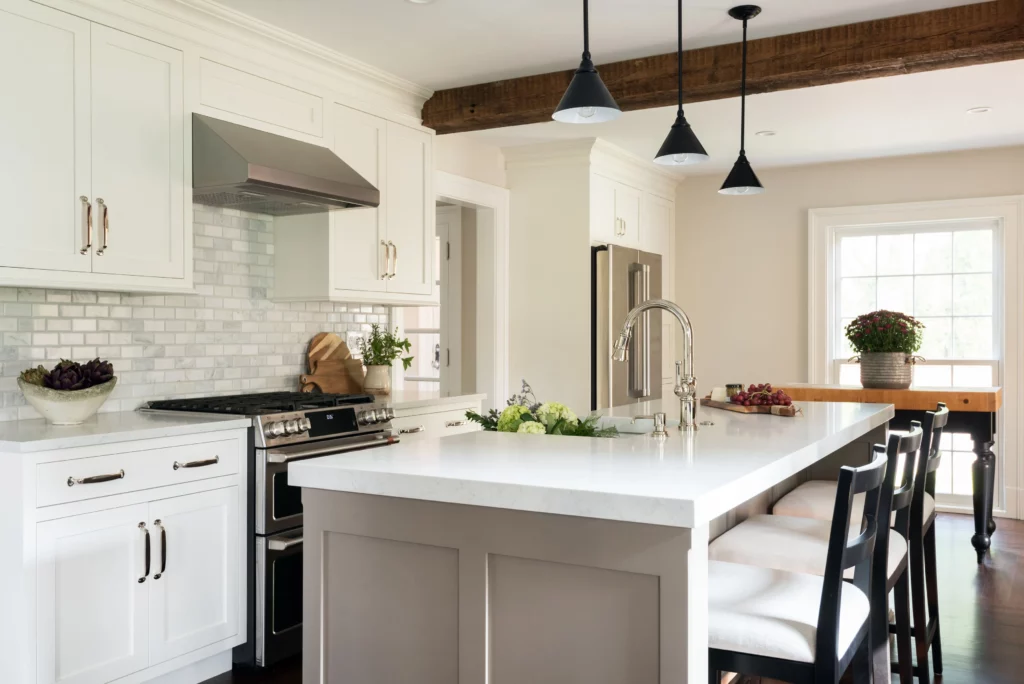
How do you handle uneven ceilings, soffits, or bulkheads when running cabinets to the ceiling?
You plan for it from the start with careful measuring and a finish detail that can absorb small variations. Most kitchens need some combination of trim, fillers, or a scribed panel for a clean fit.
Older homes rarely have perfectly level ceilings, so the goal is not perfection, it is intention. A well designed top treatment makes the cabinetry look like it belongs there, even when the ceiling line is not perfectly straight.
What is the best height for upper cabinets and how do you choose cabinet height with different ceiling heights?
The best height is the one that fits your ceiling, your proportions, and how you use the kitchen, not a one size rule. Start with a comfortable reach for everyday storage, then use upper space for occasional items.
With taller ceilings, you may choose a taller cabinet, a stacked cabinet look, or a dedicated top section for seasonal storage. The right choice depends on whether you want a clean modern wall or a more traditional, layered look.
Do you need crown molding or a filler panel at the top, and what looks best?
You do not always need crown molding, but you do need a deliberate finish at the top. What looks best depends on your style and your ceiling conditions.
Traditional kitchens often look most complete with crown molding because it ties cabinetry to the home’s trim. Modern kitchens often look better with a clean, flat finish or minimal trim, especially when you want the cabinetry to read as simple architecture.
How do you organize tall cabinets so the top storage is actually usable?
Use a “frequency” system: daily items in the easiest reach zone, occasional items above, and heavy items lower. Labeling and grouped categories make high storage far easier to maintain.
Tall cabinets work best when you avoid turning them into miscellaneous drop zones. Treat each section like a pantry aisle, baking zone, entertaining zone, or small appliance zone, and you will keep the kitchen functional long after the remodel is done.
How do installers put cabinets to the ceiling in place, and what installation constraints matter?
Installers need accurate measurements, a solid mounting plan, and a top finish strategy that accounts for ceiling variation. Constraints usually include ceiling level, wall flatness, and how appliances and ventilation are integrated.
Ceiling height runs often involve taller, heavier boxes or stacked sections, so anchoring and alignment matter. Planning ahead for lighting, crown or trim, and any clearance issues helps the installation look crisp instead of forced.
Are floor to ceiling kitchen cabinets worth the added cost, and do they increase resale value?
Floor to ceiling kitchen cabinets are worth it when you truly need the storage and want a more custom, built-in finish. They can support resale appeal because they read as an upgraded, higher quality kitchen.
The value is not only in “more cabinets,” it is in the overall impression: a kitchen that looks complete, feels organized, and minimizes clutter. If the budget is tight, you can still get a similar effect by taking key areas to the ceiling, like a pantry wall or a main cabinet run, instead of doing every wall.
About Kountry Kraft
Founded in 1959 in Newmanstown, Pennsylvania, Kountry Kraft has grown from a small family shop to a nationwide leader in custom cabinetry. Known for craftsmanship, attention to detail, and American-made values, the company serves homeowners across the U.S. through authorized dealers and designers.
Every project reflects Kountry Kraft’s philosophy: cabinetry should not only be beautiful but also make life easier. With decades of experience and thousands of unique projects, Kountry Kraft continues to prove the power of true customization.
Homeowners ready to begin their journey can reach out via the Kountry Kraft Contact Form or by calling 610-589-4575. The team, based at 291 S. Sheridan Rd, Newmanstown, PA, looks forward to creating cabinetry that transforms kitchens, baths, and beyond. Visit our Find a dealer page to locate a custom cabinetry dealer near you.
Top Trending Features of Custom Kitchen Cabinets
By / March 4, 2026 March 4, 2026
The Appeal of Custom Kitchen Cabinets
Most conversations about a kitchen remodel eventually circle back to the same question: “Where is everything going to go?” Cabinets are where that answer really takes shape. They determine how easy it is to unload groceries, put dishes away, plug in a mixer, or clear the counters at the end of the day.
What sets custom kitchen cabinets apart is how specific they can be. Instead of working around a standard layout, you can plan storage for the way you actually cook and live: a place for the coffee setup that currently takes up half of the counter, a storage solution that actually fits your baking trays, or a pantry that does more than just hold stacked boxes and bags.
In the sections that follow, we’ll look at the features homeowners are asking for most often right now. From integrated appliances and hidden outlets to organization inside drawers, doors, and pantries, these ideas show how thoughtful cabinet design can make a familiar kitchen layout work much better.
What Are Custom Kitchen Cabinets?
Before diving into trending upgrades, it helps to understand what “custom” truly means. Unlike stock cabinets—which come in fixed dimensions and limited design options—custom kitchen cabinets are crafted specifically for your home. Every measurement, finish, and interior detail is tailored to your space. This allows for design solutions that simply cannot be achieved with mass-produced products.
Custom cabinetry offers:
- Precision sizing to fit unique architectural features.
- Virtually unlimited stain, paint, and specialty finish options.
- Functional choices that match the way you use the space.
- Organization systems that streamline daily tasks.
- Design freedom to create a cohesive look throughout the home.
For many families, this level of personalization makes the kitchen more enjoyable and more efficient. Instead of working around cluttered countertops or awkward layouts, everything has a designated place that makes moving through the kitchen easy and intuitive.
Popular Custom Kitchen Cabinet Features
Today’s most in-demand custom kitchen cabinet features strike a balance between beauty and practicality, blending innovation with timeless craftsmanship. Below are the top categories homeowners are asking for during the cabinet design process.

Integrated Appliances
One of the most significant design shifts in modern kitchens is the move toward uninterrupted sightlines. Integrated appliances help achieve this goal by hiding functional items behind beautifully crafted appliance panels. Instead of seeing a stainless steel refrigerator or dishwasher, the appliances visually disappear into the cabinetry.
A panel ready refrigerator creates a custom furniture-like look, especially in open-concept homes where the kitchen connects to living and dining spaces. This trend appeals to homeowners seeking a more intentional and refined design. The cohesive look also helps small kitchens feel less crowded and gives large kitchens a sense of architectural balance.
Beyond refrigerators, designers are integrating:
- Dishwashers
- Undercounter ice makers
- Freezer drawers
- Beverage centers
- Warming drawers
The result is a clean, polished aesthetic that elevates the entire room. Homeowners who value timeless design are especially drawn to this trend because integrated appliances reduce visual noise and shift attention to the beauty of the woodwork.
Hidden Outlets in Cabinets
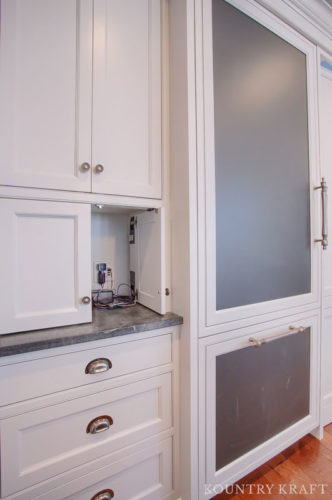
Homeowners are increasingly rethinking the location of their outlets. Instead of having them visible on the wall, they’re choosing hidden outlets that keep the backsplash uninterrupted and let the tile or stone shine.
A docking drawer or charging drawer tucks outlets inside the cabinet box so phones, tablets, and small electronics can stay plugged in without sitting out on the counter. This approach keeps everyday clutter contained and makes it easier to wipe surfaces clean at the end of the day.
For small appliances, outlets under cabinets are a simple, effective option. Slim outlet strips mounted beneath the upper cabinets provide easy access for mixers, blenders, and coffee makers, while still keeping the backsplash free of visible plates and covers. The result is a kitchen that feels polished while still remaining functional.
Specialty Kitchen Cabinet Organization
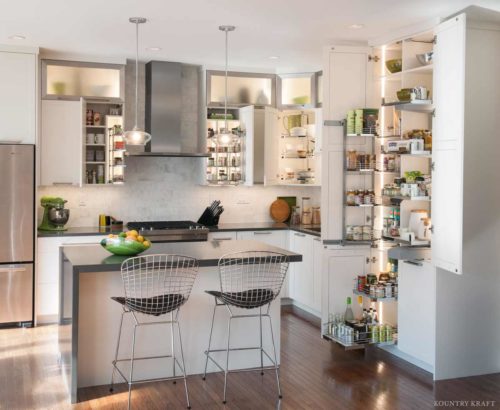
Organization is one of the biggest reasons homeowners choose custom kitchen cabinets. Instead of storing items wherever they fit, custom cabinetry allows for intentionally planned zones that match how you cook and what you use most frequently.
Some of the most popular specialty storage solutions include:
Pull Out Spice Racks
Designed to fit next to the cooktop or range, a pull out spice rack puts essentials within reach while keeping labels visible. This feature is small but impactful, saving time and reducing frustration during meal prep.
Pull Out Trash Cabinets
A pull out trash cabinet conceals bins behind a stylish cabinet front. Many homeowners choose a side-by-side configuration to separate waste and recycling efficiently.
Roll Out Trays
These trays transform deep cabinets into usable storage by pulling out completely, making it easy to access pots, pans, and small appliances.
Tray Divider Cabinet
For bakers or frequent entertainers, a tray divider cabinet organizes baking sheets, trays, platters, and cutting boards so they can be accessed without rearranging the entire cabinet.
The beauty of custom kitchen cabinetry is that each of these features is tailored specifically to your space. Discuss your routines and needs with your designer and they can help you decide on the specialty storage configurations that will work best for you.
Pantry Cabinet Organization
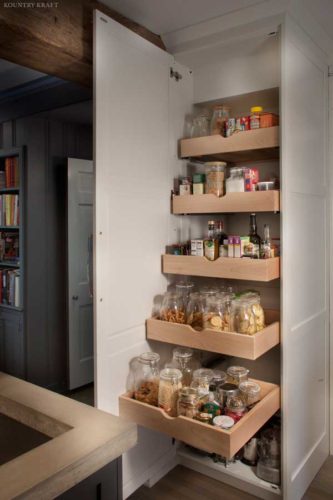
Pantry storage has become a major priority for homeowners seeking a more functional kitchen. Whether you’re working with a compact layout or a spacious floorplan, pantry cabinet organization dramatically improves the flow of the room.
For smaller kitchens, tall pantry towers with adjustable shelves and interior lighting maximize vertical space. Roll out trays inside these towers make it easy to see and access dry goods.
For larger homes, butler’s pantry cabinetry offers a dedicated zone for meal prep, entertaining essentials, small appliances, and overflow storage. This area often becomes a second kitchen, supporting everything from baking to party hosting. Many families also choose to incorporate a coffee station cabinet, keeping brewers, mugs, and supplies neatly organized and out of the main cooking area.
These pantry solutions reduce visual clutter, enhance efficiency, and allow the kitchen to remain a calm, organized gathering place.
Design Options Available with Custom Kitchen Cabinets
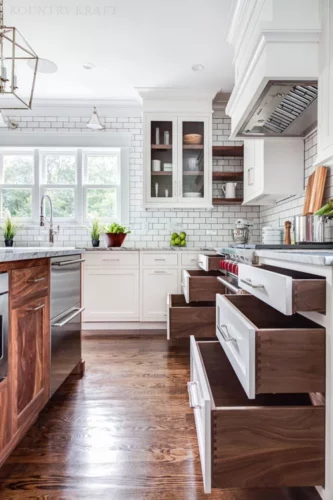
Beyond functional upgrades, design flexibility is one of the most exciting aspects of custom kitchen cabinets. It allows homeowners to create a kitchen that reflects their personal style without compromise. Here are some of the design options available when you choose custom kitchen cabinets.
Custom Sizes
Every home has unique architectural details—slanted ceilings, uneven walls, tight corners, or expansive floorplans. Trying to tackle these challenges with stock cabinets often feels like trying to fit a square peg into a round hole, but custom kitchen cabinets adapt to these features with ease.
With custom sizing, every cabinet is planned to use space intentionally instead of leaving odd gaps or “dead” corners that collect dust. Taller cabinets can meet the ceiling so you gain an extra shelf of storage instead of a hard to clean ledge. Drawers can be sized to fit pots, pans, and lids in a single glide instead of spreading them across multiple cabinets. Narrow openings can become pullouts for spices, oils, or trays instead of being blocked off.
Islands and peninsulas can be designed with storage on every usable side, turning what might have been wasted back panels into space for serving pieces or seasonal items. Even shallow areas, like the back of a pantry wall, can house slim cabinets for baking sheets or cutting boards. The goal is simple: no awkward fillers, no unreachable corners, and no space that’s just there for looks. Custom kitchen cabinets optimize every square inch.
Custom Material and Finish Options
Another advantage of custom kitchen cabinets is the amount of control you have over how they look and feel. Selections begin with the construction materials themselves, as different wood types have different graining, varying from subtle to more pronounced. Then, you decide exactly how you want that wood to be finished. And those finish options are virtually limitless.
If you love the warmth of natural wood, there are stain options that highlight the grain in a soft, quiet way or make it richer and more dramatic. If painted cabinetry is more your style, you can select from almost unlimited paint colors, including custom formulas that match a specific shade you already have in your home. That might be a favorite wall color, a trim tone, or even a color pulled from your countertop or tile.
Because the materials and finishes are tailored to your space, the cabinetry can tie together adjoining rooms, connect old and new parts of the home, and support the overall look you’re trying to achieve.
Custom Door Styles
Cabinet doors are one of the first things you notice in a kitchen, so the way they’re designed has a big impact on the overall look. With custom cabinetry, you can treat the doors as a true design element rather than just a standard front. Many homeowners like to incorporate glass front cabinet doors or reeded glass cabinet doors in select areas, such as bar cabinets, display shelving, or upper wall cabinets. Clear glass is ideal if you enjoy styling dishes and glassware, while reeded glass offers a softer, more opaque look that lets light through without requiring the interior to be perfectly staged all the time.
Beyond glass, there are other custom options that add character. Metal accents, like framed metal doors or decorative grilles, can give cabinetry a tailored, furniture-inspired feel. Leather panel inserts introduce texture and a more unexpected detail on specific doors or even appliance panels. By mixing these door treatments in a few key spots and keeping the remaining fronts simple and hardworking, you can create focal points that feel intentional without overwhelming the room.
Custom Kitchen Cabinets Near Me
Kountry Kraft is proud to be Lebanon County, PA’s trusted choice for custom kitchen cabinets. Widely renowned for our uncompromising craftsmanship and customer service, homeowners and designers alike have relied on our expertise for decades. From integrated appliances to highly personalized storage, Kountry Kraft can help bring your vision to life.
To explore ideas or begin planning your project, schedule a consultation with one of our design experts today.
In Summary
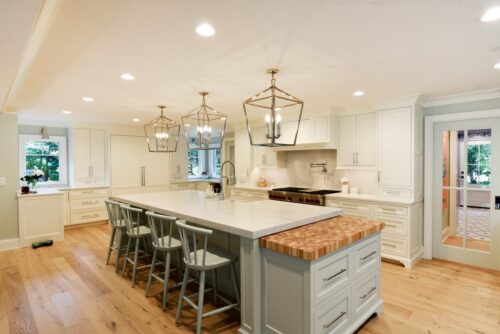
When you look at how you use your kitchen every day, it becomes clear why custom kitchen cabinets are worth considering. Instead of working around fixed sizes and generic storage, you get cabinets that are planned for your space, your routines, and the way you want the room to look and feel.
FAQ: Custom Kitchen Cabinets
How much do custom kitchen cabinets cost?
Custom kitchen cabinets typically cost more than stock or semi-custom options because they’re built to your exact specifications. The final price depends on size, materials, and design features.
For most homeowners, the investment reflects the level of detail involved, including custom sizing, upgraded hardware, organizational inserts, and premium finishes. Because the cabinets are made for your home rather than adapted to fit, they take more time and craftsmanship to produce, which influences cost.
Are custom kitchen cabinets worth the cost compared to stock or semi-custom cabinets?
Custom kitchen cabinets are often worth the cost if you want long-term durability and storage that works for your specific kitchen layout. They give you flexibility that premade options simply can’t match.
The value comes from eliminating wasted space, choosing exact finishes and materials, and creating storage that supports your daily habits. While the upfront price is higher, custom cabinetry often lasts longer, functions better, and contributes to a more cohesive kitchen design.
How long does it take to design, build, and install custom kitchen cabinets?
Most custom kitchen cabinets take several weeks to design and manufacture, followed by installation once the space is prepared. Timelines vary based on project scope and the cabinet maker’s schedule.
The process usually includes design consultations, detailed measurements, material selection, and final approvals before production begins. Because each cabinet is built to order, the manufacturing phase takes longer than ordering stock cabinets, but the end result is tailored to your home.
What are the best or most durable materials for custom kitchen cabinets?
Hardwood, high-quality plywood, and durable finishes are often considered the best choices for long-lasting custom cabinets. These materials stand up well to daily use.
Hardwoods like maple, cherry, or white oak offer strong structural support, while high-grade plywood provides stability for cabinet boxes. A durable finish—whether paint or stain—helps protect the surface from moisture, heat, and regular cleaning, contributing to a longer cabinet lifespan.
What is the difference between stock, semi-custom, and custom kitchen cabinets?
Stock cabinets come in predetermined sizes, semi-custom cabinets offer limited adjustments, and custom kitchen cabinets are built entirely to your specifications. The level of flexibility increases with each tier.
Stock cabinets work well for straightforward layouts but can leave gaps or require fillers. Semi-custom cabinets allow for small modifications, but still follow set parameters. Custom cabinets are made from scratch and offer complete control over size, interior features, materials, and finishes.
Do custom kitchen cabinets add value to my home and help with resale?
Yes, custom kitchen cabinets can add value because buyers recognize the quality and thoughtful design they provide. A well-planned kitchen is often a major selling point.
Custom cabinets improve both the appearance and usability of the kitchen, which increases overall appeal. While no renovation guarantees a full return on investment, custom cabinetry tends to perform better in resale than lower-grade alternatives because of its craftsmanship and longevity.
Can I mix custom kitchen cabinets with semi-custom or ready-to-assemble units?
You can mix cabinet types, but it works best when the visible areas are custom and the less prominent areas use other options. This keeps the look consistent without overspending.
Many homeowners choose custom cabinetry for the primary kitchen and use semi-custom or RTA cabinets in pantries, laundry rooms, or basements. The key is ensuring the finishes, door styles, and proportions work together so the final result feels cohesive.
How do I clean and maintain custom kitchen cabinets so they last?
Most custom kitchen cabinets can be maintained with gentle cleaning using mild soap and water or a recommended wood cleaner. The goal is to protect the finish.
Avoid harsh chemicals or abrasive scrubbers, which can wear down the surface over time. Wiping spills promptly, cleaning handles and high-touch areas regularly, and keeping humidity levels consistent will help your cabinets look their best for many years.
Are custom kitchen cabinets only for large kitchens, or do they work in small spaces too?
Custom kitchen cabinets work extremely well in small kitchens because they can maximize storage in tight or awkward areas. They help eliminate unused corners and gaps.
Custom sizing allows every inch of the room—from narrow gaps to tall vertical space—to be put to work. Features like pullouts, slim cabinets, and smart dividers are especially impactful in small layouts, making the kitchen feel more functional and less crowded.
How do I choose the right custom cabinet maker, and what questions should I ask?
Choose a cabinet maker with strong craftsmanship, a clear design process, and experience building the style of cabinetry you want. Asking about materials, timelines, and customization options helps you compare providers.
It’s helpful to request examples of past work, review references or testimonials, and clarify what’s included in the quote. Understanding how they handle measurements, installations, and finish quality will give you confidence that the final product will meet your expectations.
Finding the Best Kitchen Designer Near Me & How to Choose the Right Pro
By / February 7, 2026 February 7, 2026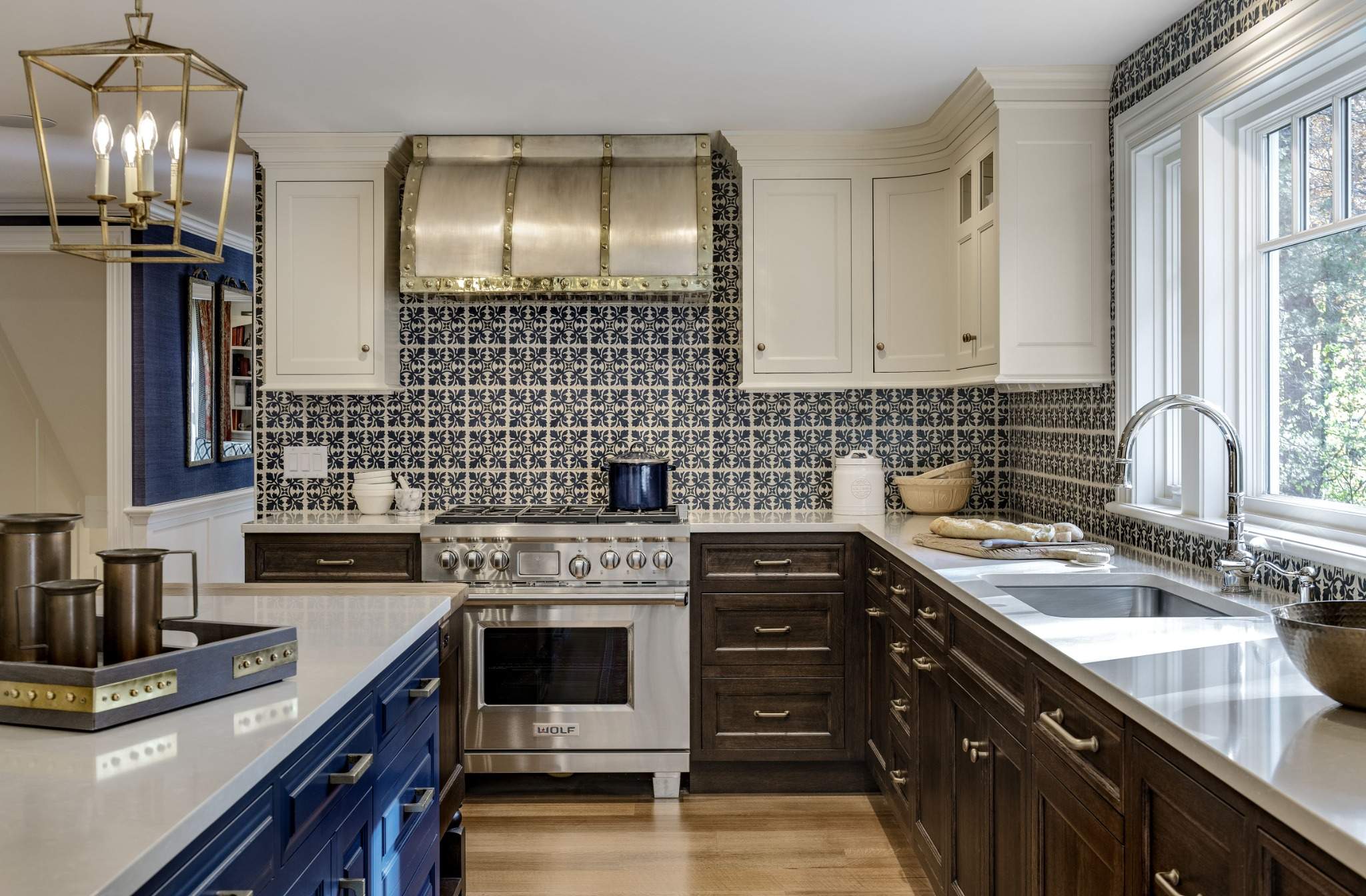
Finding the Best Kitchen Designer Near Me
When you search for the “best kitchen designer near me”, what you’re really looking for is someone who understands your goals for the space along with the daily rhythms that define how you use your kitchen. A kitchen remodel is one of the biggest investments you can make and adds tremendous value to your home. Hiring a professional kitchen designer can dramatically improve the outcome of your project. From enhancing functionality to improving workflow and elevating the overall aesthetic, the right designer guides you from the first idea through the final installation.
In this guide, we will walk through the difference between a kitchen designer and a contractor, the full range of kitchen design services available, what qualities to look for in a designer, and how to understand kitchen designer cost. You will also learn the essential questions to ask a kitchen designer before signing a contract and how to confidently hire a kitchen designer who is equipped to bring your dream kitchen to life.
Kitchen Designer vs Contractor: Understanding the Difference
Homeowners often begin planning a remodel by searching terms such as “kitchen designer near me” or “kitchen remodeling contractors,” but these roles are not the same. Understanding the difference is essential before you move into the kitchen design process.
A kitchen designer is focused on the creative and functional development of your space. They specialize in:
- Spatial planning
- Workflow optimization
- Material and product selections
- Cabinetry layouts and functionality
- Aesthetic cohesion across the room
Designers think through everything from kitchen layout ideas to appliance placement to storage optimization. Their primary goal is to ensure the kitchen is not only beautiful but also intuitive to use.
A contractor, by contrast, is responsible for construction, demolition, and execution. Contractors manage labor, permitting, plumbing, electrical, and installation. While many contractors can offer suggestions, most do not have the specialized training or software tools that kitchen designers use to craft detailed plans.
In short—a designer creates your vision. A contractor builds your vision.
For the best remodel outcome, homeowners typically work with both or choose a design-build firm where designers and contractors collaborate closely. But the design always comes first. Without strong design direction, even the most skilled contractor cannot deliver a cohesive, functional kitchen.
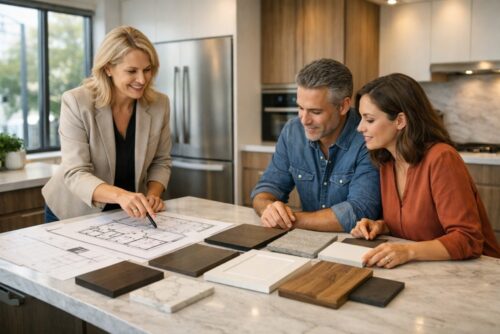
Kitchen Design Services
When homeowners book a kitchen design consultation, they are initiating a process that goes far beyond selecting colors or finishes. Professional designers offer a wide range of services tailored to your home’s needs. These may include:
Space Planning and Layout Development
A designer evaluates how you use your kitchen and introduces planning concepts such as the kitchen work triangle and kitchen zones layout. Whether you cook daily, entertain frequently, or need a family-friendly space, your designer creates a kitchen layout that supports those routines.
Custom Cabinetry and Storage Planning
Most clients find cabinetry to be the most complex part of a kitchen remodel. A designer helps you choose between custom kitchen cabinets, custom cabinetry, or semi custom cabinets, depending on your budget and storage needs. They help you plan:
- Kitchen storage solutions
- Pantry cabinet ideas
- Spice pullouts, tray dividers, or utensil organizers
- Deep drawers for pots and pans
- Hidden appliance garages
Thoughtful cabinetry planning improves your kitchen’s functionality for years to come.
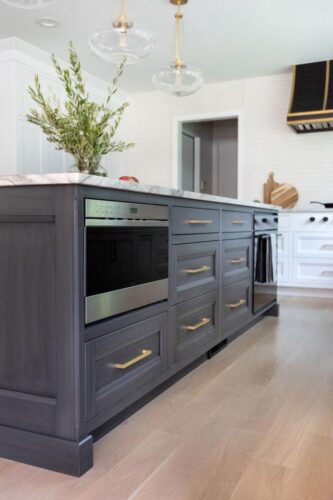
Product and Finish Selections
The right designer will guide you through all material choices, including:
- Cabinet door styles
- Cabinet finishes
- Cabinet hardware ideas
- Countertop materials
- Flooring and backsplash options
- Lighting layers
- Appliance selections
These choices can feel overwhelming, which is why an experienced designer is invaluable in steering you toward durable, timeless options that match your aesthetic.
3D Renderings and Technical Plans
Designers also provide scaled drawings, renderings, and construction documents. These plans ensure your contractor knows exactly what to build and eliminate costly miscommunication during installation.

How to Identify a Good Kitchen Designer
Searching for the best kitchen designer near me means identifying someone with the right combination of experience, communication skills, creativity, and technical knowledge.
Here are the qualities that set exceptional designers apart:
Experience with Many Types of Kitchens
A skilled designer understands the problem areas in older homes, the challenges of small kitchens, and the opportunities in larger, open-concept spaces. They can explain why certain kitchen layout ideas work better in your home, how the kitchen work triangle affects your workflow, and how to use kitchen zones layout to improve organization.
Cabinetry Expertise
Because cabinetry is the foundation of your kitchen, the best designers have deep knowledge of custom kitchen cabinets, custom cabinetry, and semi custom cabinets. They understand how cabinet modifications, inserts, and sizing affect usability and style.
Attention to Detail
Every detail matters in kitchen design, from cabinet hardware ideas to lighting placement to the style of cabinet finishes. An experienced designer ensures all selections complement one another.
Creative Problem Solving
The goal of professional design is to solve real-life problems. A strong designer will offer kitchen storage solutions, customized plans for your cooking habits, and pantry cabinet ideas that maximize space.
Clear Communication
The designer should guide you through the kitchen design process, explain the reasoning behind their decisions, and help you compare costs and options without overwhelm.
If a designer combines technical skill, strong communication, and a clear design vision, you are likely working with the right professional.
How Much Does a Kitchen Designer Cost?
One of the most common questions homeowners ask is how much does a kitchen designer cost. Understanding kitchen designer cost helps you plan your budget early.
Pricing varies based on:
- Experience level
- Geographic location
- Scope of your remodel
- Whether cabinetry is included
- Number of revisions and drawings needed
Designers may structure fees as:
- Flat design packages
- Hourly rates
- A percentage of the overall project cost
- Cabinetry-based pricing
For most homeowners, investing in good design reduces costly mistakes and prevents inefficiencies during construction. In many cases, working with a professional designer leads to better space utilization, better storage, and timeless selections that maintain value over time.
How to Hire a Kitchen Designer: Questions to Ask Before You Commit
Finding the best kitchen designer near me requires interviewing designers and evaluating fit, communication, and expertise. Before hiring a kitchen designer, go over the following questions.
Questions to Ask a Kitchen Designer
- What is your overall kitchen design philosophy?
- Do you specialize in any particular cabinet lines or materials?
- What is included in your kitchen design consultation?
- Will you provide 3D renderings or floor plans?
- How do you help homeowners select cabinetry, finishes, and hardware?
- What is the typical kitchen design process timeline?
- Do you work with contractors or can you recommend one?
- How do you price your kitchen design services?
- What happens if I change my mind during the design process?
- Can I see examples of previous kitchens similar to mine?
These questions help you determine whether the designer aligns with your preferences, budget, and project goals.
Important Hiring Tips
- Look for designers who listen carefully and ask about your routines.
- Ask for references or client testimonials.
- Review portfolios to evaluate style versatility.
- Discuss budget expectations early so the designer can recommend realistic solutions.
- Ensure the designer’s communication style matches yours.
When you feel confident about your designer’s approach and transparency, you are ready to move forward.
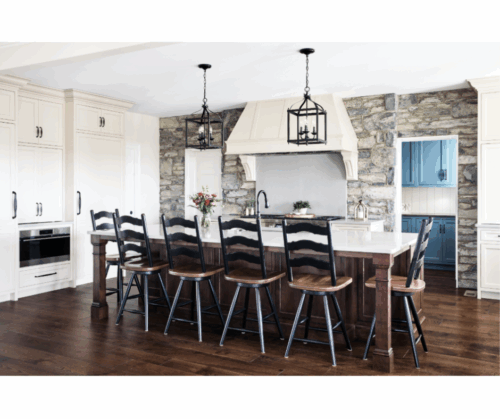
Lebanon County’s Choice for Best Kitchen Designer Near Me
If your search for the best kitchen designer near me has brought you here, Kountry Kraft is a natural next step. As a premier manufacturer of custom kitchen cabinets and custom cabinetry, Kountry Kraft has been trusted by homeowners and designers across the country for decades. Our American-made craftsmanship, precision engineering, and fully customized approach ensure that every kitchen is designed around your exact needs.
From unique cabinet finishes to personalized storage systems, Kountry Kraft cabinetry gives designers unlimited creative freedom. Whether your style is classic, contemporary, or something entirely your own, our ability to fabricate truly one-of-a-kind cabinetry helps bring your dream kitchen to life.
Ready to begin your kitchen remodel planning? Simply use our Find a Dealer Tool to connect with one of our authorized design partners and schedule your kitchen design consultation.
Summary
The search for the best kitchen designer near me begins with understanding what designers do, how they differ from contractors, and what services they provide. A great designer can turn ordinary ideas into extraordinary results by improving layout, storage, and style through a thoughtful, collaborative design process.
Before you hire a kitchen designer, take time to ask the right questions, review portfolios, and understand kitchen designer costs so you can confidently choose the professional who fits your vision.
With expert planning and high-quality cabinetry from trusted manufacturers like Kountry Kraft, your kitchen remodel can become one of the most rewarding transformations in your home. Contact one of our design experts to get started today!
FAQ: Best Kitchen Designer Near Me
How do I find the best kitchen designer near me?
The best way to find a top kitchen designer near you is to look for professionals with strong portfolios, positive client reviews, and experience in the style you want. A targeted search through local showrooms, cabinetry manufacturers, and trusted dealer networks will help you quickly identify qualified designers. From there, schedule consultations to evaluate how well they listen, communicate, and translate your goals into a workable plan. The right designer will understand your priorities and make recommendations that fit your home and lifestyle. Be sure to have an idea of your budget so that the kitchen can guide your choices and determine if you are a good fit for the products they offer.
What is the difference between a kitchen designer and a contractor?
A kitchen designer plans how your kitchen will function and look, while a contractor handles the construction and installation. Designers focus on layout, materials, cabinetry, workflow, and aesthetic cohesion. Contractors step in once the plans are complete and manage demolition, structural work, plumbing, electrical, and finishes. Both roles are essential, but they contribute at different stages and bring different expertise to the remodel.
How much does a kitchen designer cost?
Kitchen designer costs vary depending on the scope of the project, the designer’s experience, and the level of detail required. Some designers charge hourly, others offer flat-rate design packages, and some structure fees around cabinetry purchases or percentages of the total project. Investing in design early often helps homeowners avoid costly errors and ensures the layout, materials, and workflow are planned correctly before construction begins.
What services does a kitchen designer provide?
A kitchen designer provides layout planning, material selections, cabinetry design, and visual renderings to guide your remodel. They help you evaluate storage needs, choose finishes, coordinate appliances, and develop a cohesive design plan that suits your budget and lifestyle. Many also prepare technical drawings for contractors and assist throughout the project to ensure the final result matches the original vision.
What should I ask a kitchen designer before hiring one?
Ask about their design process, pricing structure, project timelines, and past experience with kitchens similar to yours. These questions reveal how a designer works, how they communicate, and whether their approach aligns with your expectations. It’s also helpful to discuss revisions, cabinetry options, and how they coordinate with contractors. Clear answers at the start help ensure a smooth relationship throughout the remodel.
Do I need a kitchen designer for my remodel?
A kitchen designer isn’t required, but most homeowners benefit significantly from working with one. Designers bring a level of expertise that improves functionality, storage, and long-term value. They help you avoid layout mistakes, guide you through material choices, and create a plan that supports how you cook, gather, and live in your home. Even small renovations often run more smoothly with professional oversight.
How long does the kitchen design process take?
Most kitchen designs take a few weeks to develop, though timelines depend on decision-making speed and project complexity. Initial consultations, measurements, layout revisions, and finish selections all contribute to the overall timeline. Larger or more custom projects may require additional rounds of refinement. Designers who communicate clearly and offer timely updates help keep the process efficient and predictable.
Can a kitchen designer help me choose cabinetry and storage solutions?
Yes, cabinetry and storage planning are core strengths of professional kitchen designers. They evaluate your cooking habits, organizational needs, and available space to recommend custom or semi-custom cabinetry solutions.
Designers also guide you on inserts, pantry layouts, drawer configurations, and specialty storage that make daily tasks easier. Their goal is to create a kitchen that is visually appealing and highly functional.
What is included in a kitchen design consultation?
A design consultation typically covers your goals, lifestyle needs, preferred style, and budget. Designers may review inspiration photos, walk through challenges in your current kitchen, and outline possible layout directions.
Some consultations include preliminary measurements or estimates for next steps. The meeting helps both you and the designer determine whether the partnership is a good fit.
Will a kitchen designer work with my contractor?
Most kitchen designers regularly collaborate with contractors to ensure the design is executed correctly. They supply drawings, answer technical questions, and clarify details that affect installation. This coordination helps prevent misunderstandings and ensures the finished space reflects the design plan. If you don’t already have a contractor, many designers can recommend trusted partners they’ve worked with before.
Space-Saving Small Kitchen Design Ideas
By / December 30, 2025 December 30, 2025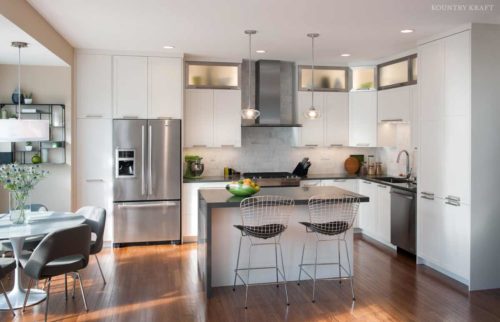
Looking for Space-Saving Small Kitchen Design Ideas?
Look no further! Designing a beautiful kitchen in a smaller footprint starts with smart planning, and that’s where space-saving small kitchen design really shines. By combining custom cabinetry with thoughtful details, you can turn even a compact room into a highly functional, welcoming hub. The projects below highlight different ways some of our favorite designers make every inch count while still delivering the style, warmth, and personality homeowners love.
Our Favorite Space-Saving Small Kitchen Designs
Custom kitchen cabinetry allows for small kitchens to take advantage of every square inch. These design highlights show how clever storage, thoughtful lighting, and tailored layouts can make compact spaces feel bigger, brighter, and easier to use. Together, they prove that with the right details, a small kitchen can live like a much larger one.
A Phoenixville Kitchen Built for Storage
This Phoenixville, PA kitchen proves that a compact footprint can still feel open and organized. Thoughtful storage, smart lighting, and tailored cabinetry work together so every inch earns its keep while remaining calm and uncluttered. It’s a great example of how small kitchen organization ideas can make the room feel bigger, brighter, and more intuitive.
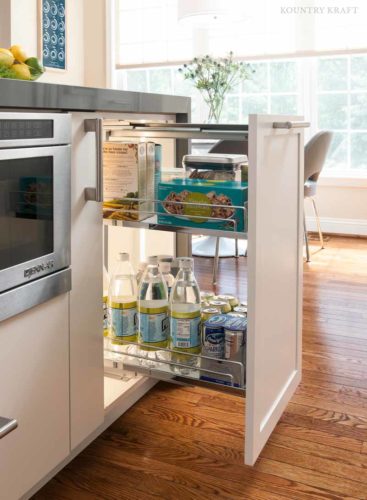
Custom Pull-Out Systems for Cabinetry
Custom pull-out storage is the quiet hero of this design. From the pull-out spice racks flanking the range to the slim filler pull-outs for oils and baking essentials, everything has a dedicated, easy-to-reach spot. The unique corner pull-out system turns what used to be “lost” dead space into fully accessible storage, while base and tall cabinet pull-outs keep items visible and organized. No more kneeling on the floor to dig through dark, deep cabinets—everything glides out to meet you.
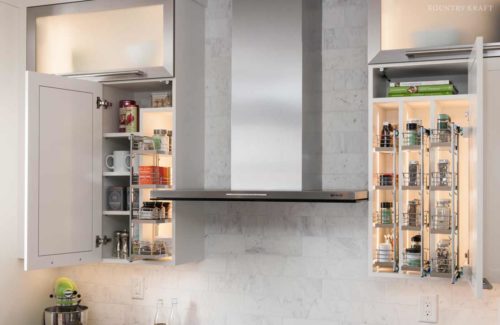
In-Cabinet LED Strip Lighting
In-cabinet LED strip lighting takes these storage solutions a step further. Integrated along shelves and inside pull-outs, the lighting makes it simple to spot ingredients, snacks, and cleaning supplies at a glance. It also adds a warm, custom glow that highlights the cabinetry details without the harshness of overhead-only lighting. Functionally, it cuts down on hunting and guessing; visually, it gives the kitchen a polished, high-end feel.
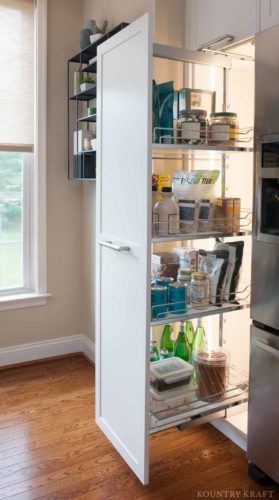
Floor-to-Ceiling Cabinet Towers
Floor-to-ceiling cabinet towers maximize every vertical inch while making the room feel taller and more expansive. Flanking each end of the kitchen, these towers draw the eye upward to create a sense of height, while closed storage helps keep everyday clutter out of sight. The result is a kitchen that stores more than you’d expect for its size yet still feels open and airy. It’s proof that when storage, lighting, and cabinet layout are planned together, even a smaller kitchen can live large.
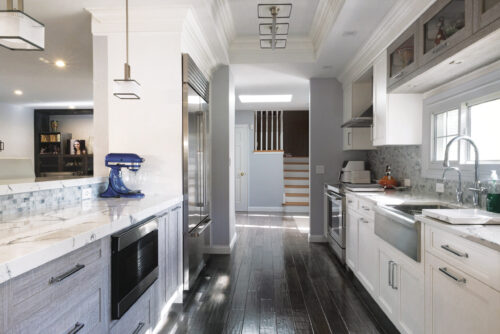
A Cool-Toned Custom Kitchen by Jeff Boico
This Great Neck, NY kitchen shows how a luxury space can still work beautifully within a modest footprint. Cool silver, blue, and gray tones foster a sense of tranquility, while every storage decision is carefully planned. The result is a kitchen that looks like a sanctuary yet functions like a hardworking small kitchen design.

Microwave Housed in Custom Base Cabinetry
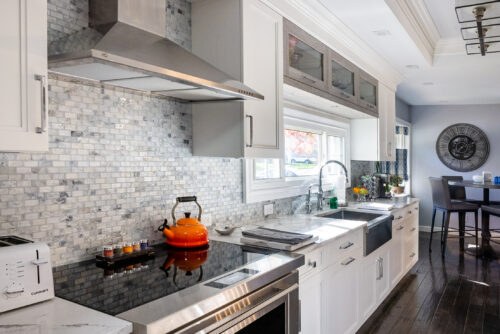
Housing the microwave in a custom base cabinet is a smart move for both form and function. By tucking it neatly below the counter, the design keeps eye-level space open for a striking range hood feature instead of a bulky appliance. Countertops stay clear for prep and serving, sightlines are cleaner, and everyday tasks feel more streamlined because everything has a defined, built-in place.
Extra Storage above the Sink Window
Above the sink, a row of horizontal cabinets adds storage without making the window wall feel heavy. Their soft gray finish contrasts the surrounding white cabinetry, so the window still feels framed rather than boxed in. At the same time, that gray tone echoes the base cabinets on the opposite wall, visually tying the room together and reinforcing the cool, cohesive palette. These space-saving ideas support daily routines while maintaining the kitchen’s serene, high-end look.
A Country Kitchen Design by Martha Gargano, AMS Kitchens & Baths
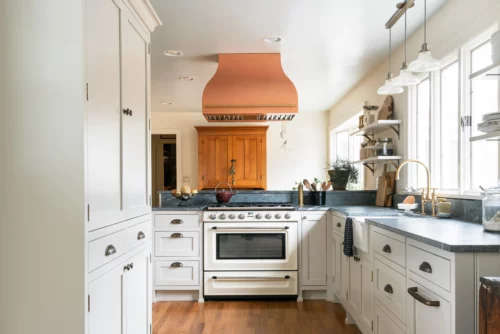
This Branford, CT kitchen feels like stepping into a storybook cottage, but it’s also quietly clever about space. Classic English countryside details, warm finishes, and vintage-inspired appliances are paired with layout choices that keep the room feeling open, cheerful, and highly functional. It’s a small kitchen that proves charm and practicality can share the same footprint.
Open Shelving
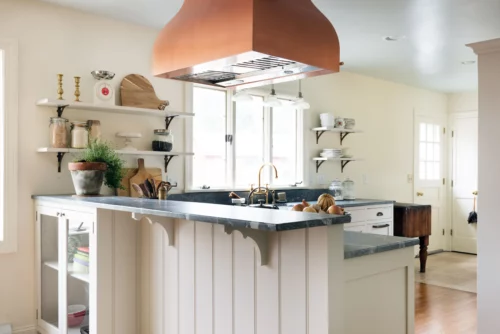
Open shelving takes the place of traditional upper cabinets, instantly lightening the room. Instead of a wall of solid doors, the shelves create breathing space and a wider, more relaxed feel around the range and sink. Everyday dishes and favorite pieces become part of the decor, adding texture and personality while keeping everything within easy reach.
Secondary Prep and Storage Space
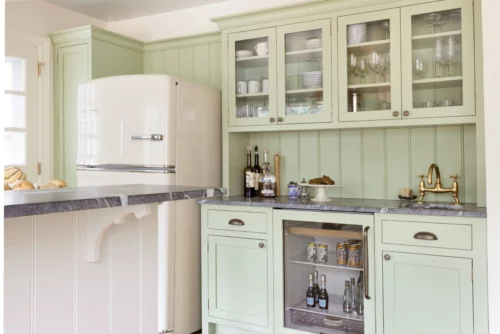
Opposite the main kitchen work area is a hutch-like wet bar that offers extra prep space and ensures the design has enough hidden storage to be practical instead of just pretty. With closed cabinets both above and below, it provides plenty of space to tuck away glassware, bottles, and entertaining essentials, plus a central counter area for mixing drinks or setting out snacks. Because it feels more like a furniture piece than a standard run of cabinets, it reinforces the cozy English cottage vibe while quietly carrying a big share of the kitchen’s storage needs.
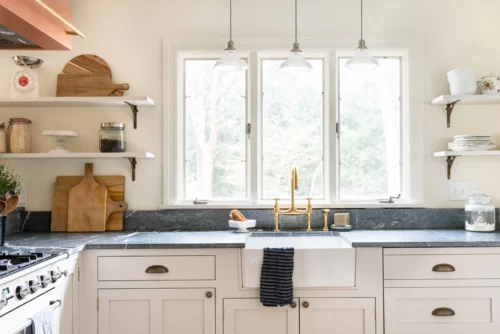
An Abundance of Natural Light
Generous windows flood the kitchen with natural light, which is one of the easiest ways to make a smaller space feel bigger. Sunlight plays off the inset cabinetry, soapstone counters, and cream-toned appliances, softening every surface and blurring the boundaries of the room. The result is a kitchen that feels bright, open, and welcoming at any time of day, even though its footprint stays comfortably compact.
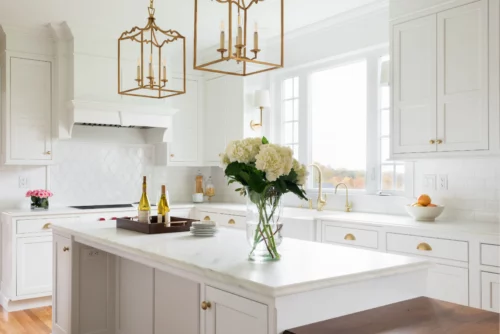
A Light & Bright White Kitchen by Martha Gargano, AMS Kitchens & Baths
This New England kitchen shows how smart storage can still look classic and timeless. A custom center island and generous wall cabinetry pack in hidden storage so everything has a place, yet the nuanced all-white design keeps the space feeling light and bright. It’s a layout that quietly maximizes every inch, proving you don’t need a huge footprint to enjoy a truly luxurious kitchen.

Custom Island Built for Storage
At the center of the room, a custom island acts like a beautifully tailored storage hub. Deep drawers, hidden cabinets, and dedicated zones for cookware and serving pieces keep everyday essentials close at hand without crowding the perimeter walls. The island also doubles as a landing zone for prep and plating, so you gain extra work surface and storage in the same footprint—ideal when square footage is at a premium.
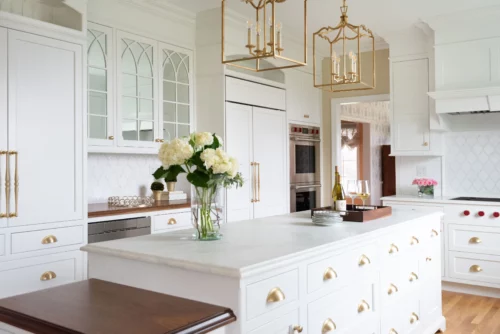
Closed Storage
Around the room, generous wall cabinetry makes the most of every vertical inch. Because everything is finished in clean, bright white, the abundance of cabinets feels airy rather than heavy, almost blending into the architecture instead of dominating it. This allows for ample closed storage to hide small appliances, pantry items, and entertaining pieces, while select glass-front doors showcase special items and add a sense of depth.
Unique Small Kitchen Storage Solutions
These space-saving small kitchen design ideas from some of our favorite designers prove that beautiful kitchens don’t have to be big to work beautifully. Each project reflects a collaboration between homeowner, designer, and Kountry Kraft craftsmanship, resulting in compact kitchens that feel organized, inviting, and tailored to the way people really live.
Looking for more space-saving inspiration? Explore the craftsmanship, creativity, and custom details behind every Kountry Kraft project. Follow us on Facebook and Instagram for ongoing design highlights, storage solutions, and real-life small kitchen transformations from our clients and designers.
Partner With Kountry Kraft For Custom Cabinetry
For over six decades, Kountry Kraft has partnered with designers across the United States to craft custom cabinetry that makes the most of every square inch. These partnerships ensure that each space-saving small kitchen design reflects not only superior craftsmanship, but also the thoughtful planning and personalized guidance our clients deserve.
Simply use our Find a Dealer tool to connect with one of our trusted designers and begin your project with confidence. Each authorized Kountry Kraft dealer has the expertise to guide you through every step—from space planning and storage strategy to selecting finishes and custom cabinet configurations that fit your home. Whether you’re planning a full renovation or looking for smart ways to rework an existing footprint, our network of professionals will help you capture more function from your kitchen without sacrificing style.
Conclusion
We’re proud to showcase these space-saving small kitchen design ideas that highlight the creativity and expertise of the talented designers we collaborate with. Each project proves that with thoughtful storage, custom cabinetry, and careful layout decisions, even a modest kitchen can feel spacious, organized, and truly one of a kind. When you’re ready to rethink your own kitchen footprint, contact one of our design experts to discover how Kountry Kraft can help turn your small kitchen into a space that lives larger every day.
FAQ: Space-Saving Small Kitchen Design
How can I maximize storage in a small kitchen without making it feel cramped?
Maximize storage in a small kitchen by hiding more behind doors and drawers while keeping counters as clear as possible. Use interior organizers and pull-outs so storage works in layers instead of piles.
Inside your cabinets, think pull-out trays, vertical dividers, spice pull-outs, and corner solutions so everything has a defined spot and slides out to you. On the outside, limit what lives on the countertop so the room feels open and calm. The combination of hard-working interiors and visually quiet surfaces lets a small kitchen store a lot without looking crowded.
What is the best layout for a space-saving small kitchen design?
The best layout for a space-saving small kitchen design keeps the main work zone compact and traffic out of the cook’s way. Straight-line, galley, and small L-shaped layouts are often the most efficient.
In practice, that means your sink, range, and refrigerator should be grouped in a tidy triangle or line, with prep space directly beside at least one of them. Once that flow is set, custom cabinetry can fill in leftover corners and walls with storage tailored to how you cook, so every inch works without creating awkward dead zones.
Which cabinets and storage accessories work best for small kitchens?
The best cabinets and accessories for small kitchens are the ones that move: pull-outs, deep drawers, corner systems, and narrow filler units. These features turn tight or awkward spaces into organized, easy-access storage.
Spice pull-outs, tray dividers, under-sink organizers, and deep drawers for pots and pans help you store items vertically and in layers instead of stacking everything on a single shelf. Corner pull-out systems reclaim space that would otherwise be wasted. When these elements are built into custom cabinetry, you can size them precisely to your cookware and pantry items so no space is underused.
How do I use vertical space effectively in a small kitchen?
Use vertical space in a small kitchen by treating your walls as full-height storage zones. Tall cabinets, stacked uppers, and pantry towers let you store more without expanding the footprint.
Floor-to-ceiling cabinetry can hold bulk items, seasonal pieces, and small appliances that would clutter the counter, while open shelves or lighter-feeling uppers near windows keep the room from feeling boxed in. This mix of tall, closed storage and a few visually lighter elements means you gain capacity up high while the lower half of the room remains open and comfortable to move through.
What colors and finishes make a small kitchen look larger and less cluttered?
Light, low-contrast colors and cohesive finishes make a small kitchen feel larger and less cluttered. Soft whites, pale grays, and muted neutrals help the eye read the room as one continuous space.
When cabinetry, walls, and even larger appliances share similar tones, the boundaries between them blur and the room feels more expansive. Gentle sheens can bounce light around, while a few carefully placed accents—like a slightly deeper island or subtle hardware contrast—add character without visually chopping the space into pieces. The goal is harmony: fewer competing finishes and more smooth transitions.
Can I have a kitchen island in a small kitchen, and if so, what type should I choose?
Yes, you can often have an island in a small kitchen, but it must be compact and highly functional. Choose a narrower island with built-in storage and generous walkways around it.
Look for an island that offers deep drawers, shelves, or cabinets on at least one side. Make sure there’s enough clearance for doors to open and people to pass comfortably. A well-planned small island becomes a multi-purpose zone for prep, serving, and casual meals, adding function without overwhelming the room.
How should I plan lighting in a small kitchen so it feels brighter and more open?
Plan lighting in layers: general, task, and accent. A mix of ceiling fixtures, under-cabinet lighting, and a few decorative pieces will make a small kitchen feel brighter and more open.
Recessed or low-profile fixtures handle overall illumination, while under-cabinet and in-cabinet lights clear shadows from counters and shelves where you actually work. A pendant or small chandelier can add personality and draw the eye upward, enhancing the feeling of height. Keep window treatments simple so natural light can flood the space and work together with your fixtures to visually “stretch” the room.
Where should I put major appliances in a small kitchen to save space and keep a good workflow?
Place major appliances so they support a tight work zone and don’t interrupt traffic. Anchor the layout with the sink and range, and position the refrigerator where it’s easy to reach but out of the main path.
Panel-ready or counter-depth refrigeration can help reduce bulk and keep sightlines clean. Microwaves and wall ovens often work best built into tall or base cabinets, freeing up counter space and keeping the range wall from feeling crowded. When each appliance has a logical zone and doesn’t block doorways or prep areas, the kitchen feels smoother to use and surprisingly more spacious.
What are some smart pantry and cabinet organization ideas specifically for space-saving small kitchens?
Smart pantry and cabinet organization for space-saving small kitchens focuses on visibility and zoning. Use pull-outs, labeled bins, and dividers so everything has a place and nothing gets lost at the back.
Pull-out pantry units and roll-out trays let you see every item without digging. Turntables in corners, tiered risers for cans, and vertical dividers for baking sheets and cutting boards keep categories neat and easy to grab. Group everyday essentials near prep areas and store rarely used items higher or deeper. This kind of thoughtful organization lets even a tiny pantry function like a much larger one.
How much does it typically cost to redesign a small kitchen with space-saving features, and what upgrades give the best value?
The cost to redesign a small kitchen with space-saving features varies widely, but the best value usually comes from investing in cabinetry, layout, and lighting rather than purely cosmetic upgrades. Focus first on storage, workflow, and brightness.
Custom or semi-custom cabinets with integrated storage accessories, a refined appliance plan, and improved lighting can transform how the space works day to day. These changes often matter more to homeowners and buyers than decorative tweaks alone. When budgets are tight, prioritize fixes to functional pain points—like lack of storage, poor traffic flow, or dark corners—so every dollar directly improves how the kitchen lives.
Bathroom Design Ideas from Our Favorite Designers
By / December 1, 2025 November 20, 2025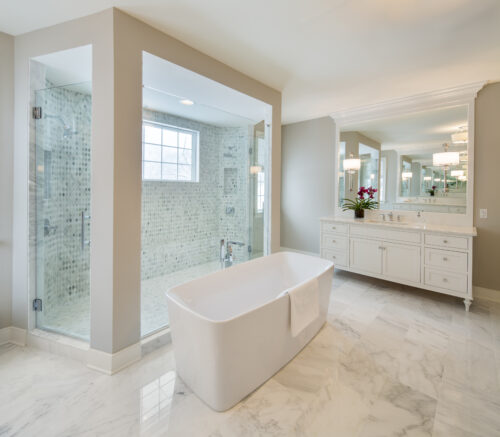
Bathroom Design Ideas for Your Next Remodel
Sourcing bathroom design ideas is the first step towards crafting a spa-like retreat right in the comfort of your own home. Today, we’re sharing unique bathroom renovation ideas from three collaborations with some of our favorite designers—each one showcasing how cabinetry, materials, and layout choices work together. Whether you’re collecting trendy bathroom remodel ideas or hunting for clever small bathroom ideas, these projects offer a clear path from inspiration to installation.
Bathroom Design Ideas from Our Favorite Designers
Whether you’re drawn to a luxurious mix of layered marbles, the fresh lift of light-blue tile, or the airy look of a rift-cut oak floating vanity, these bathroom design highlights show how thoughtful planning and custom cabinetry can turn everyday baths into truly exceptional spaces.
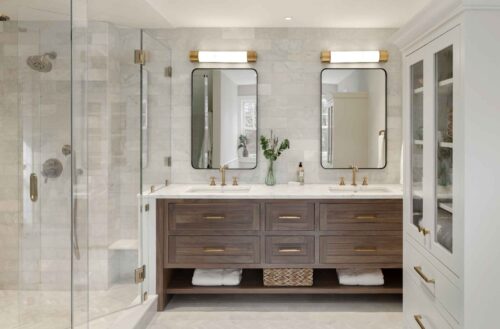
A Spa-Like Bath by PKsurroundings
This spa-like bath near Exeter, NH leans into natural stone, warm wood, and a light palette to create a true retreat. Every move—material, metal, and layout—was chosen to feel luxurious yet relaxed, with cabinetry anchoring the room and tying the details into a single, serene space.
Mixing Stained and Painted Wood Finishes
The straight-grained walnut vanity finished in a warm, dark stain anchors the bathroom design, introducing tactile contrast against cool stone. A softly painted tower cabinet balances that warmth with lift and light, increasing capacity without visual weight. Careful control of reveals, door profiles, and sheen unites the pieces so they read as a complementary pair despite their different finishes. Interior fittings—divided drawers, integrated outlets, and linen-height compartments—translate daily routines into orderly, concealed storage, keeping counters clear and the marble uninterrupted.
All Brass Accents
Brass has a way of unifying a room without overwhelming it. In this project, the same finish appears on cabinet hardware, faucets, shower trim, and lighting, creating continuity across wet and dry zones. The finish adds a sun-warmed glow against the various types of marble used throughout the space, while at the same time delivering a subtle, jewelry-like highlight against the walnut vanity. Selecting one brass family and repeating it ensures consistent patina and simplifies maintenance, while the tone itself softens the stone’s coolness for an overall feeling of relaxed luxury.
Incorporating Multiple Types of Marble
Three marbles—Sea Pearl, Carrara, and Thassos—work together to add depth and quiet variation. A large-format subway tile behind the vanity keeps the backdrop calm and clean. In the shower and behind the freestanding tub, a hexagonal mosaic creates a quiet feature wall that frames the fixtures. Underfoot, a smaller herringbone tile that’s carried continuously through the shower and main floor adds just enough pattern to guide the eye without breaking up the space. The mix reads collected and high-end—perfect for a luxurious home spa.
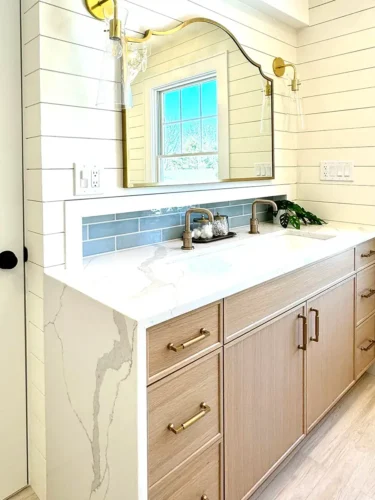
A Custom Bath by Ruchi Bhardwaj, By Design Kitchen and Bath
Color leads the story in this Kingsland, NJ custom bath. Light blue tile introduces a fresh, uplifting tone, while refined details—an arched niche, repeated forms, and crisp glass—keep the room feeling ordered, balanced, and bright.
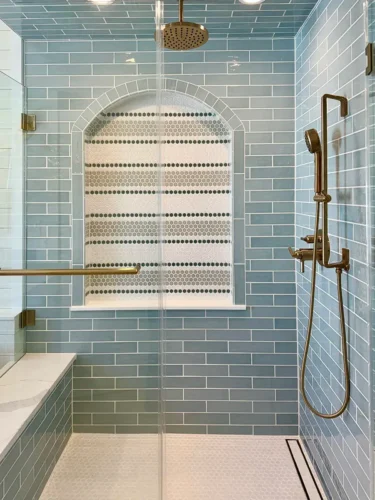
Blue Tiled Shower with Matching Vanity Wall Accent
Light blue subway tile adds a calm, refreshing note to the bathroom design, ifusing color in a way that feels permanent and polished. Using the same tile behind the vanity carries that tone across the room, creating a clear visual link between zones. The consistent tile and grout lines keep the look tidy, while the soft blue lifts the palette, highlights metal accents, and gives the vanity wall a subtle focal point without overwhelming the eye.
Accent Shower Niche
Storage should be as beautiful as it is practical. Here, a large, arched shower niche finished with hexagonal penny tile creates a clean contrast against the surrounding light blue subway tile. The arched top softens all the straight lines in the shower, while the repeated arch on the built-in shelves next to it carries the motif across the room. The result is storage that looks intentional while remaining functional.
Frameless Glass Shower
A frameless glass shower enclosure amplifies the room’s visual width by removing heavy frames and visual breaks, allowing uninterrupted sightlines across the bath. With minimal hardware and low-profile clips, the glass recedes so the shower’s tilework becomes the star. This is a high-impact move for small bathroom ideas: the same footprint reads larger, finishes carry seamlessly from wall to wall, and maintenance stays simple with fewer metal joints and ledges to clean.
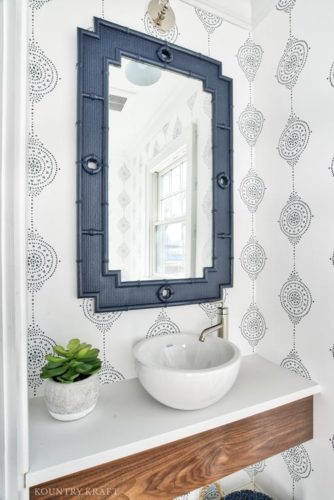
A Half Bath by Stonington Cabinetry & Designs
This compact half bath in Chatham, NJ proves that minimal doesn’t mean plain. A floating form, natural wood, and a subtle wallpaper motif deliver a clean, modern look with just enough warmth and movement to feel inviting.
Floating Vanity
A floating wall-mounted vanity lightens and opens the space, reading as a crisp horizontal line with open floor extending beneath it. That uninterrupted flooring expands the visual footprint—especially helpful in compact baths like this powder room—while the wall behind becomes a clean backdrop for fixtures and finishes. The result is calm, modern, and airy, with clear sightlines and an easy, gallery-like feel.
Natural Finishes
The rift-cut white oak vanity, finished in a low sheen, brings quiet warmth and a refined linear grain that softens all the crisp lines in the room. The wood’s tone balances white walls and stone, adding depth without heaviness, while the low sheen finish diffuses light for a calm, tactile feel. As an anchor piece for the room, it ties the metal, stone, and brick elements into one cohesive palette and keeps the composition timeless.
Minimalist Wallpaper
Pattern belongs in bathrooms when it’s scaled and placed thoughtfully. In this project, a subtle white wallpaper with a refined vertical blue motif adds movement that plays well with straight-grained oak and a herringbone floor. When using wallpaper in bathrooms, choose moisture-resistant papers and avoid direct splash zones.
Custom Cabinetry—the Key to Unlocking Your Bathroom Design Ideas
Great bathrooms start with a plan anchored in how you live. That’s why our trusted designers begin each project with storage and workflow, then layer in materials and finishes. Cabinet door style, reveal choice, interior fittings, and finish sheen are the quiet decisions that make everything else—tile, lighting, and plumbing—feel like one story. When cabinetry is dialed in, your bathroom renovation moves smoothly and the finished space looks intentional from every angle.
Want more bathroom design ideas? Explore the craftsmanship and custom details behind every Kountry Kraft project. Follow us on Facebook and Instagram for fresh inspiration, project spotlights, and behind-the-scenes highlights.
Ready to Start Your Own Project?
For more than six decades, Kountry Kraft has worked with designers across the country to create custom cabinetry that turns bathroom design ideas into reality. Our partnerships ensure you receive both exceptional craftsmanship and the guidance needed to make confident decisions from day one.
Use our Find a Dealer tool to connect with a trusted design partner and start your project with ease of mind. Authorized Kountry Kraft dealers can help you plan the layout, select finishes and hardware, and specify cabinetry that fits your space and lifestyle. Whether you’re planning a full bathroom renovation or exploring unique, modern touches for a refresh, our network will help bring your vision to life with precision and care.
Conclusion
Across these three baths, a clear pattern emerges: thoughtful cabinetry sets the tone, materials do the talking, and restrained details make everyday life easier. Whether you gravitate toward warm wood and marble, color-forward tile, or minimalist lines, the right mix turns good bathroom design ideas into a room that looks intentional from every angle and works beautifully day after day. When you’re ready to start your own bathroom renovation, contact one of our design experts today to learn how we can bring your bathroom design ideas to life!
FAQ: Bathroom Design Ideas
What bathroom design ideas are trending right now?
Natural materials, soft color palettes, brass or black metals, and clean-lined fixtures lead the way. Frameless glass, arched details, and subtle patterns add interest without clutter.
These trends favor calm, low-contrast backgrounds paired with one consistent metal finish. Texture shows up in small ways (niches, wallpaper, fluted fronts), while lighting mixes ambient, task, and accent. Storage is integrated: tower cabinets, drawer organizers, and hidden outlets keep counters clear.
How do I choose between natural wood and painted cabinetry?
Use wood to add warmth and character; choose paint to keep things bright and crisp. Many successful baths combine both.
Wood grain grounds the room and pairs well with stone. Painted elements—often in light neutrals—lift the palette and help larger storage feel less bulky. Match door profiles, reveals, and sheen so the mix reads intentional. Consider durability: specify moisture-resistant construction and a tough topcoat for either finish.
Are brass fixtures a good idea for a bathroom renovation?
Yes—brass is timeless, versatile, and brings gentle warmth to tile and stone. The key is consistency.
Select one brass family (polished, satin, or unlacquered) and repeat it across faucets, hardware, shower trim, and lighting. This creates a cohesive look and simplifies maintenance. If you prefer low-gloss, choose satin; if you like patina, unlacquered will age naturally. Keep mixed metals to strategic accents so brass remains the throughline.
How can I mix multiple stone or tile types without the room feeling busy?
Vary scale and role: one surface as the quiet field, one as an accent, and one underfoot. Keep undertones compatible.
Large formats make calm backdrops, while mosaics or patterned pieces define focal areas like niches or feature walls. Repeat a color thread across all materials to unify them. Limit grout colors and align joints where surfaces meet for a tidy read. If in doubt, edit—three coordinated materials usually feel richer than five competing ones.
Should I bring color into the bathroom through tile or paint?
For a durable, built-in look, use tile; for easy future changes, use paint. Many projects do both.
Color in tile reads architectural and won’t scuff like painted walls. Soft blues, greens, or muted earth tones add personality while staying calm. If you prefer flexibility, keep tile neutral and use paint, textiles, and art for color. Whatever the approach, choose a grout that supports—rather than fights—the color.
What’s the design impact of a frameless glass shower?
It makes the room feel larger by removing heavy frames and visual breaks. Materials become the focal point.
Clear panels, minimal clips, and low thresholds extend sightlines, which is especially helpful in compact baths. The effect is cleaner and brighter, and tile patterns read continuously. For upkeep, consider glass with easy-clean coatings and plan squeegee hooks or towel placement to keep maintenance painless.
How do I make a small bathroom feel bigger without moving walls?
Prioritize uninterrupted lines and a restrained palette. Floating pieces, continuous flooring, and large mirrors help.
Carry one floor tile into the shower, choose a single metal finish, and keep wall colors light. Use vertical elements—tall mirrors, slim towers—to draw the eye up. Reduce visual clutter with integrated storage and ensure layered lighting removes shadows at corners and under cabinets.
Are floating vanities practical or just aesthetic?
They are both. Floating vanities visually lighten the room and simplify floor cleaning.
Confirm wall blocking, coordinate plumbing heights, and finish the underside to match the face. Pair with appropriately sized sinks and consider under-vanity lighting for a gentle night glow. If additional storage is needed, complement with a medicine cabinet or a slim tower rather than overloading the vanity line.
Where does wallpaper work best in a bathroom?
Away from direct splash, at a scale that won’t overwhelm. Powder rooms and walls above wainscotting are ideal.
Choose moisture-resistant or vinyl-coated papers and seal edges carefully. Keep patterns balanced with cabinetry rhythms—align repeats with mirrors and sconces. In full baths, place paper opposite showers or tubs; in powders, feel free to go bolder since humidity is lower. Pair with tile or millwork bases for durability.
How do I mix warm and cool tones without clashing?
Pick one warm anchor (wood or brass) and one cool anchor (stone or tile), then connect them with quiet neutrals.
Repeat each anchor at least twice—for example, brass in lighting and hardware; cool stone on walls and counters—so the pairing feels intentional. Keep sheens compatible and avoid introducing many accent colors. The result is balanced, adaptable, and easy to update with towels and art over time.
Kitchen Design Ideas from Our Favorite Designers
By / November 1, 2025 October 17, 2025
Kitchen Design Ideas for Your Next Remodel
Searching for kitchen design ideas should always be your first step in a renovation so you know all of the different things that are possible with modern cabinetry and design. At Kountry Kraft, we’re fortunate to collaborate with incredibly talented designers across the country, each bringing a unique perspective to cabinetry, layout, and craftsmanship. From timeless wood finishes to modern range hoods, the projects below showcase unique modern kitchen design ideas that can inspire your own trendy kitchen remodel ideas.
Kitchen Design Ideas from Our Favorite Designers
Whether you love the charm of a classic butler’s pantry, the warmth of natural wood, or the contrast of matte black cabinetry, these design highlights demonstrate how thoughtful planning and custom cabinetry can transform everyday spaces into extraordinary kitchens.
A Home Designed for Entertaining by Shawn Preis, Kountry Kraft
Few spaces illustrate the art of entertaining as beautifully as this custom kitchen and butler’s pantry in Villanova, Pennsylvania. Designed by Kountry Kraft’s own Shawn Preis, this project balances timeless style with everyday performance.

Butler’s Pantry with Built-In Coffee Station
Homeowners searching for butler’s pantry ideas or built-in coffee station inspiration will find plenty to love here. The butler’s pantry serves as a private hub for beverage prep, outfitted with Benjamin Moore Grappa cabinetry, glass-front uppers, and a Miele built-in coffee machine. This layout keeps the main kitchen clutter-free while giving guests a luxurious way to enjoy espresso or cappuccino. It’s a perfect example of how luxury pantry design can merge form and function in one elegant space.
Layered Lighting and Finishes to Define Connected Spaces
Homeowners searching for kitchen lighting ideas or kitchen and pantry design inspiration will appreciate how this Villanova project uses light and finish to establish atmosphere. The main kitchen’s Benjamin Moore White Dove cabinetry reflects natural and recessed light for a soft, welcoming glow, while the adjoining butler’s pantry in Benjamin Moore Grappa offers a moodier tone illuminated by glass-front uppers and mirrored backsplash. This approach shows how strategic lighting and finish selection can distinguish adjoining spaces—bright and airy for cooking, rich and intimate for service—while maintaining a cohesive kitchen renovation aesthetic that feels curated and connected.

Large Kitchen Island with Butcher Block and Prep Sink
If you’re exploring large kitchen island ideas for your remodel, this space offers a masterclass in multifunctional design. The oversized island features a butcher block countertop, integrated prep sink, and ample storage drawers. These details transform the island into a true workhorse—ideal for everyday meals, party prep, and social gatherings. For homeowners searching kitchen island with prep sink or butcher block countertop ideas, this feature proves that practicality and sophistication can blend seamlessly in one centerpiece.
A Sophisticated Kitchen Remodel by Pksurroundings

In this kitchen renovation near Exeter, New Hampshire, PKsurroundings designed a space that feels rooted in tradition but updated for today’s lifestyle. The contrast of warm wood tones, layered finishes, and architectural details offers a wealth of timeless kitchen remodel ideas to draw inspiration from.
Two-Toned Custom Wood Cabinets
One of the most enduring kitchen design ideas homeowners search for is two-toned kitchen cabinets—a look that adds contrast and depth while showcasing craftsmanship. In this design, custom wood cabinetry takes center stage with a refined pairing: painted Hard Maple uppers in Valley Forge Tan and Quarter Sawn White Oak bases finished in a deep, custom stain. This blend of painted and stained wood creates visual balance—light tones that open the room above, grounded by the richness of oak below. For those exploring custom wood kitchen cabinets or white oak kitchen cabinets, this design shows how mixing materials and finishes brings warmth, texture, and timeless appeal to a modern kitchen renovation.

Brass Range Hood with Marble Backsplash as a Focal Point
For homeowners exploring modern range hood ideas or brass kitchen accents, this Exeter kitchen offers a perfect example of how to turn function into art. A custom brass vent hood, ribbed and finished with an artisanal patina, crowns a Wolf stainless steel range and sets a luxurious tone. Behind it, a marble backsplash with soft veining extends to the ceiling, adding subtle movement and timeless elegance. Together, these elements create a stunning focal wall that blends performance and sophistication—proof that a well-designed cooking zone can be as visually striking as it is practical in any kitchen renovation.

Brick Accent Wall and Herringbone Wood Floor
Architectural texture takes center stage here. An exposed brick wall adds heritage and warmth, while herringbone-patterned wood flooring introduces rhythm and refinement. Homeowners searching for brick kitchen wall ideas, herringbone kitchen floor designs, or rustic modern kitchen ideas can see how these materials create tactile layers that balance modern cabinetry with historic charm. These surfaces make the kitchen feel both lived-in and luxuriously detailed.
A Contemporary Custom Kitchen by Cabry Design

Designed by Cabry Design, this modern kitchen in Knoxville, Tennessee captures everything homeowners want in a unique modern kitchen design: natural light, smart storage, and effortless style. Crafted with Kountry Kraft’s custom cabinetry, it’s a study in how clean lines and warm materials can coexist beautifully.
Rift Cut White Oak and Matte Black Cabinets
When it comes to two-toned kitchen cabinets, few combinations feel as enduring as this one. The designer paired Rift Cut White Oak cabinetry with a Benjamin Moore Black Panther range hood and accents to create visual balance and contemporary appeal. For anyone exploring modern black kitchen ideas or rift cut white oak cabinets, this palette offers a sophisticated balance of natural and industrial elements that never feels too trendy.

Hidden Storage and Integrated Appliances
A hallmark of modern design is discretion, and this space definitely delivers hidden kitchen storage ideas that make daily life simpler. Features like an integrated microwave drawer, recessed paper towel holder, and built-in beverage bar keep clutter out of sight while maintaining accessibility. For homeowners researching integrated kitchen appliances or modern kitchen design ideas, this project demonstrates how seamless functionality defines the next generation of kitchen layouts.

Contemporary Range Hood and Vertical Design Accents
The bold, black range hood with vertical paneling commands attention without overwhelming the space. Its geometry mirrors the tall cabinetry and black-framed windows, reinforcing the kitchen’s architectural height. Homeowners looking for modern range hood ideas, black range hood designs, or ways to enhance vertical kitchen design will see how subtle alignment of elements can visually expand a room while maintaining harmony.
Inspired Kitchen Design Ideas for Every Home
These kitchen design ideas from our favorite designers prove that beautiful kitchens come in many forms. Each project reflects a collaboration between homeowner, designer, and Kountry Kraft craftsmanship, resulting in kitchens that are as functional as they are breathtaking.
Looking for more kitchen design ideas? Experience the craftsmanship, creativity, and custom details behind every Kountry Kraft project. Follow us on Facebook, Instagram, and Houzz for ongoing design highlights and stories from our clients and designers.
Partner with Kountry Kraft for Custom Cabinetry
For over six decades, Kountry Kraft has partnered with designers across the United States to craft custom cabinetry that turns kitchen design ideas into reality. These partnerships ensure that every Kountry Kraft kitchen reflects not just superior craftsmanship, but also the personalized guidance our clients deserve.
Simply use our Find a Dealer tool to connect with one of our trusted designers and begin your project with confidence. Each authorized Kountry Kraft dealer has the expertise to guide you through every step—from inspiration and planning to selecting the perfect finishes and custom cabinetry styles. Whether you’re dreaming of a full kitchen renovation or exploring unique modern kitchen design ideas for your home, our network of professionals will help bring your vision to life with precision, craftsmanship, and care.
Conclusion
We’re proud to showcase these kitchen design ideas that highlight the creativity and expertise of the talented designers collaborate with. Each project proves that thoughtful design and custom craftsmanship can transform any space into a kitchen that’s both beautiful and built for real life. When you’re ready to start your own kitchen renovation, contact one of our design experts today to learn how we can bring your kitchen design ideas to life!
FAQ: Kitchen Design Ideas
What are the best kitchen design ideas for small spaces?
The best kitchen design ideas for small spaces focus on maximizing storage and light. Choose tall cabinets, reflective finishes, and compact, multi-purpose zones that create flow and openness.
To enhance both form and function, extend cabinetry to the ceiling, add under-cabinet lighting, and use lighter colors like white or cream to expand the feel of the room. Smart storage accessories—pull-outs, corner carousels, and drawer dividers—keep every inch efficient without sacrificing style.
How do I budget for a kitchen renovation?
Plan your kitchen renovation budget around priorities. Custom cabinetry typically accounts for about half of total costs, followed by appliances, counters, and lighting.
To set realistic expectations, assign 40–50% for cabinetry, 15–20% for appliances, and 10–15% for countertops. Keep a 10–15% contingency for surprises. Partnering with a designer helps align spending with long-term value, ensuring your investment balances beauty, quality, and practicality.
What is the typical timeline for a full kitchen remodel?
A full kitchen remodel usually takes 8–16 weeks after design approval. Timelines vary depending on project scope, materials, and custom cabinetry lead times.
The process includes design and measurement, cabinet production, demolition, installation, and finishing work. Custom cabinetry, like Kountry Kraft’s, adds precision and personalization—resulting in a longer fabrication phase but an outcome tailored to your home’s architecture and lifestyle.
Can I mix painted and stained wood cabinets?
Yes—mixing painted and stained wood cabinets adds character and depth. Light uppers and darker bases are a timeless, two-tone design choice.
For example, painted maple uppers brighten the space, while stained oak bases introduce warmth and contrast. The look pairs beautifully in open-concept kitchens and can highlight custom craftsmanship. Two-tone cabinetry remains one of today’s most requested trendy kitchen remodel ideas because it offers versatility and visual dimension.
What lighting strategies work best in a kitchen?
Layered lighting creates flexibility and ambiance in any kitchen. Combine ambient, task, and accent fixtures for balanced illumination.
Recessed lights brighten the overall space, while pendants highlight islands and under-cabinet lights support meal prep. Add accent lighting inside glass cabinets or under toe kicks for depth. A layered approach not only improves functionality but also highlights finishes and architectural details—key to modern kitchen design ideas.
How do I create a focal point in my kitchen?
Every great kitchen design includes one focal point that anchors the room. This could be a statement range hood, bold backsplash, or standout island.
Choose one defining feature and let the surrounding cabinetry and finishes enhance it. For example, a brass or black metal hood framed by calm cabinetry creates instant balance. A clear focal point provides visual direction and sophistication in any kitchen renovation.
What should I prioritize first in my kitchen renovation?
Always begin with layout and workflow before selecting colors or materials. A functional foundation ensures long-term satisfaction.
Plan how you cook, entertain, and move through the space. Once the layout works, focus on cabinetry design, storage, lighting, and appliances. Finishes and décor come last. Following this sequence streamlines the process, helping every choice support your home’s function and aesthetics.
How can I include hidden storage and integrated appliances in my kitchen design?
Hidden storage and integrated appliances keep a kitchen organized and sleek. Custom cabinetry makes these features easy to achieve.
Use pull-out spice racks, lift-up mixer shelves, and appliance garages for tidy convenience. Panel-ready dishwashers and refrigerators blend seamlessly with cabinet fronts. Even small touches, like recessed paper towel holders or built-in microwave drawers, help maintain a clutter-free, contemporary look—perfect for a unique modern kitchen design.
Which materials are most durable for cabinets and countertops?
For durability, choose hardwood cabinets and low-maintenance countertops. Maple and white oak are top choices for cabinetry, while quartz offers lasting strength and style.
Hardwoods provide structure and longevity, and painted maple surfaces deliver smooth, refined finishes. Quartz counters resist stains and scratches better than most natural stones, making them ideal for busy homes. Durable materials ensure your kitchen renovation looks beautiful for decades.
How do I find a kitchen designer or contractor I can trust?
Use reputable resources like Kountry Kraft’s Find a Dealer tool to connect with qualified designers. Experience and communication matter most.
Review portfolios, ask for references, and confirm credentials before starting. A trusted designer will translate your ideas into an actionable plan and manage your renovation smoothly. Working with an authorized Kountry Kraft dealer ensures precision, professionalism, and a seamless experience from concept to completion.
Top Kitchen Remodel Contractors are Near You
By / October 1, 2025 September 23, 2025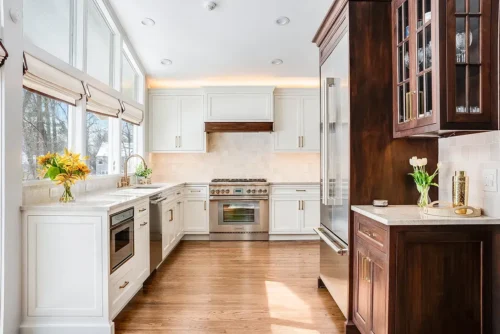
The Importance of Good Kitchen Remodel Contractors
Hiring a skilled kitchen remodel contractor is one of the most important decisions in any kitchen renovation. The right professional will bring design knowledge, technical accuracy, and clear communication to the project. From layout changes to cabinetry details, top kitchen remodel contractors guide homeowners through every step, ensuring the finished kitchen is both beautiful and highly functional.
Kitchen Remodel Contractors Near Me Who Design with Kountry Kraft Cabinetry
Kountry Kraft is proud to be a top choice among designers nationwide for custom cabinetry. Here are a few top kitchen remodel contractors whose work features Kountry Kraft cabinetry.
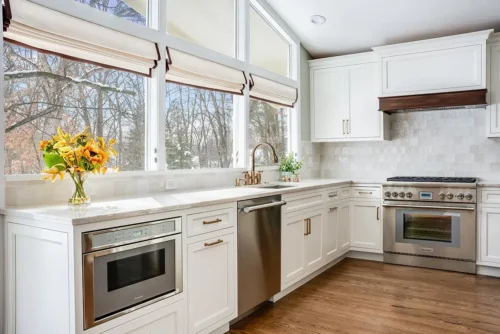
By Design Kitchen and Bath—Short Hills, NJ
By Design Kitchen and Bath is led by designer and owner Ruchi Bhardwaj, whose background as an architect informs her unique approach to interiors. For Ruchi, function always comes first. She believes that the way a family lives in a space should naturally guide its form, layout, and flow.
Her process begins with a detailed consultation where she learns about her clients’ needs, daily routines, and design preferences. Site measurements follow, and then she creates CAD drawings and 3D renderings to bring the design to life. These tools allow clients to visualize every detail and ensure that storage, finishes, and appliances align with their vision.
Once plans are finalized, Ruchi prepares precise cabinet specifications and works directly with the manufacturer. Each piece is custom-made to order, minimizing errors and ensuring that installation runs smoothly. She remains hands-on throughout, coordinating with installers, contractors, and builders so that every project comes together seamlessly.
Her services extend well beyond kitchens and baths. By Design Kitchen and Bath also provides custom storage for pantries, laundry rooms, garages, bars, and home offices. Across every space, Ruchi’s work is defined by careful planning, technical expertise, and a personal commitment to her clients’ lifestyles.
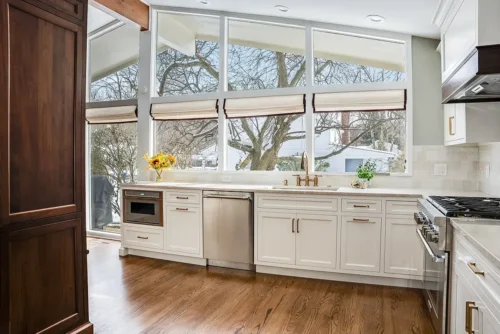
Cambridge Kitchen Project—By Design Kitchen and Bath
The Cambridge Kitchen Project in New Jersey reflects Ruchi’s design philosophy with striking clarity. Though compact, the kitchen feels bright and inviting thanks to its thoughtful combination of finishes and architectural details.
The cabinetry takes center stage, with Simply White inset cabinets in a TW10 recessed panel style contrasted by rich English Walnut Five accents. This pairing strikes a balance between warmth and sophistication, adding depth to the small space.
Countertops in Taj Mahal quartzite from Atlas Marble and Granite tie the palette together with subtle veining, while a square zellige tile backsplash from Tilebar adds handcrafted character. Hardware from Top Knobs completes the cabinetry with refined detail.
Natural light pours through a wall of windows that frames wooded views. Custom blinds from The Shade Store soften the effect while maintaining the connection to the outdoors, turning the kitchen into a space that feels both functional and restorative.
Practicality is built in with a walk-in storage room finished in crisp white, offering organized shelving for appliances and dishware. This ensures the main kitchen remains free of clutter while providing easy access to essentials.
Altogether, the Cambridge project illustrates how Ruchi designs kitchens that go beyond cooking. It’s a space for gathering, entertaining, and daily living—an embodiment of her belief that form follows function in every successful design.
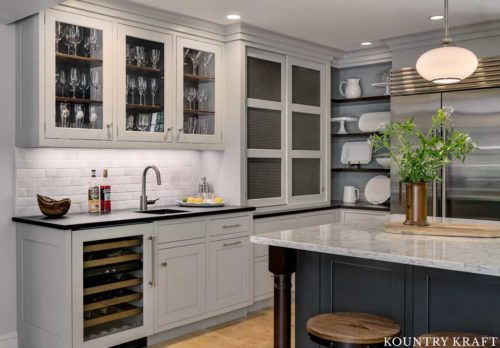
PKsurroundings—Exeter, NH
PKsurroundings is a design firm that specializes in fine kitchens and interiors. Founded by Janice Page, CKD, and Debbie Karpiak, the company brings more than 25 years of expertise to each project. Their award-winning designs are known for blending efficiency with style while keeping the client’s vision front and center.
The design journey begins in their studio, where clients share ideas and explore cabinetry styles, finishes, and materials. From there, detailed CAD drawings and space planning ensure accuracy, while reflective ceiling plans and lighting guidance round out the design.
PKsurroundings emphasizes teamwork. Janice and Debbie work directly with homeowners, architects, and contractors, acting as liaisons to guarantee the design translates seamlessly into the finished space. Their turnkey approach means they manage the process from concept through installation, ensuring consistency and quality.
Whether it’s a kitchen, bath, mudroom, or custom bar, the mission remains the same—deliver functional, stylish interiors that exceed expectations.
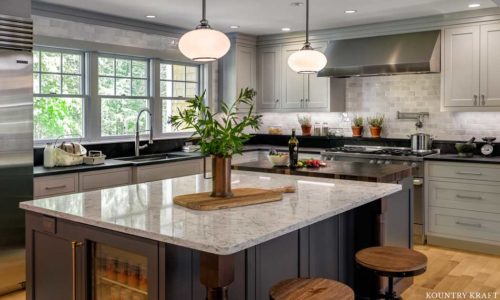
Industrial Inspired Kitchen—PKsurroundings
For this Industrial Inspired Kitchen in New Hampshire, PKsurroundings transformed a cramped and closed-off layout into an open chef’s kitchen with views of the bay. By removing walls and reorganizing the footprint, the team created room to cook, gather, and entertain.
The cabinetry forms the foundation of the design. Harbor Gray 25° perimeter cabinets pair with a French Beret 25° island, while walnut accents in shelving, stools, and island supports bring warmth. A Pennline style with TW10 Hybrid doors keeps the look clean and transitional.
Countertops provide layers of texture and function. Soapstone adds character and houses a ledge for cooking essentials. A thick Wenge wood chopping block creates a dedicated prep zone, and quartz surfaces offer versatile work space for two cooks.
Storage is equally considered. A pantry with by-pass doors and metal mesh inserts hides clutter while walnut L-shaped shelves provide open display. A bar area complete with a beverage refrigerator and wine chiller supports entertaining.
Material choices complete the balance of industrial and residential design. The mix of gray and blue cabinetry works seamlessly with the variegated subway tile, maple flooring, and mixed-metal hardware. The result is a space that feels professional yet welcoming, combining durable function with artisanal warmth.
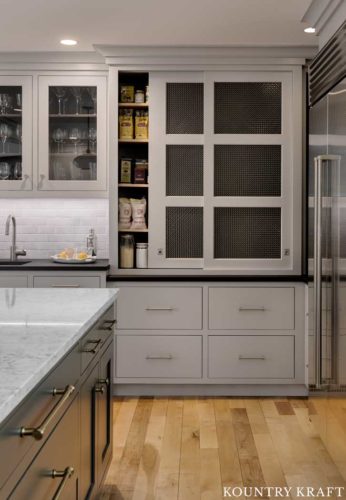
Find a Kitchen Remodel Contractor Near Me
Homeowners often begin their search for a kitchen remodel contractor online with phrases like “kitchen remodel near me,” “kitchen contractors near me,” or even “kitchen remodeling companies near me,” only to end up overwhelmed. Instead of sorting through all of the results and attempting to vet each company yourself, allow us to offer a better solution.
Kountry Kraft’s Find a Dealer tool allows you to search for our local partners nationwide. The designers we’ve highlighted today represent only a small fraction of the truly talented professionals we work with every day. Simply use the tool to search your location and get connected with a kitchen remodel contractor today!
Conclusion
Choosing the best kitchen remodel contractor means more than comparing estimates—it’s about finding a partner who understands your vision. Experienced contractors balance design with practicality, manage timelines, and coordinate every detail for a seamless process. With the right professional by your side, your kitchen remodel becomes a rewarding investment that enhances your home and increases long-term value.
Schedule a consultation with one of our design experts to learn more about Kountry Kraft and our partners!
FAQ: Kitchen Remodel Contractors
What does a kitchen remodel contractor do?
Contractors oversee the renovation process from design coordination to installation, ensuring all aspects of the project run smoothly.
How do I choose the best kitchen remodel contractor?
Homeowners look for experience, licensing, references, and a strong portfolio to evaluate potential contractors.
Are kitchen remodel contractors licensed and insured?
Most professional contractors carry the necessary credentials, protecting homeowners against liability and ensuring compliance with building codes.
How long does a kitchen remodel take with a contractor?
Timelines vary based on scope, but many projects range from several weeks to a few months, including design, permits, and construction.
Do kitchen remodel contractors handle permits and inspections?
Reputable contractors typically manage this process, saving homeowners time and ensuring code compliance.
Do contractors use their own crews or subcontractors?
Some have in-house teams, while others rely on subcontractors; both approaches can work if managed properly.
What does a kitchen remodel contractor include in the scope of work?
A detailed contract usually outlines design, materials, labor, and change-order procedures to avoid surprises.
Do kitchen remodel contractors offer warranties?
Many provide warranties or guarantees on their work, offering peace of mind about craftsmanship and materials.
How much does it cost to hire a kitchen remodel contractor?
Costs vary widely depending on layout changes, finishes, and materials, but the contractor should provide a detailed estimate.
Can I live at home during a kitchen remodel?
Many contractors can accommodate this with temporary kitchens or phased work, though it depends on project scope.
From Farm to Factory: Kountry Kraft’s Journey and Lessons for Cabinet Makers
By / September 17, 2025 September 23, 2025
In the world of custom cabinetry, stories of grit, ingenuity, and craftsmanship resonate deeply with cabinet makers who understand the challenges of turning raw wood into finished art. Among these stories, few are as inspiring as that of Kountry Kraft, a company founded by Elvin Hurst, Sr. in 1959. What began with a Sears & Roebuck table saw in a farmhouse garage has grown into a 96,000-square-foot facility in Pennsylvania Dutch Country—employing over 100 skilled craftsmen and shipping kitchens from Maine to Florida.
Recently, Hurst shared his journey on the Around the House with Eric G. podcast, covering topics that go beyond personal history and into valuable lessons for cabinet makers today: family succession, evolving finishes, technological shifts, quality control, and the enduring role of craftsmanship.
This blog distills those insights and reframes them as lessons cabinet makers can learn from, whether you’re running a one-person shop or managing a growing custom operation.
Humble Beginnings: Why Small Shops Can Become Industry Leaders
Many cabinet makers start in garages, barns, or basements with little more than a table saw and determination. For Elvin Hurst, it was a gift from his wife Helen in 1958—a modest table saw that set the stage for Kountry Kraft. When his employer told him he couldn’t build cabinets at home due to “conflict of interest,” Hurst chose entrepreneurship over job security.
That bold move resonates with every cabinet maker who has ever wondered: Should I take the leap? Kountry Kraft proves that small beginnings don’t limit future growth. Instead, they can fuel innovation and resilience.
The Role of Family in Cabinet Making Businesses

Family businesses are common in woodworking, but not all thrive across generations. Hurst credits his wife Helen for handling design and office work while he ran the shop and installs. Their children joined as the company grew—today, Dolores Hurst Funk serves as CFO while Elvin Hurst Jr. leads as president.
For cabinet makers, this illustrates two things:
- Shared vision matters – Spouses and children need clearly defined roles that complement, not duplicate, efforts.
- Succession planning is essential – Preparing the next generation ensures continuity, stability, and adaptation to new technology.
Embracing Technology Without Losing Craftsmanship

One of the biggest themes from the interview was the shift from hand-drafted plans and table saws to CNC routers, precision saws, and CAD design software.
Yet, Hurst emphasized that technology only enhances the craft—it doesn’t replace it. Cabinet makers today face a similar challenge: how to integrate technology while preserving artistry. Kountry Kraft’s approach is clear: use technology to reduce error and improve efficiency, but rely on craftsmen for final quality and detail.
For designers and builders, organizations like the NKBA (National Kitchen & Bath Association) continue to highlight the value of certified professionals who blend tech with craft.
Finishes: From Hand-Rubbed Stains to Polyurethane Durability
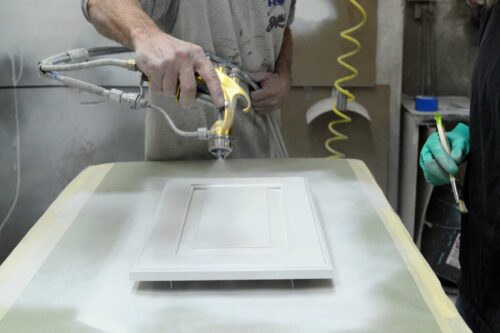
Finishes tell the story of changing consumer demand. In the early days, most cabinets were stained with oil-based, hand-rubbed finishes. Today, 60–70% of Kountry Kraft’s cabinets are painted.
Still, the company maintains tradition by offering hand-wiped stains that bring out the grain—a reminder to cabinet makers that not every new process replaces old methods. Instead, versatility wins.
Kountry Kraft also adopted polyurethane finishes from Sherwin-Williams, offering clarity without plastic sheen, coupled with long-term durability. For cabinet makers, this underscores the importance of staying current with finishing systems, not just for aesthetics but for compliance with VOC regulations and consumer expectations.
Quality Control as a Competitive Edge
Perhaps the most striking practice at Kountry Kraft is its full pre-shipment staging process. One week before delivery, the entire kitchen is assembled in the warehouse—every door, drawer, and finish inspected.
This is more than quality assurance; it’s brand insurance. Cabinet makers can take note: implementing systematic pre-delivery checks prevents costly mistakes, enhances customer trust, and distinguishes your shop from competitors.
Expanding Beyond Kitchens: Whole-Home Cabinetry
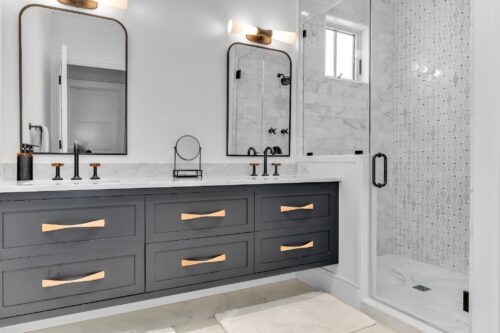
Another lesson for cabinet makers is market diversification. Kountry Kraft moved beyond kitchens into closets, entertainment centers, offices, laundry rooms, bathrooms, and even garages.
This strategy not only secures more revenue per client but also positions cabinetry as a lifestyle investment. Cabinet makers considering expansion should look at the success of whole-home solutions as proof that the market rewards flexibility.
Trends Cabinet Makers Should Watch
From the podcast, several current trends stand out:
- Frameless cabinetry growth: Once rare in American shops, it now accounts for ~50% of Kountry Kraft’s output. Cabinet makers should consider offering both face frame and frameless options to meet regional preferences.
- Wood species demand: Quartersawn white oak and walnut are trending, reversing decades where maple and alder dominated.
- Color diversity: Instead of “white is white,” today’s consumers demand dozens of shades. Cabinet makers must master color matching and finishing flexibility.
- Fashion over function: Kitchens are now the center of the home—public spaces as much as functional ones. This shifts design priorities from utility to lifestyle.
The Cabinet Maker’s Golden Rule
Hurst summed up Kountry Kraft’s philosophy with one phrase:
“Treat people the way you want to be treated. Do it right. Do it right the first time.”
For cabinet makers, this timeless advice applies to clients, employees, and suppliers alike. In an industry where word-of-mouth and reputation can make or break a shop, the golden rule remains the best business plan.
FAQs About Kountry Kraft and Cabinet Makers
How do I train employees effectively in a cabinet shop?
Kountry Kraft’s apprenticeship model is a gold standard for cabinet shop management. Pair new hires with experienced craftsmen for hands-on learning in precision cabinet joinery and cabinet finishing techniques. Develop a structured training program covering safety, tool use, and advanced skills like veneer application or CNC operation. Encourage continuous learning through workshops or online courses on advanced cabinet making techniques. Foster a collaborative culture with regular team meetings to share tips and troubleshoot. Offer incentives like profit-sharing, as Kountry Kraft does, to retain talent. For apprenticeship programs for cabinet makers, check local trade schools or organizations like the Woodworkers Guild of America.
How can cabinet makers incorporate sustainability into their work?
Kountry Kraft’s KCMA certification underscores the growing demand for sustainable cabinetry solutions. Use FSC-certified or reclaimed woods to reduce environmental impact. Opt for low-VOC or water-based finishes to minimize harmful emissions, as these are safer for both workers and clients. Implement waste reduction by repurposing offcuts for smaller projects or donating to community workshops. Invest in energy-efficient cabinet shop automation tools like dust collection systems to improve air quality and reduce energy use. Market your eco-friendly practices to attract clients searching for green cabinetry solutions, positioning your shop as a leader in sustainable craftsmanship.
What are the main differences between face frame and frameless cabinets?
Face frame cabinets use a solid wood frame attached to the front of the box. They’re traditional, sturdy, and allow for inset doors. Frameless cabinets (European-style) skip the frame, offering more usable space inside drawers and a cleaner modern aesthetic. Cabinet makers must decide based on regional demand, but offering both expands your market.
How do finishes affect the longevity of cabinetry?
Finishes protect wood from moisture, stains, and wear. Traditional oil-based stains offer warmth but limited durability. Modern polyurethane systems, like those Kountry Kraft adopted, combine clarity with resistance to scratches and UV fading. For cabinet makers, the finish is as critical as the joinery—it determines lifespan and customer satisfaction.
What is the advantage of hand-rubbed stains compared to sprayed stains?
Hand-rubbed stains penetrate the grain more evenly and highlight natural beauty, creating a furniture-grade look. Sprayed stains can appear uniform but risk a flat, artificial finish. Cabinet makers offering hand-rubbed stains can position themselves as premium, artisanal suppliers.
How do CNC machines change cabinet construction?
CNC routers cut parts with precision to fractions of a millimeter. This reduces human error, ensures perfect joints, and speeds production. However, they require upfront investment, training, and software. Cabinet makers must balance efficiency gains with the artistry of traditional craftsmanship.
What quality control processes should cabinet makers adopt?
Beyond visual inspection, cabinet makers should:
- Test-fit doors and drawers.
- Check finish consistency under natural and artificial light.
- Verify dimensions against shop drawings.
How can small cabinet shops compete with larger manufacturers?
By emphasizing customization, local service, and craftsmanship. Large factories often standardize; small shops can tailor details, offer faster turnaround, and build personal relationships. Cabinet makers should lean into flexibility and local reputation.
Why are dovetail drawers still popular if modern slides handle weight?
Consumers associate dovetails with quality and tradition. Even if undermount slides carry the load, the dovetail joint signals craftsmanship. Cabinet makers should view dovetails as a marketing tool as much as a structural feature.
What woods are trending for cabinetry in 2025?
Quartersawn white oak for its linear grain and stability, and walnut for rich tone and luxury appeal. Painted finishes remain dominant, but stains are making a comeback. Cabinet makers who adapt to changing wood demand stay competitive.
How important is succession planning in cabinet making businesses?
Critical. Many shops falter when founders retire without a clear successor. Kountry Kraft thrived because family members stepped into defined roles. Cabinet makers should create succession plans that include training, equity transfer, and customer continuity.
Conclusion: Inspiration for Today’s Cabinet Makers
Kountry Kraft’s story is more than history—it’s a roadmap for cabinet makers navigating today’s market. From humble beginnings on a farm to becoming a respected national brand, the company shows how resilience, family support, technological adaptation, and uncompromising quality can transform a small shop into an industry leader.
Whether you’re hand-rubbing stains in a garage workshop or managing CNC routers in a large facility, the lessons remain the same: honor the craft, adapt with the times, and treat people right.
Cabinet makers who follow those principles may find themselves, like Kountry Kraft, building not just cabinets—but legacies.
Contact Kountry Kraft
Looking for cabinet makers who combine craftsmanship, innovation, and personal service? Kountry Kraft has been designing and building custom cabinetry since 1959, helping homeowners and designers bring their visions to life.
Whether you’re interested in custom cabinetry for your kitchen, bath, or an entire home, or exploring career opportunities with our team of skilled cabinet makers, we’re here to help. Fill out our contact form on our website or give a call 610-589-4575.
Visit our History page to learn more about our history and mission—or explore our photo gallery to see the craftsmanship of our cabinet makers in action.
Kountry Kraft Cabinetry Showcased by AMS Kitchens in 2025 Designer Show House
By / September 1, 2025 September 23, 2025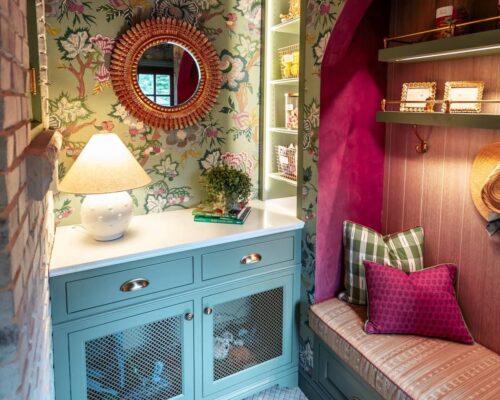
Kountry Kraft is proud to be showcased in the 2025 Junior League of Hartford Designer Show House, a celebrated event that gathers top designers for an unforgettable display of talent, craftsmanship, and community. This year, A Matter of Style (AMS) Kitchens—a trusted Kountry Kraft dealer based in Cheshire, Connecticut—has once again delivered an inspiring design story on a standout mudroom space in the Designer Show House.
A Historic Tudor Transformed
Set within the Prospect Avenue Historic District, the 2025 Designer Show House is nestled in one of Hartford’s most picturesque neighborhoods, celebrated for its scenic views and timeless estates. Originally built in 1902 by renowned architect Edward T. Hapgood, this 4,900-square-foot Tudor revival is brimming with original character. From leaded glass doors to elaborate wood moldings, the home is a canvas steeped in architectural heritage.
Donated by current homeowners Annie Pascucci and her family, the home becomes the backdrop for more than 20 redesigned rooms, all masterfully styled by Connecticut’s top designers. AMS Kitchens was selected to reimagine the mudroom, a secondary entry often overlooked but deeply impactful in daily living.
AMS Kitchen’s Vision for the Designer Show House
Renowned for thoughtful interiors and high-end, custom cabinetry design, AMS Kitchens has long set a standard of excellence. Led by Martha Gargano, who joined the firm in 1995 and soon became Lead Designer, AMS offers full-service design that fuses function with beauty.
In the 2025 Designer Show House, Martha and her team brought a cohesive story to life in the mudroom using Kountry Kraft cabinetry in a beautiful sage green finish as the unifying thread. The result is a functional space that showcases how cabinetry can go beyond storage—into storytelling.

Mudroom
Martha envisioned the mudroom as more than a utility space—it became a welcoming point of entry, filled with charm and refined utility. Her design honors the home’s character while layering in tactile finishes and custom features that feel both fresh and timeless. In Martha’s own words:
“The blank slate I was given to work with inspired me to create a beautiful back entry to come home to! Families seldom use a formal front entrance… This mudroom has a little formality with a play on a colorful ‘Cottage Core’ style, and palette. Extra storage was made as radiator cover, allowing a countertop to be added with lighted open shelving, and base storage below. The bench seat adds additional storage in a ‘cozy’ arched niche, backed with white washed, oak beadboard and brass railed floating shelves.”
The resulting space is cozy, curated, and completely functional. Built-in sage green cabinetry keeps everyday essentials tucked away, while a signature arched seating nook adds architectural interest and a feeling of welcome. Thibaut wallpaper and coordinating fabric infuse pattern and personality, while Top Knobs hardware elevates the cabinetry with classic charm.
Material Selections
AMS Kitchens’ Designer Show House mudroom features the following materials:
- Cabinetry Style: TW10 with Ogee Frame Bead
- Cabinetry Color: Sherwin Williams, Dried Thyme
- Cabinet Hardware: Top Knobs, Somerset cup pull and Chareau knobs
- Countertop: Calacatta Gold Quartz
- Pendant Lighting: Hudson Valley, Savvy flush mount
- Cabinet Lighting: Hafele
- Wallpaper: Thibaut
An Immersive Experience
For anyone passionate about interior design, the Designer Show House offers a rare glimpse inside a private estate that’s been meticulously transformed. Beyond the home tour itself, guests can shop vendor items and even purchase furnishings featured in the rooms, with a portion of proceeds going directly to the Junior League’s charitable efforts. It’s not just a house—it’s an immersive experience that blends history, design, and purpose.
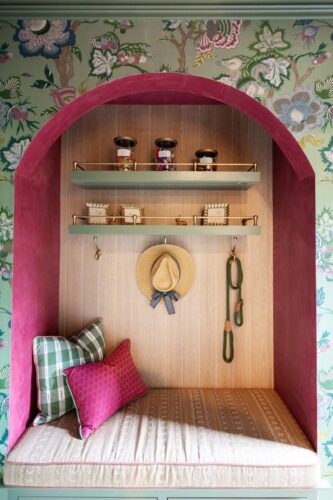
Designer Show House & the Junior League of Hartford
More than a showcase of design talent, the Designer Show House fuels the philanthropic mission of the Junior League of Hartford, a women-led volunteer organization with a century-long legacy of community impact and leadership development. With over 300 members, the League trains women in nonprofit leadership, volunteers throughout the region, and gives grants to organizations fighting systemic poverty in the Greater Hartford area.
Held every three years, this highly anticipated event has generated more than $1.7 million for the League’s local initiatives. It invites guests to experience the artistic vision of Connecticut’s finest designers inside a newly reinvented historic home. Proceeds from the event support nonprofits such as Journey Home and The Diaper Bank of Connecticut.
The 2025 Designer Show House is especially meaningful as it honors the memory of Mary Lynn Gorman, who brought the concept to Hartford after volunteering with a Junior League Show House in Ohio. Her legacy continues in this sixteenth edition of the event.
See More of AMS Kitchens
AMS Kitchens has a long-standing history of creating timeless interiors that reflect the personalities and needs of each client. With that in mind, it’s no surprise that the Designer Show House is not their first showcase. Check out more of their designs featured in Design + Decor and behind-the-scenes looks on their Instagram and Facebook pages.
From cozy mudrooms to chef-worthy kitchens, AMS Kitchens and Kountry Kraft cabinetry prove that good design is both beautiful and livable.

Why Do Top Designers Choose Kountry Kraft Cabinetry?
Kountry Kraft is a leading name in custom cabinetry that is celebrated for handcrafted detail, durable materials, and fully personalized solutions. Our cabinetry is built to fit each home’s unique architecture and every client’s lifestyle. For over 65 years, Kountry Kraft has partnered with skilled designers like AMS to bring dream spaces to life—room by room.
Whether it’s a modern kitchen, a Tudor-style mudroom, or a transitional pantry, Kountry Kraft’s craftsmanship ensures beauty, utility, and longevity. Our brand’s national network of authorized dealers makes it easy for homeowners across the country to find local professionals ready to guide them through the custom cabinetry process.
Find a Kountry Kraft Dealer Near Me
Interested in using Kountry Kraft cabinetry in your own home? With dealers located across the United States, it’s easy to connect with a local expert who can help you select finishes, plan layouts, and coordinate your installation. From initial design consultation to final touches, your Kountry Kraft dealer is your partner in creating a space that’s truly custom.
Visit the Dealer Locator to get started.
Conclusion
The 2025 Junior League of Hartford Designer Show House stands as a testament to the power of design and community coming together. With AMS Kitchens leading the way in a pivotal space showcasing Kountry Kraft cabinetry, the project highlights what happens when top designers and trusted craftsmanship align. Whether you’re seeking inspiration or planning your next remodel, this collaboration offers a compelling example of how spaces can be both functional and full of soul. Schedule a consultation today to learn how Kountry Kraft can bring this magic to your home.
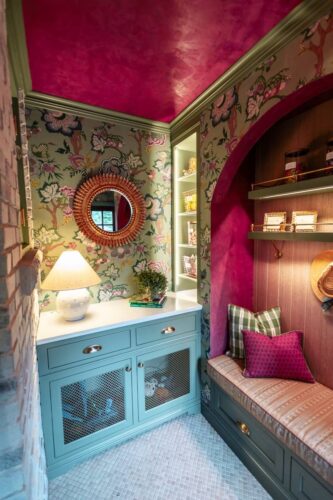
FAQ: Designer Show House
What is the Designer Show House?
The Designer Show House is a charitable event where top interior designers reimagine the rooms of a notable home, transforming it into a temporary exhibition open to the public. Proceeds from tours, sponsorships, and product sales benefit nonprofit organizations, making it both a design showcase and fundraising initiative.
Who organizes the Designer Show House in Hartford?
The Junior League of Hartford organizes the Designer Show House every three years. This all-women volunteer nonprofit selects a distinguished property, invites designers to transform the interiors, and uses the event to raise funds for community programs that address systemic poverty and support local nonprofits in Greater Hartford.
Why do designers choose Kountry Kraft cabinetry for show homes?
Designers favor Kountry Kraft cabinetry for its handcrafted quality, custom sizing, and design flexibility. Its wide range of finishes and materials allows creative freedom, making it a top choice for show homes where aesthetics, durability, and standout detail are essential to impress both industry professionals and visitors alike.
What are the trending kitchen design ideas seen in Designer Show Houses?
Current kitchen trends in Designer Show Houses include layered lighting, statement islands with seating, personalized cabinetry colors, and concealed storage. Design teams often incorporate rich textures, natural materials, and high-end hardware to create luxurious yet livable spaces that reflect both beauty and everyday functionality.
How are mudrooms being reimagined by top designers?
Mudrooms are evolving into stylish yet hardworking spaces. Designers now incorporate built-in seating, hidden storage, wallpaper accents, and premium cabinetry. These functional transition areas are being treated as design opportunities—balancing organization, charm, and continuity with the home’s overall aesthetic, especially in show homes where first impressions matter.
Is Sherwin Williams Dried Thyme a good color for kitchen cabinetry?
Yes, Dried Thyme is a muted, sage green tone with earthy undertones. It brings calm and warmth to a kitchen, complements natural wood tones and brass hardware, and works well in both traditional and cottage-style interiors.
What are the benefits of Calacatta Gold Quartz countertops?
Calacatta Gold Quartz offers the luxurious look of natural Calacatta marble but with added durability. It resists stains, scratches, and etching, making it ideal for busy kitchens. The gold and gray veining adds visual interest while maintaining a neutral palette.
How do you clean a tumbled mosaic backsplash like Drift Coastal Gray?
Tumbled mosaics have a textured, matte finish. To clean them, use a soft sponge with a mild pH-neutral cleaner. Avoid abrasive scrubbers and acidic products. For longevity, sealing the grout lines is recommended to prevent staining and moisture buildup.
Why choose Hafele for under and in-cabinet lighting?
Hafele is known for its sleek, high-performance lighting systems designed specifically for cabinetry. Their LED options provide bright, energy-efficient illumination that enhances visibility while adding ambiance. Many models offer dimming features and motion sensors for convenience.
What hardware pairs well with sage green cabinetry?
Sage green cabinetry pairs beautifully with warm metallic finishes like brass and gold. In particular, hardware from Top Knobs—such as the Somerset cup pulls and Chareau knobs—adds a timeless, polished touch. These pieces provide contrast while enhancing the natural, earthy tones of the cabinetry.