
From Farm to Factory: Kountry Kraft’s Journey and Lessons for Cabinet Makers
By / September 17, 2025 September 23, 2025
In the world of custom cabinetry, stories of grit, ingenuity, and craftsmanship resonate deeply with cabinet makers who understand the challenges of turning raw wood into finished art. Among these stories, few are as inspiring as that of Kountry Kraft, a company founded by Elvin Hurst, Sr. in 1959. What began with a Sears & Roebuck table saw in a farmhouse garage has grown into a 96,000-square-foot facility in Pennsylvania Dutch Country—employing over 100 skilled craftsmen and shipping kitchens from Maine to Florida.
Recently, Hurst shared his journey on the Around the House with Eric G. podcast, covering topics that go beyond personal history and into valuable lessons for cabinet makers today: family succession, evolving finishes, technological shifts, quality control, and the enduring role of craftsmanship.
This blog distills those insights and reframes them as lessons cabinet makers can learn from, whether you’re running a one-person shop or managing a growing custom operation.
Humble Beginnings: Why Small Shops Can Become Industry Leaders
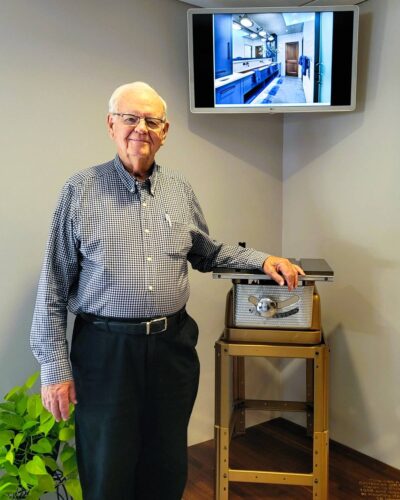
Many cabinet makers start in garages, barns, or basements with little more than a table saw and determination. For Elvin Hurst, it was a gift from his wife Helen in 1958—a modest table saw that set the stage for Kountry Kraft. When his employer told him he couldn’t build cabinets at home due to “conflict of interest,” Hurst chose entrepreneurship over job security.
That bold move resonates with every cabinet maker who has ever wondered: Should I take the leap? Kountry Kraft proves that small beginnings don’t limit future growth. Instead, they can fuel innovation and resilience.
The Role of Family in Cabinet Making Businesses

Family businesses are common in woodworking, but not all thrive across generations. Hurst credits his wife Helen for handling design and office work while he ran the shop and installs. Their children joined as the company grew—today, Dolores Hurst Funk serves as CFO while Elvin Hurst Jr. leads as president.
For cabinet makers, this illustrates two things:
- Shared vision matters – Spouses and children need clearly defined roles that complement, not duplicate, efforts.
- Succession planning is essential – Preparing the next generation ensures continuity, stability, and adaptation to new technology.
Embracing Technology Without Losing Craftsmanship
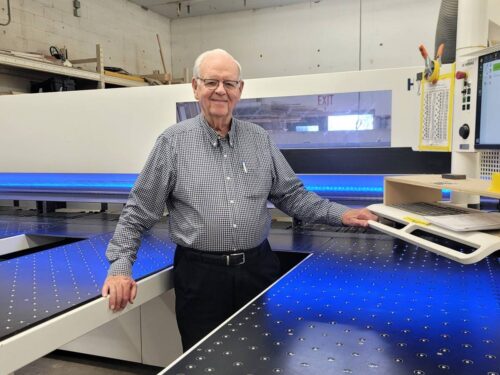
One of the biggest themes from the interview was the shift from hand-drafted plans and table saws to CNC routers, precision saws, and CAD design software.
Yet, Hurst emphasized that technology only enhances the craft—it doesn’t replace it. Cabinet makers today face a similar challenge: how to integrate technology while preserving artistry. Kountry Kraft’s approach is clear: use technology to reduce error and improve efficiency, but rely on craftsmen for final quality and detail.
For designers and builders, organizations like the NKBA (National Kitchen & Bath Association) continue to highlight the value of certified professionals who blend tech with craft.
Finishes: From Hand-Rubbed Stains to Polyurethane Durability
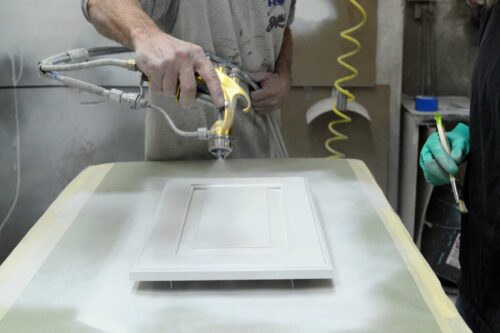
Finishes tell the story of changing consumer demand. In the early days, most cabinets were stained with oil-based, hand-rubbed finishes. Today, 60–70% of Kountry Kraft’s cabinets are painted.
Still, the company maintains tradition by offering hand-wiped stains that bring out the grain—a reminder to cabinet makers that not every new process replaces old methods. Instead, versatility wins.
Kountry Kraft also adopted polyurethane finishes from Sherwin-Williams, offering clarity without plastic sheen, coupled with long-term durability. For cabinet makers, this underscores the importance of staying current with finishing systems, not just for aesthetics but for compliance with VOC regulations and consumer expectations.
Quality Control as a Competitive Edge
Perhaps the most striking practice at Kountry Kraft is its full pre-shipment staging process. One week before delivery, the entire kitchen is assembled in the warehouse—every door, drawer, and finish inspected.
This is more than quality assurance; it’s brand insurance. Cabinet makers can take note: implementing systematic pre-delivery checks prevents costly mistakes, enhances customer trust, and distinguishes your shop from competitors.
Expanding Beyond Kitchens: Whole-Home Cabinetry
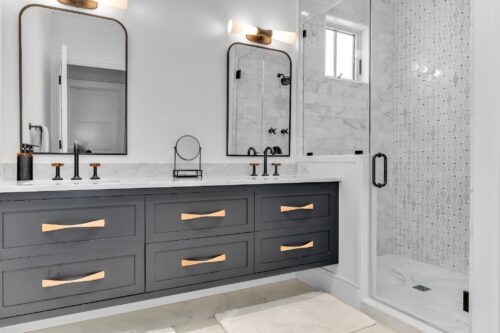
Another lesson for cabinet makers is market diversification. Kountry Kraft moved beyond kitchens into closets, entertainment centers, offices, laundry rooms, bathrooms, and even garages.
This strategy not only secures more revenue per client but also positions cabinetry as a lifestyle investment. Cabinet makers considering expansion should look at the success of whole-home solutions as proof that the market rewards flexibility.
Trends Cabinet Makers Should Watch
From the podcast, several current trends stand out:
- Frameless cabinetry growth: Once rare in American shops, it now accounts for ~50% of Kountry Kraft’s output. Cabinet makers should consider offering both face frame and frameless options to meet regional preferences.
- Wood species demand: Quartersawn white oak and walnut are trending, reversing decades where maple and alder dominated.
- Color diversity: Instead of “white is white,” today’s consumers demand dozens of shades. Cabinet makers must master color matching and finishing flexibility.
- Fashion over function: Kitchens are now the center of the home—public spaces as much as functional ones. This shifts design priorities from utility to lifestyle.
The Cabinet Maker’s Golden Rule
Hurst summed up Kountry Kraft’s philosophy with one phrase:
“Treat people the way you want to be treated. Do it right. Do it right the first time.”
For cabinet makers, this timeless advice applies to clients, employees, and suppliers alike. In an industry where word-of-mouth and reputation can make or break a shop, the golden rule remains the best business plan.
FAQs About Kountry Kraft and Cabinet Makers
How do I train employees effectively in a cabinet shop?
Kountry Kraft’s apprenticeship model is a gold standard for cabinet shop management. Pair new hires with experienced craftsmen for hands-on learning in precision cabinet joinery and cabinet finishing techniques. Develop a structured training program covering safety, tool use, and advanced skills like veneer application or CNC operation. Encourage continuous learning through workshops or online courses on advanced cabinet making techniques. Foster a collaborative culture with regular team meetings to share tips and troubleshoot. Offer incentives like profit-sharing, as Kountry Kraft does, to retain talent. For apprenticeship programs for cabinet makers, check local trade schools or organizations like the Woodworkers Guild of America.
How can cabinet makers incorporate sustainability into their work?
Kountry Kraft’s KCMA certification underscores the growing demand for sustainable cabinetry solutions. Use FSC-certified or reclaimed woods to reduce environmental impact. Opt for low-VOC or water-based finishes to minimize harmful emissions, as these are safer for both workers and clients. Implement waste reduction by repurposing offcuts for smaller projects or donating to community workshops. Invest in energy-efficient cabinet shop automation tools like dust collection systems to improve air quality and reduce energy use. Market your eco-friendly practices to attract clients searching for green cabinetry solutions, positioning your shop as a leader in sustainable craftsmanship.
What are the main differences between face frame and frameless cabinets?
Face frame cabinets use a solid wood frame attached to the front of the box. They’re traditional, sturdy, and allow for inset doors. Frameless cabinets (European-style) skip the frame, offering more usable space inside drawers and a cleaner modern aesthetic. Cabinet makers must decide based on regional demand, but offering both expands your market.
How do finishes affect the longevity of cabinetry?
Finishes protect wood from moisture, stains, and wear. Traditional oil-based stains offer warmth but limited durability. Modern polyurethane systems, like those Kountry Kraft adopted, combine clarity with resistance to scratches and UV fading. For cabinet makers, the finish is as critical as the joinery—it determines lifespan and customer satisfaction.
What is the advantage of hand-rubbed stains compared to sprayed stains?
Hand-rubbed stains penetrate the grain more evenly and highlight natural beauty, creating a furniture-grade look. Sprayed stains can appear uniform but risk a flat, artificial finish. Cabinet makers offering hand-rubbed stains can position themselves as premium, artisanal suppliers.
How do CNC machines change cabinet construction?
CNC routers cut parts with precision to fractions of a millimeter. This reduces human error, ensures perfect joints, and speeds production. However, they require upfront investment, training, and software. Cabinet makers must balance efficiency gains with the artistry of traditional craftsmanship.
What quality control processes should cabinet makers adopt?
Beyond visual inspection, cabinet makers should:
- Test-fit doors and drawers.
- Check finish consistency under natural and artificial light.
- Verify dimensions against shop drawings.
How can small cabinet shops compete with larger manufacturers?
By emphasizing customization, local service, and craftsmanship. Large factories often standardize; small shops can tailor details, offer faster turnaround, and build personal relationships. Cabinet makers should lean into flexibility and local reputation.
Why are dovetail drawers still popular if modern slides handle weight?
Consumers associate dovetails with quality and tradition. Even if undermount slides carry the load, the dovetail joint signals craftsmanship. Cabinet makers should view dovetails as a marketing tool as much as a structural feature.
What woods are trending for cabinetry in 2025?
Quartersawn white oak for its linear grain and stability, and walnut for rich tone and luxury appeal. Painted finishes remain dominant, but stains are making a comeback. Cabinet makers who adapt to changing wood demand stay competitive.
How important is succession planning in cabinet making businesses?
Critical. Many shops falter when founders retire without a clear successor. Kountry Kraft thrived because family members stepped into defined roles. Cabinet makers should create succession plans that include training, equity transfer, and customer continuity.
Conclusion: Inspiration for Today’s Cabinet Makers
Kountry Kraft’s story is more than history—it’s a roadmap for cabinet makers navigating today’s market. From humble beginnings on a farm to becoming a respected national brand, the company shows how resilience, family support, technological adaptation, and uncompromising quality can transform a small shop into an industry leader.
Whether you’re hand-rubbing stains in a garage workshop or managing CNC routers in a large facility, the lessons remain the same: honor the craft, adapt with the times, and treat people right.
Cabinet makers who follow those principles may find themselves, like Kountry Kraft, building not just cabinets—but legacies.
Contact Kountry Kraft
Looking for cabinet makers who combine craftsmanship, innovation, and personal service? Kountry Kraft has been designing and building custom cabinetry since 1959, helping homeowners and designers bring their visions to life.
Whether you’re interested in custom cabinetry for your kitchen, bath, or an entire home, or exploring career opportunities with our team of skilled cabinet makers, we’re here to help. Fill out our contact form on our website or give a call 610-589-4575.
Visit our History page to learn more about our history and mission—or explore our photo gallery to see the craftsmanship of our cabinet makers in action.
Kountry Kraft Cabinetry Showcased by AMS Kitchens in 2025 Designer Show House
By / September 1, 2025 September 23, 2025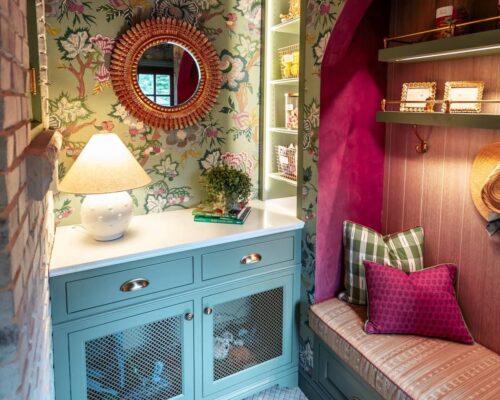
Kountry Kraft is proud to be showcased in the 2025 Junior League of Hartford Designer Show House, a celebrated event that gathers top designers for an unforgettable display of talent, craftsmanship, and community. This year, A Matter of Style (AMS) Kitchens—a trusted Kountry Kraft dealer based in Cheshire, Connecticut—has once again delivered an inspiring design story on a standout mudroom space in the Designer Show House.
A Historic Tudor Transformed
Set within the Prospect Avenue Historic District, the 2025 Designer Show House is nestled in one of Hartford’s most picturesque neighborhoods, celebrated for its scenic views and timeless estates. Originally built in 1902 by renowned architect Edward T. Hapgood, this 4,900-square-foot Tudor revival is brimming with original character. From leaded glass doors to elaborate wood moldings, the home is a canvas steeped in architectural heritage.
Donated by current homeowners Annie Pascucci and her family, the home becomes the backdrop for more than 20 redesigned rooms, all masterfully styled by Connecticut’s top designers. AMS Kitchens was selected to reimagine the mudroom, a secondary entry often overlooked but deeply impactful in daily living.
AMS Kitchen’s Vision for the Designer Show House
Renowned for thoughtful interiors and high-end, custom cabinetry design, AMS Kitchens has long set a standard of excellence. Led by Martha Gargano, who joined the firm in 1995 and soon became Lead Designer, AMS offers full-service design that fuses function with beauty.
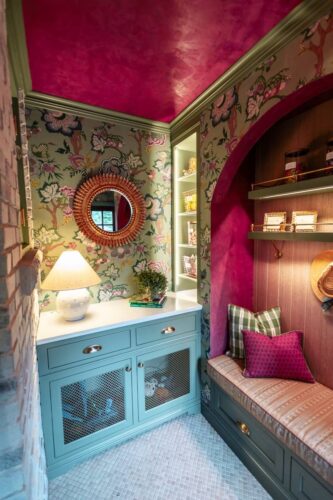
In the 2025 Designer Show House, Martha and her team brought a cohesive story to life in the mudroom using Kountry Kraft cabinetry in a beautiful sage green finish as the unifying thread. The result is a functional space that showcases how cabinetry can go beyond storage—into storytelling.

Mudroom
Martha envisioned the mudroom as more than a utility space—it became a welcoming point of entry, filled with charm and refined utility. Her design honors the home’s character while layering in tactile finishes and custom features that feel both fresh and timeless. In Martha’s own words:
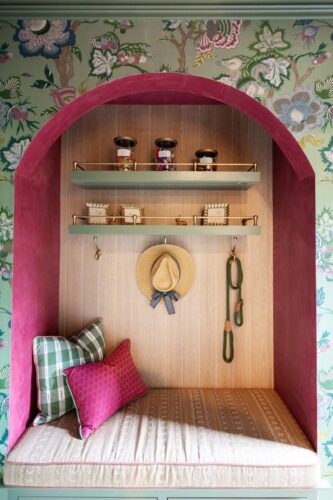
“The blank slate I was given to work with inspired me to create a beautiful back entry to come home to! Families seldom use a formal front entrance… This mudroom has a little formality with a play on a colorful ‘Cottage Core’ style, and palette. Extra storage was made as radiator cover, allowing a countertop to be added with lighted open shelving, and base storage below. The bench seat adds additional storage in a ‘cozy’ arched niche, backed with white washed, oak beadboard and brass railed floating shelves.”
The resulting space is cozy, curated, and completely functional. Built-in sage green cabinetry keeps everyday essentials tucked away, while a signature arched seating nook adds architectural interest and a feeling of welcome. Thibaut wallpaper and coordinating fabric infuse pattern and personality, while Top Knobs hardware elevates the cabinetry with classic charm.
Material Selections
AMS Kitchens’ Designer Show House mudroom features the following materials:
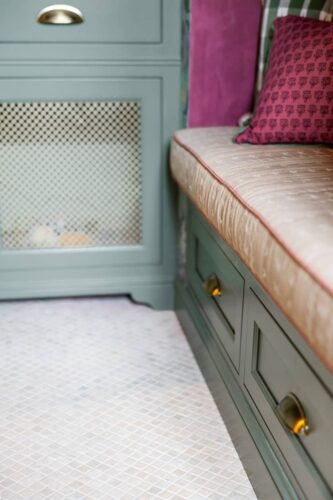
- Cabinetry Style: TW10 with Ogee Frame Bead
- Cabinetry Color: Sherwin Williams, Dried Thyme
- Cabinet Hardware: Top Knobs, Somerset cup pull and Chareau knobs
- Countertop: Calacatta Gold Quartz
- Pendant Lighting: Hudson Valley, Savvy flush mount
- Cabinet Lighting: Hafele
- Wallpaper: Thibaut
An Immersive Experience
For anyone passionate about interior design, the Designer Show House offers a rare glimpse inside a private estate that’s been meticulously transformed. Beyond the home tour itself, guests can shop vendor items and even purchase furnishings featured in the rooms, with a portion of proceeds going directly to the Junior League’s charitable efforts. It’s not just a house—it’s an immersive experience that blends history, design, and purpose.
Designer Show House & the Junior League of Hartford
More than a showcase of design talent, the Designer Show House fuels the philanthropic mission of the Junior League of Hartford, a women-led volunteer organization with a century-long legacy of community impact and leadership development. With over 300 members, the League trains women in nonprofit leadership, volunteers throughout the region, and gives grants to organizations fighting systemic poverty in the Greater Hartford area.
Held every three years, this highly anticipated event has generated more than $1.7 million for the League’s local initiatives. It invites guests to experience the artistic vision of Connecticut’s finest designers inside a newly reinvented historic home. Proceeds from the event support nonprofits such as Journey Home and The Diaper Bank of Connecticut.
The 2025 Designer Show House is especially meaningful as it honors the memory of Mary Lynn Gorman, who brought the concept to Hartford after volunteering with a Junior League Show House in Ohio. Her legacy continues in this sixteenth edition of the event.
See More of AMS Kitchens
AMS Kitchens has a long-standing history of creating timeless interiors that reflect the personalities and needs of each client. With that in mind, it’s no surprise that the Designer Show House is not their first showcase. Check out more of their designs featured in Design + Decor and behind-the-scenes looks on their Instagram and Facebook pages.
From cozy mudrooms to chef-worthy kitchens, AMS Kitchens and Kountry Kraft cabinetry prove that good design is both beautiful and livable.

Why Do Top Designers Choose Kountry Kraft Cabinetry?
Kountry Kraft is a leading name in custom cabinetry that is celebrated for handcrafted detail, durable materials, and fully personalized solutions. Our cabinetry is built to fit each home’s unique architecture and every client’s lifestyle. For over 65 years, Kountry Kraft has partnered with skilled designers like AMS to bring dream spaces to life—room by room.
Whether it’s a modern kitchen, a Tudor-style mudroom, or a transitional pantry, Kountry Kraft’s craftsmanship ensures beauty, utility, and longevity. Our brand’s national network of authorized dealers makes it easy for homeowners across the country to find local professionals ready to guide them through the custom cabinetry process.
Find a Kountry Kraft Dealer Near Me
Interested in using Kountry Kraft cabinetry in your own home? With dealers located across the United States, it’s easy to connect with a local expert who can help you select finishes, plan layouts, and coordinate your installation. From initial design consultation to final touches, your Kountry Kraft dealer is your partner in creating a space that’s truly custom.
Visit the Dealer Locator to get started.
Conclusion
The 2025 Junior League of Hartford Designer Show House stands as a testament to the power of design and community coming together. With AMS Kitchens leading the way in a pivotal space showcasing Kountry Kraft cabinetry, the project highlights what happens when top designers and trusted craftsmanship align. Whether you’re seeking inspiration or planning your next remodel, this collaboration offers a compelling example of how spaces can be both functional and full of soul. Schedule a consultation today to learn how Kountry Kraft can bring this magic to your home.
FAQ: Designer Show House
What is the Designer Show House?
The Designer Show House is a charitable event where top interior designers reimagine the rooms of a notable home, transforming it into a temporary exhibition open to the public. Proceeds from tours, sponsorships, and product sales benefit nonprofit organizations, making it both a design showcase and fundraising initiative.
Who organizes the Designer Show House in Hartford?
The Junior League of Hartford organizes the Designer Show House every three years. This all-women volunteer nonprofit selects a distinguished property, invites designers to transform the interiors, and uses the event to raise funds for community programs that address systemic poverty and support local nonprofits in Greater Hartford.
Why do designers choose Kountry Kraft cabinetry for show homes?
Designers favor Kountry Kraft cabinetry for its handcrafted quality, custom sizing, and design flexibility. Its wide range of finishes and materials allows creative freedom, making it a top choice for show homes where aesthetics, durability, and standout detail are essential to impress both industry professionals and visitors alike.
What are the trending kitchen design ideas seen in Designer Show Houses?
Current kitchen trends in Designer Show Houses include layered lighting, statement islands with seating, personalized cabinetry colors, and concealed storage. Design teams often incorporate rich textures, natural materials, and high-end hardware to create luxurious yet livable spaces that reflect both beauty and everyday functionality.
How are mudrooms being reimagined by top designers?
Mudrooms are evolving into stylish yet hardworking spaces. Designers now incorporate built-in seating, hidden storage, wallpaper accents, and premium cabinetry. These functional transition areas are being treated as design opportunities—balancing organization, charm, and continuity with the home’s overall aesthetic, especially in show homes where first impressions matter.
Is Sherwin Williams Dried Thyme a good color for kitchen cabinetry?
Yes, Dried Thyme is a muted, sage green tone with earthy undertones. It brings calm and warmth to a kitchen, complements natural wood tones and brass hardware, and works well in both traditional and cottage-style interiors.
What are the benefits of Calacatta Gold Quartz countertops?
Calacatta Gold Quartz offers the luxurious look of natural Calacatta marble but with added durability. It resists stains, scratches, and etching, making it ideal for busy kitchens. The gold and gray veining adds visual interest while maintaining a neutral palette.
How do you clean a tumbled mosaic backsplash like Drift Coastal Gray?
Tumbled mosaics have a textured, matte finish. To clean them, use a soft sponge with a mild pH-neutral cleaner. Avoid abrasive scrubbers and acidic products. For longevity, sealing the grout lines is recommended to prevent staining and moisture buildup.
Why choose Hafele for under and in-cabinet lighting?
Hafele is known for its sleek, high-performance lighting systems designed specifically for cabinetry. Their LED options provide bright, energy-efficient illumination that enhances visibility while adding ambiance. Many models offer dimming features and motion sensors for convenience.
What hardware pairs well with sage green cabinetry?
Sage green cabinetry pairs beautifully with warm metallic finishes like brass and gold. In particular, hardware from Top Knobs—such as the Somerset cup pulls and Chareau knobs—adds a timeless, polished touch. These pieces provide contrast while enhancing the natural, earthy tones of the cabinetry.