
Space-Saving Small Kitchen Design Ideas
By / December 30, 2025 December 30, 2025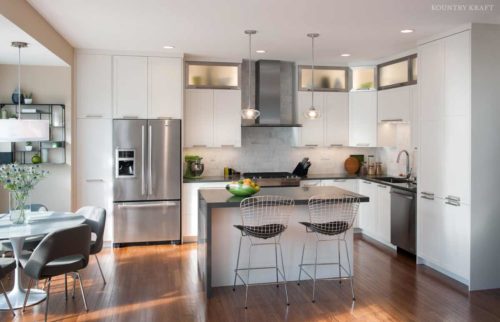
Looking for Space-Saving Small Kitchen Design Ideas?
Look no further! Designing a beautiful kitchen in a smaller footprint starts with smart planning, and that’s where space-saving small kitchen design really shines. By combining custom cabinetry with thoughtful details, you can turn even a compact room into a highly functional, welcoming hub. The projects below highlight different ways some of our favorite designers make every inch count while still delivering the style, warmth, and personality homeowners love.
Our Favorite Space-Saving Small Kitchen Designs
Custom kitchen cabinetry allows for small kitchens to take advantage of every square inch. These design highlights show how clever storage, thoughtful lighting, and tailored layouts can make compact spaces feel bigger, brighter, and easier to use. Together, they prove that with the right details, a small kitchen can live like a much larger one.
A Phoenixville Kitchen Built for Storage
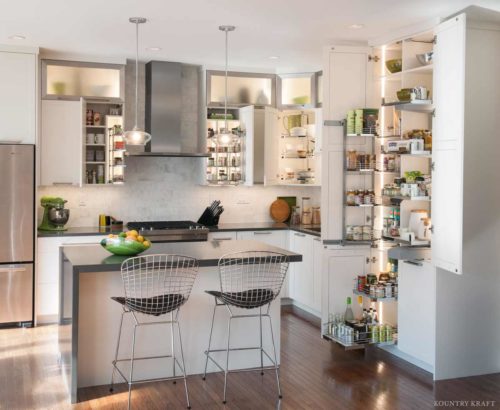
This Phoenixville, PA kitchen proves that a compact footprint can still feel open and organized. Thoughtful storage, smart lighting, and tailored cabinetry work together so every inch earns its keep while remaining calm and uncluttered. It’s a great example of how small kitchen organization ideas can make the room feel bigger, brighter, and more intuitive.
Custom Pull-Out Systems for Cabinetry
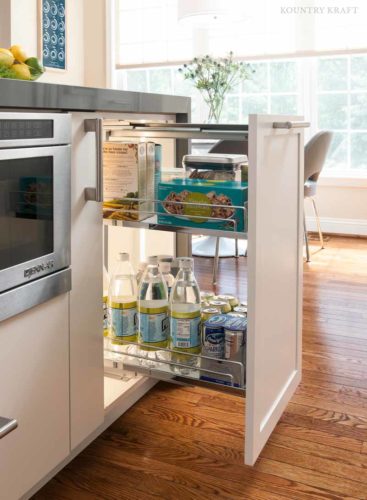
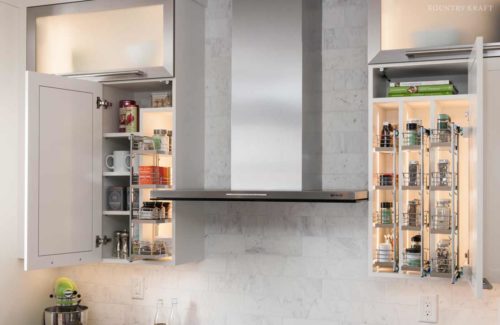
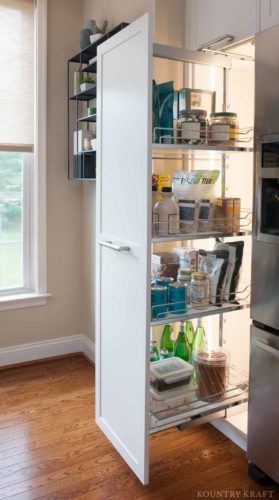
Custom pull-out storage is the quiet hero of this design. From the pull-out spice racks flanking the range to the slim filler pull-outs for oils and baking essentials, everything has a dedicated, easy-to-reach spot. The unique corner pull-out system turns what used to be “lost” dead space into fully accessible storage, while base and tall cabinet pull-outs keep items visible and organized. No more kneeling on the floor to dig through dark, deep cabinets—everything glides out to meet you.
In-Cabinet LED Strip Lighting
In-cabinet LED strip lighting takes these storage solutions a step further. Integrated along shelves and inside pull-outs, the lighting makes it simple to spot ingredients, snacks, and cleaning supplies at a glance. It also adds a warm, custom glow that highlights the cabinetry details without the harshness of overhead-only lighting. Functionally, it cuts down on hunting and guessing; visually, it gives the kitchen a polished, high-end feel.
Floor-to-Ceiling Cabinet Towers
Floor-to-ceiling cabinet towers maximize every vertical inch while making the room feel taller and more expansive. Flanking each end of the kitchen, these towers draw the eye upward to create a sense of height, while closed storage helps keep everyday clutter out of sight. The result is a kitchen that stores more than you’d expect for its size yet still feels open and airy. It’s proof that when storage, lighting, and cabinet layout are planned together, even a smaller kitchen can live large.
A Cool-Toned Custom Kitchen by Jeff Boico
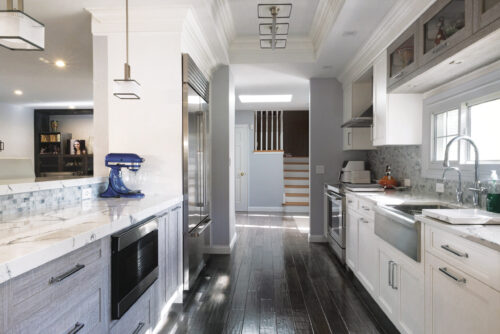
This Great Neck, NY kitchen shows how a luxury space can still work beautifully within a modest footprint. Cool silver, blue, and gray tones foster a sense of tranquility, while every storage decision is carefully planned. The result is a kitchen that looks like a sanctuary yet functions like a hardworking small kitchen design.

Microwave Housed in Custom Base Cabinetry
Housing the microwave in a custom base cabinet is a smart move for both form and function. By tucking it neatly below the counter, the design keeps eye-level space open for a striking range hood feature instead of a bulky appliance. Countertops stay clear for prep and serving, sightlines are cleaner, and everyday tasks feel more streamlined because everything has a defined, built-in place.
Extra Storage above the Sink Window
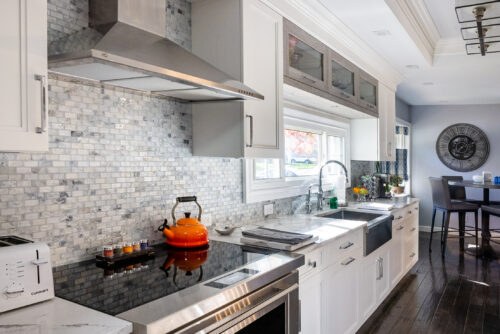
Above the sink, a row of horizontal cabinets adds storage without making the window wall feel heavy. Their soft gray finish contrasts the surrounding white cabinetry, so the window still feels framed rather than boxed in. At the same time, that gray tone echoes the base cabinets on the opposite wall, visually tying the room together and reinforcing the cool, cohesive palette. These space-saving ideas support daily routines while maintaining the kitchen’s serene, high-end look.
A Country Kitchen Design by Martha Gargano, AMS Kitchens & Baths
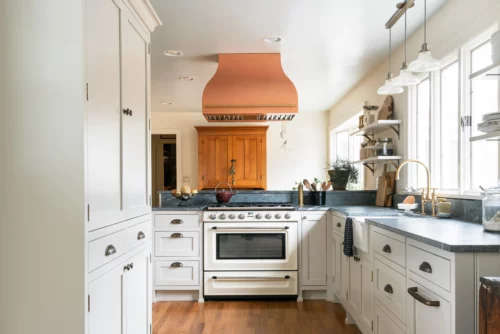
This Branford, CT kitchen feels like stepping into a storybook cottage, but it’s also quietly clever about space. Classic English countryside details, warm finishes, and vintage-inspired appliances are paired with layout choices that keep the room feeling open, cheerful, and highly functional. It’s a small kitchen that proves charm and practicality can share the same footprint.
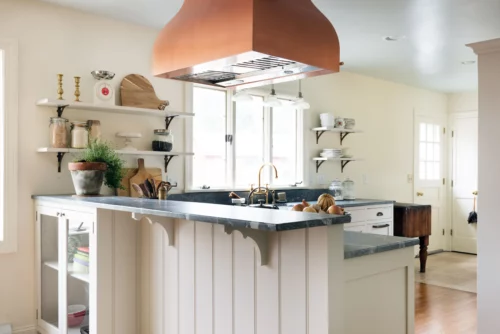
Open Shelving
Open shelving takes the place of traditional upper cabinets, instantly lightening the room. Instead of a wall of solid doors, the shelves create breathing space and a wider, more relaxed feel around the range and sink. Everyday dishes and favorite pieces become part of the decor, adding texture and personality while keeping everything within easy reach.
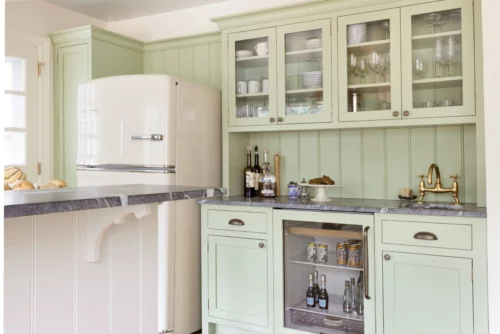
Secondary Prep and Storage Space
Opposite the main kitchen work area is a hutch-like wet bar that offers extra prep space and ensures the design has enough hidden storage to be practical instead of just pretty. With closed cabinets both above and below, it provides plenty of space to tuck away glassware, bottles, and entertaining essentials, plus a central counter area for mixing drinks or setting out snacks. Because it feels more like a furniture piece than a standard run of cabinets, it reinforces the cozy English cottage vibe while quietly carrying a big share of the kitchen’s storage needs.
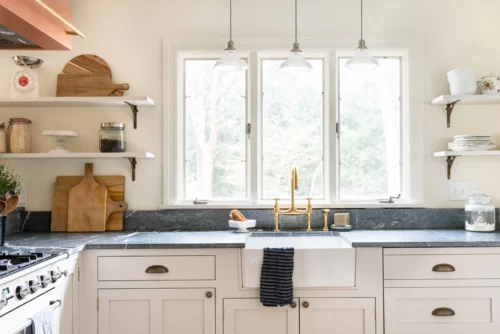
An Abundance of Natural Light
Generous windows flood the kitchen with natural light, which is one of the easiest ways to make a smaller space feel bigger. Sunlight plays off the inset cabinetry, soapstone counters, and cream-toned appliances, softening every surface and blurring the boundaries of the room. The result is a kitchen that feels bright, open, and welcoming at any time of day, even though its footprint stays comfortably compact.
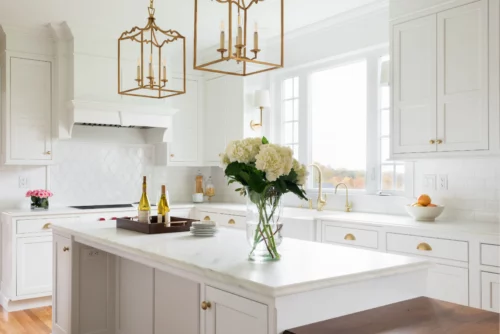
A Light & Bright White Kitchen by Martha Gargano, AMS Kitchens & Baths
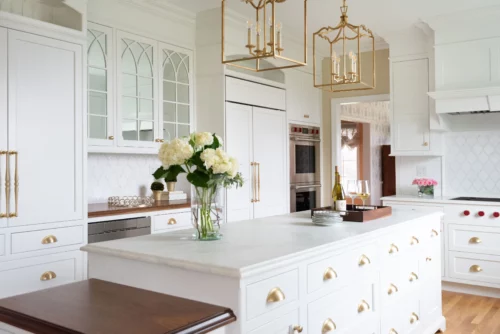
This New England kitchen shows how smart storage can still look classic and timeless. A custom center island and generous wall cabinetry pack in hidden storage so everything has a place, yet the nuanced all-white design keeps the space feeling light and bright. It’s a layout that quietly maximizes every inch, proving you don’t need a huge footprint to enjoy a truly luxurious kitchen.

Custom Island Built for Storage
At the center of the room, a custom island acts like a beautifully tailored storage hub. Deep drawers, hidden cabinets, and dedicated zones for cookware and serving pieces keep everyday essentials close at hand without crowding the perimeter walls. The island also doubles as a landing zone for prep and plating, so you gain extra work surface and storage in the same footprint—ideal when square footage is at a premium.
Closed Storage
Around the room, generous wall cabinetry makes the most of every vertical inch. Because everything is finished in clean, bright white, the abundance of cabinets feels airy rather than heavy, almost blending into the architecture instead of dominating it. This allows for ample closed storage to hide small appliances, pantry items, and entertaining pieces, while select glass-front doors showcase special items and add a sense of depth.
Unique Small Kitchen Storage Solutions
These space-saving small kitchen design ideas from some of our favorite designers prove that beautiful kitchens don’t have to be big to work beautifully. Each project reflects a collaboration between homeowner, designer, and Kountry Kraft craftsmanship, resulting in compact kitchens that feel organized, inviting, and tailored to the way people really live.
Looking for more space-saving inspiration? Explore the craftsmanship, creativity, and custom details behind every Kountry Kraft project. Follow us on Facebook and Instagram for ongoing design highlights, storage solutions, and real-life small kitchen transformations from our clients and designers.
Partner With Kountry Kraft For Custom Cabinetry
For over six decades, Kountry Kraft has partnered with designers across the United States to craft custom cabinetry that makes the most of every square inch. These partnerships ensure that each space-saving small kitchen design reflects not only superior craftsmanship, but also the thoughtful planning and personalized guidance our clients deserve.
Simply use our Find a Dealer tool to connect with one of our trusted designers and begin your project with confidence. Each authorized Kountry Kraft dealer has the expertise to guide you through every step—from space planning and storage strategy to selecting finishes and custom cabinet configurations that fit your home. Whether you’re planning a full renovation or looking for smart ways to rework an existing footprint, our network of professionals will help you capture more function from your kitchen without sacrificing style.
Conclusion
We’re proud to showcase these space-saving small kitchen design ideas that highlight the creativity and expertise of the talented designers we collaborate with. Each project proves that with thoughtful storage, custom cabinetry, and careful layout decisions, even a modest kitchen can feel spacious, organized, and truly one of a kind. When you’re ready to rethink your own kitchen footprint, contact one of our design experts to discover how Kountry Kraft can help turn your small kitchen into a space that lives larger every day.
FAQ: Space-Saving Small Kitchen Design
How can I maximize storage in a small kitchen without making it feel cramped?
Maximize storage in a small kitchen by hiding more behind doors and drawers while keeping counters as clear as possible. Use interior organizers and pull-outs so storage works in layers instead of piles.
Inside your cabinets, think pull-out trays, vertical dividers, spice pull-outs, and corner solutions so everything has a defined spot and slides out to you. On the outside, limit what lives on the countertop so the room feels open and calm. The combination of hard-working interiors and visually quiet surfaces lets a small kitchen store a lot without looking crowded.
What is the best layout for a space-saving small kitchen design?
The best layout for a space-saving small kitchen design keeps the main work zone compact and traffic out of the cook’s way. Straight-line, galley, and small L-shaped layouts are often the most efficient.
In practice, that means your sink, range, and refrigerator should be grouped in a tidy triangle or line, with prep space directly beside at least one of them. Once that flow is set, custom cabinetry can fill in leftover corners and walls with storage tailored to how you cook, so every inch works without creating awkward dead zones.
Which cabinets and storage accessories work best for small kitchens?
The best cabinets and accessories for small kitchens are the ones that move: pull-outs, deep drawers, corner systems, and narrow filler units. These features turn tight or awkward spaces into organized, easy-access storage.
Spice pull-outs, tray dividers, under-sink organizers, and deep drawers for pots and pans help you store items vertically and in layers instead of stacking everything on a single shelf. Corner pull-out systems reclaim space that would otherwise be wasted. When these elements are built into custom cabinetry, you can size them precisely to your cookware and pantry items so no space is underused.
How do I use vertical space effectively in a small kitchen?
Use vertical space in a small kitchen by treating your walls as full-height storage zones. Tall cabinets, stacked uppers, and pantry towers let you store more without expanding the footprint.
Floor-to-ceiling cabinetry can hold bulk items, seasonal pieces, and small appliances that would clutter the counter, while open shelves or lighter-feeling uppers near windows keep the room from feeling boxed in. This mix of tall, closed storage and a few visually lighter elements means you gain capacity up high while the lower half of the room remains open and comfortable to move through.
What colors and finishes make a small kitchen look larger and less cluttered?
Light, low-contrast colors and cohesive finishes make a small kitchen feel larger and less cluttered. Soft whites, pale grays, and muted neutrals help the eye read the room as one continuous space.
When cabinetry, walls, and even larger appliances share similar tones, the boundaries between them blur and the room feels more expansive. Gentle sheens can bounce light around, while a few carefully placed accents—like a slightly deeper island or subtle hardware contrast—add character without visually chopping the space into pieces. The goal is harmony: fewer competing finishes and more smooth transitions.
Can I have a kitchen island in a small kitchen, and if so, what type should I choose?
Yes, you can often have an island in a small kitchen, but it must be compact and highly functional. Choose a narrower island with built-in storage and generous walkways around it.
Look for an island that offers deep drawers, shelves, or cabinets on at least one side. Make sure there’s enough clearance for doors to open and people to pass comfortably. A well-planned small island becomes a multi-purpose zone for prep, serving, and casual meals, adding function without overwhelming the room.
How should I plan lighting in a small kitchen so it feels brighter and more open?
Plan lighting in layers: general, task, and accent. A mix of ceiling fixtures, under-cabinet lighting, and a few decorative pieces will make a small kitchen feel brighter and more open.
Recessed or low-profile fixtures handle overall illumination, while under-cabinet and in-cabinet lights clear shadows from counters and shelves where you actually work. A pendant or small chandelier can add personality and draw the eye upward, enhancing the feeling of height. Keep window treatments simple so natural light can flood the space and work together with your fixtures to visually “stretch” the room.
Where should I put major appliances in a small kitchen to save space and keep a good workflow?
Place major appliances so they support a tight work zone and don’t interrupt traffic. Anchor the layout with the sink and range, and position the refrigerator where it’s easy to reach but out of the main path.
Panel-ready or counter-depth refrigeration can help reduce bulk and keep sightlines clean. Microwaves and wall ovens often work best built into tall or base cabinets, freeing up counter space and keeping the range wall from feeling crowded. When each appliance has a logical zone and doesn’t block doorways or prep areas, the kitchen feels smoother to use and surprisingly more spacious.
What are some smart pantry and cabinet organization ideas specifically for space-saving small kitchens?
Smart pantry and cabinet organization for space-saving small kitchens focuses on visibility and zoning. Use pull-outs, labeled bins, and dividers so everything has a place and nothing gets lost at the back.
Pull-out pantry units and roll-out trays let you see every item without digging. Turntables in corners, tiered risers for cans, and vertical dividers for baking sheets and cutting boards keep categories neat and easy to grab. Group everyday essentials near prep areas and store rarely used items higher or deeper. This kind of thoughtful organization lets even a tiny pantry function like a much larger one.
How much does it typically cost to redesign a small kitchen with space-saving features, and what upgrades give the best value?
The cost to redesign a small kitchen with space-saving features varies widely, but the best value usually comes from investing in cabinetry, layout, and lighting rather than purely cosmetic upgrades. Focus first on storage, workflow, and brightness.
Custom or semi-custom cabinets with integrated storage accessories, a refined appliance plan, and improved lighting can transform how the space works day to day. These changes often matter more to homeowners and buyers than decorative tweaks alone. When budgets are tight, prioritize fixes to functional pain points—like lack of storage, poor traffic flow, or dark corners—so every dollar directly improves how the kitchen lives.
Bathroom Design Ideas from Our Favorite Designers
By / December 1, 2025 November 20, 2025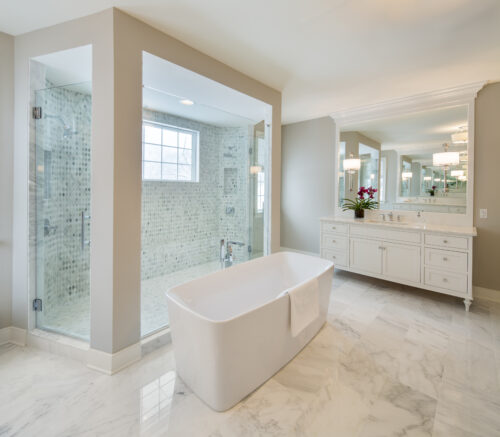
Bathroom Design Ideas for Your Next Remodel
Sourcing bathroom design ideas is the first step towards crafting a spa-like retreat right in the comfort of your own home. Today, we’re sharing unique bathroom renovation ideas from three collaborations with some of our favorite designers—each one showcasing how cabinetry, materials, and layout choices work together. Whether you’re collecting trendy bathroom remodel ideas or hunting for clever small bathroom ideas, these projects offer a clear path from inspiration to installation.
Bathroom Design Ideas from Our Favorite Designers
Whether you’re drawn to a luxurious mix of layered marbles, the fresh lift of light-blue tile, or the airy look of a rift-cut oak floating vanity, these bathroom design highlights show how thoughtful planning and custom cabinetry can turn everyday baths into truly exceptional spaces.
A Spa-Like Bath by PKsurroundings
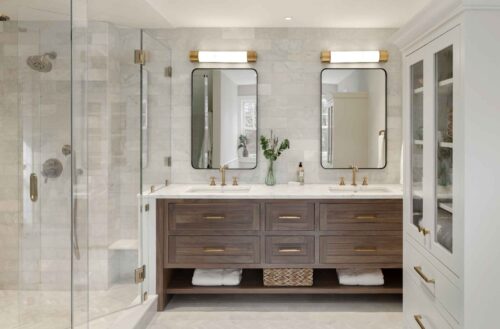
This spa-like bath near Exeter, NH leans into natural stone, warm wood, and a light palette to create a true retreat. Every move—material, metal, and layout—was chosen to feel luxurious yet relaxed, with cabinetry anchoring the room and tying the details into a single, serene space.
Mixing Stained and Painted Wood Finishes
The straight-grained walnut vanity finished in a warm, dark stain anchors the bathroom design, introducing tactile contrast against cool stone. A softly painted tower cabinet balances that warmth with lift and light, increasing capacity without visual weight. Careful control of reveals, door profiles, and sheen unites the pieces so they read as a complementary pair despite their different finishes. Interior fittings—divided drawers, integrated outlets, and linen-height compartments—translate daily routines into orderly, concealed storage, keeping counters clear and the marble uninterrupted.
All Brass Accents
Brass has a way of unifying a room without overwhelming it. In this project, the same finish appears on cabinet hardware, faucets, shower trim, and lighting, creating continuity across wet and dry zones. The finish adds a sun-warmed glow against the various types of marble used throughout the space, while at the same time delivering a subtle, jewelry-like highlight against the walnut vanity. Selecting one brass family and repeating it ensures consistent patina and simplifies maintenance, while the tone itself softens the stone’s coolness for an overall feeling of relaxed luxury.
Incorporating Multiple Types of Marble
Three marbles—Sea Pearl, Carrara, and Thassos—work together to add depth and quiet variation. A large-format subway tile behind the vanity keeps the backdrop calm and clean. In the shower and behind the freestanding tub, a hexagonal mosaic creates a quiet feature wall that frames the fixtures. Underfoot, a smaller herringbone tile that’s carried continuously through the shower and main floor adds just enough pattern to guide the eye without breaking up the space. The mix reads collected and high-end—perfect for a luxurious home spa.
A Custom Bath by Ruchi Bhardwaj, By Design Kitchen and Bath
Color leads the story in this Kingsland, NJ custom bath. Light blue tile introduces a fresh, uplifting tone, while refined details—an arched niche, repeated forms, and crisp glass—keep the room feeling ordered, balanced, and bright.
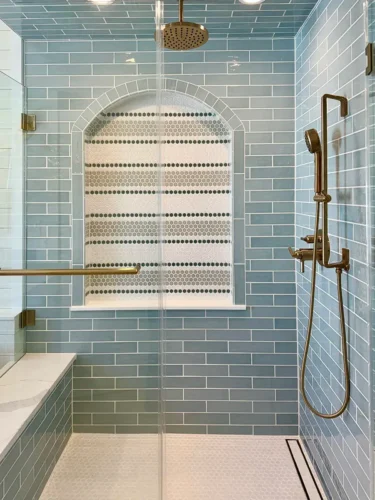
Blue Tiled Shower with Matching Vanity Wall Accent
Light blue subway tile adds a calm, refreshing note to the bathroom design, ifusing color in a way that feels permanent and polished. Using the same tile behind the vanity carries that tone across the room, creating a clear visual link between zones. The consistent tile and grout lines keep the look tidy, while the soft blue lifts the palette, highlights metal accents, and gives the vanity wall a subtle focal point without overwhelming the eye.
Accent Shower Niche
Storage should be as beautiful as it is practical. Here, a large, arched shower niche finished with hexagonal penny tile creates a clean contrast against the surrounding light blue subway tile. The arched top softens all the straight lines in the shower, while the repeated arch on the built-in shelves next to it carries the motif across the room. The result is storage that looks intentional while remaining functional.
Frameless Glass Shower
A frameless glass shower enclosure amplifies the room’s visual width by removing heavy frames and visual breaks, allowing uninterrupted sightlines across the bath. With minimal hardware and low-profile clips, the glass recedes so the shower’s tilework becomes the star. This is a high-impact move for small bathroom ideas: the same footprint reads larger, finishes carry seamlessly from wall to wall, and maintenance stays simple with fewer metal joints and ledges to clean.
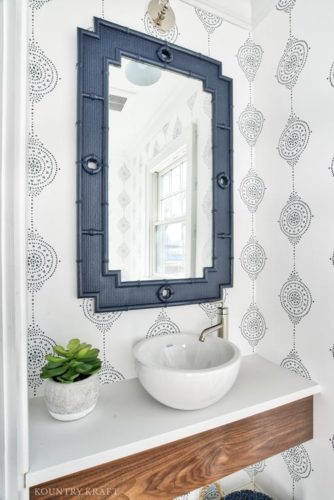
A Half Bath by Stonington Cabinetry & Designs
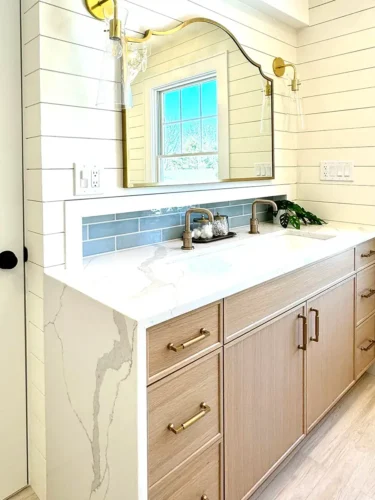
This compact half bath in Chatham, NJ proves that minimal doesn’t mean plain. A floating form, natural wood, and a subtle wallpaper motif deliver a clean, modern look with just enough warmth and movement to feel inviting.
Floating Vanity
A floating wall-mounted vanity lightens and opens the space, reading as a crisp horizontal line with open floor extending beneath it. That uninterrupted flooring expands the visual footprint—especially helpful in compact baths like this powder room—while the wall behind becomes a clean backdrop for fixtures and finishes. The result is calm, modern, and airy, with clear sightlines and an easy, gallery-like feel.
Natural Finishes
The rift-cut white oak vanity, finished in a low sheen, brings quiet warmth and a refined linear grain that softens all the crisp lines in the room. The wood’s tone balances white walls and stone, adding depth without heaviness, while the low sheen finish diffuses light for a calm, tactile feel. As an anchor piece for the room, it ties the metal, stone, and brick elements into one cohesive palette and keeps the composition timeless.
Minimalist Wallpaper
Pattern belongs in bathrooms when it’s scaled and placed thoughtfully. In this project, a subtle white wallpaper with a refined vertical blue motif adds movement that plays well with straight-grained oak and a herringbone floor. When using wallpaper in bathrooms, choose moisture-resistant papers and avoid direct splash zones.
Custom Cabinetry—the Key to Unlocking Your Bathroom Design Ideas
Great bathrooms start with a plan anchored in how you live. That’s why our trusted designers begin each project with storage and workflow, then layer in materials and finishes. Cabinet door style, reveal choice, interior fittings, and finish sheen are the quiet decisions that make everything else—tile, lighting, and plumbing—feel like one story. When cabinetry is dialed in, your bathroom renovation moves smoothly and the finished space looks intentional from every angle.
Want more bathroom design ideas? Explore the craftsmanship and custom details behind every Kountry Kraft project. Follow us on Facebook and Instagram for fresh inspiration, project spotlights, and behind-the-scenes highlights.
Ready to Start Your Own Project?
For more than six decades, Kountry Kraft has worked with designers across the country to create custom cabinetry that turns bathroom design ideas into reality. Our partnerships ensure you receive both exceptional craftsmanship and the guidance needed to make confident decisions from day one.
Use our Find a Dealer tool to connect with a trusted design partner and start your project with ease of mind. Authorized Kountry Kraft dealers can help you plan the layout, select finishes and hardware, and specify cabinetry that fits your space and lifestyle. Whether you’re planning a full bathroom renovation or exploring unique, modern touches for a refresh, our network will help bring your vision to life with precision and care.
Conclusion
Across these three baths, a clear pattern emerges: thoughtful cabinetry sets the tone, materials do the talking, and restrained details make everyday life easier. Whether you gravitate toward warm wood and marble, color-forward tile, or minimalist lines, the right mix turns good bathroom design ideas into a room that looks intentional from every angle and works beautifully day after day. When you’re ready to start your own bathroom renovation, contact one of our design experts today to learn how we can bring your bathroom design ideas to life!
FAQ: Bathroom Design Ideas
What bathroom design ideas are trending right now?
Natural materials, soft color palettes, brass or black metals, and clean-lined fixtures lead the way. Frameless glass, arched details, and subtle patterns add interest without clutter.
These trends favor calm, low-contrast backgrounds paired with one consistent metal finish. Texture shows up in small ways (niches, wallpaper, fluted fronts), while lighting mixes ambient, task, and accent. Storage is integrated: tower cabinets, drawer organizers, and hidden outlets keep counters clear.
How do I choose between natural wood and painted cabinetry?
Use wood to add warmth and character; choose paint to keep things bright and crisp. Many successful baths combine both.
Wood grain grounds the room and pairs well with stone. Painted elements—often in light neutrals—lift the palette and help larger storage feel less bulky. Match door profiles, reveals, and sheen so the mix reads intentional. Consider durability: specify moisture-resistant construction and a tough topcoat for either finish.
Are brass fixtures a good idea for a bathroom renovation?
Yes—brass is timeless, versatile, and brings gentle warmth to tile and stone. The key is consistency.
Select one brass family (polished, satin, or unlacquered) and repeat it across faucets, hardware, shower trim, and lighting. This creates a cohesive look and simplifies maintenance. If you prefer low-gloss, choose satin; if you like patina, unlacquered will age naturally. Keep mixed metals to strategic accents so brass remains the throughline.
How can I mix multiple stone or tile types without the room feeling busy?
Vary scale and role: one surface as the quiet field, one as an accent, and one underfoot. Keep undertones compatible.
Large formats make calm backdrops, while mosaics or patterned pieces define focal areas like niches or feature walls. Repeat a color thread across all materials to unify them. Limit grout colors and align joints where surfaces meet for a tidy read. If in doubt, edit—three coordinated materials usually feel richer than five competing ones.
Should I bring color into the bathroom through tile or paint?
For a durable, built-in look, use tile; for easy future changes, use paint. Many projects do both.
Color in tile reads architectural and won’t scuff like painted walls. Soft blues, greens, or muted earth tones add personality while staying calm. If you prefer flexibility, keep tile neutral and use paint, textiles, and art for color. Whatever the approach, choose a grout that supports—rather than fights—the color.
What’s the design impact of a frameless glass shower?
It makes the room feel larger by removing heavy frames and visual breaks. Materials become the focal point.
Clear panels, minimal clips, and low thresholds extend sightlines, which is especially helpful in compact baths. The effect is cleaner and brighter, and tile patterns read continuously. For upkeep, consider glass with easy-clean coatings and plan squeegee hooks or towel placement to keep maintenance painless.
How do I make a small bathroom feel bigger without moving walls?
Prioritize uninterrupted lines and a restrained palette. Floating pieces, continuous flooring, and large mirrors help.
Carry one floor tile into the shower, choose a single metal finish, and keep wall colors light. Use vertical elements—tall mirrors, slim towers—to draw the eye up. Reduce visual clutter with integrated storage and ensure layered lighting removes shadows at corners and under cabinets.
Are floating vanities practical or just aesthetic?
They are both. Floating vanities visually lighten the room and simplify floor cleaning.
Confirm wall blocking, coordinate plumbing heights, and finish the underside to match the face. Pair with appropriately sized sinks and consider under-vanity lighting for a gentle night glow. If additional storage is needed, complement with a medicine cabinet or a slim tower rather than overloading the vanity line.
Where does wallpaper work best in a bathroom?
Away from direct splash, at a scale that won’t overwhelm. Powder rooms and walls above wainscotting are ideal.
Choose moisture-resistant or vinyl-coated papers and seal edges carefully. Keep patterns balanced with cabinetry rhythms—align repeats with mirrors and sconces. In full baths, place paper opposite showers or tubs; in powders, feel free to go bolder since humidity is lower. Pair with tile or millwork bases for durability.
How do I mix warm and cool tones without clashing?
Pick one warm anchor (wood or brass) and one cool anchor (stone or tile), then connect them with quiet neutrals.
Repeat each anchor at least twice—for example, brass in lighting and hardware; cool stone on walls and counters—so the pairing feels intentional. Keep sheens compatible and avoid introducing many accent colors. The result is balanced, adaptable, and easy to update with towels and art over time.