
Design Ideas with Floor to Ceiling Kitchen Cabinets
By Dee Funk / April 1, 2026 kitchen cabinet ideas, Kitchen Cabinets, kitchen storage, Uncategorized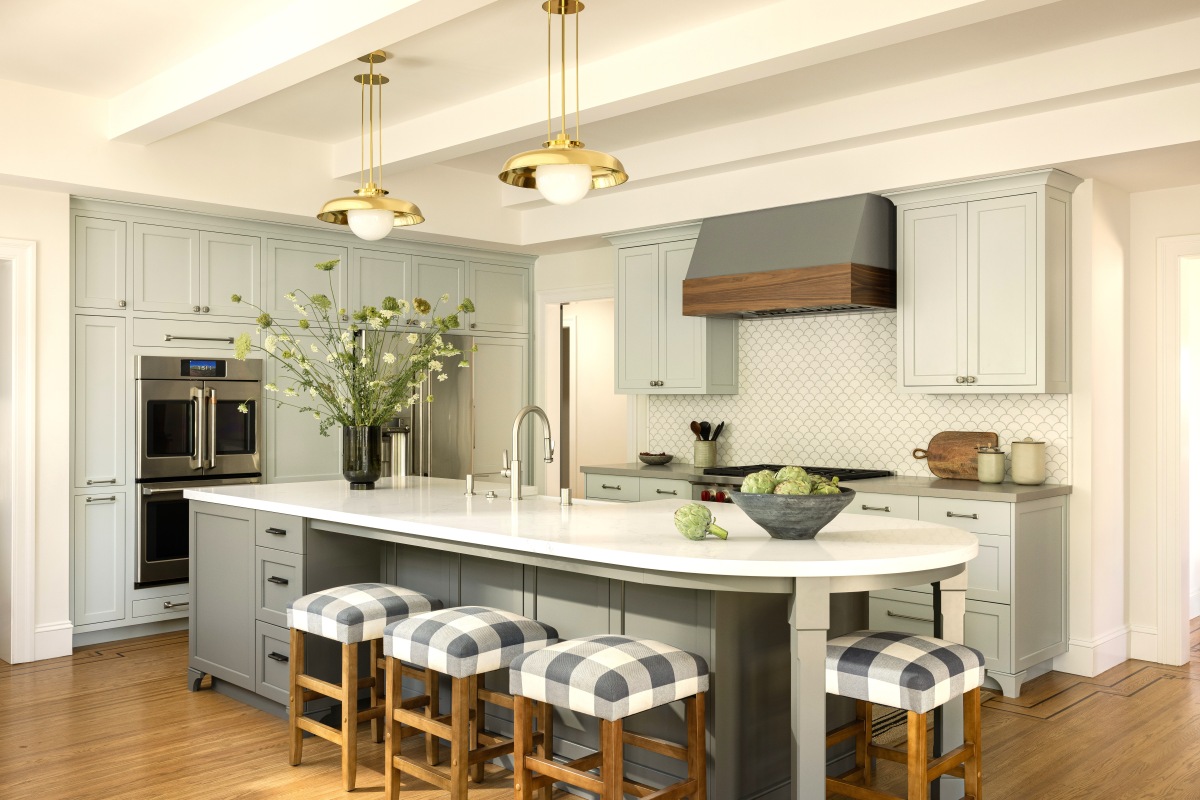
Floor to ceiling kitchen cabinets are full height cabinetry that extend from the floor to the ceiling, maximizing vertical storage while creating a built in architectural look. They are commonly used in custom kitchen design to increase storage, reduce visual clutter, and improve organization without expanding the kitchen footprint. Homeowners often choose full height kitchen cabinets for pantry walls, tall cabinet storage, and kitchen layouts that prioritize clean sightlines and long term functionality.
Why Consider Floor to Ceiling Kitchen Cabinets?
Floor to ceiling kitchen cabinets have a way of making a kitchen feel more complete the moment you walk in because they turn storage into part of the architecture. By carrying cabinetry all the way up, you gain more usable space without changing the footprint, reduce visual clutter, and give the room a clean, built-in feel that looks intentional from every angle. Just as important, that added height helps the kitchen work better by keeping counters clearer and making it easier to organize what you own so the space feels polished, not packed.
Benefits of Floor to Ceiling Kitchen Cabinets
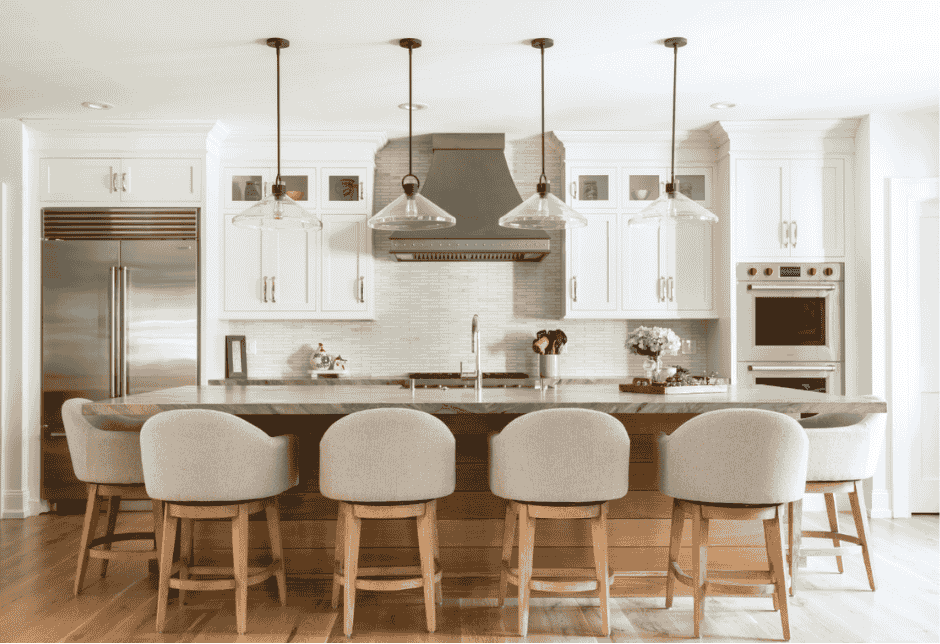
Floor to ceiling kitchen cabinets do more than add height. They change how a kitchen feels and functions by turning vertical space into usable, organized storage while giving the room a more finished, built-in look. The benefits below break down what you gain when cabinetry is planned all the way to the ceiling.
More Usable Storage
The most obvious benefit of floor to ceiling kitchen cabinets is storage, but the real win is how that storage can be organized. Tall cabinet storage gives you zones that can flex with your needs. Daily items stay within reach, while special occasion pieces and seasonal items move up high. When designed well, a tall pantry cabinet or built-in pantry cabinet becomes a system, not a catch all.
A Kitchen that Feels Taller and More Tailored
Bringing kitchen cabinets to the ceiling pulls the eye upward and makes the room feel more spacious. Even in kitchens with standard ceiling heights, ceiling height cabinets visually stretch the walls and give the space a more architectural finish.
Cleaner Sightlines and Fewer Visual Breaks
Full height kitchen cabinets reduce the number of horizontal lines that cut across the room. That detail matters in both modern and traditional designs. In a sleek kitchen, it keeps the look streamlined. In a classic kitchen, it reinforces symmetry and structure.
Intentional, Consolidated Pantry Options
A floor to ceiling pantry can replace a separate pantry room in many homes. With a tall cabinet storage plan, you can keep pantry goods, small appliances, and serving pieces in one clean run. It is also easier to maintain a tidy look because clutter stays behind closed doors.
A Refined, Finished Look
When upper cabinets to ceiling with crown molding are part of the design, the cabinetry looks built-in rather than placed. Crown molding can also help integrate cabinets with trim details elsewhere in the home, which is especially important in traditional kitchens.
Design Ideas with Floor to Ceiling Kitchen Cabinets
Below are four kitchen design examples that show how floor to ceiling kitchen cabinets can change both the look and the function of a space. Each project uses full height cabinetry differently, so you can pull ideas that fit your own style and layout.
Custom Kitchen in Riverside, NJ
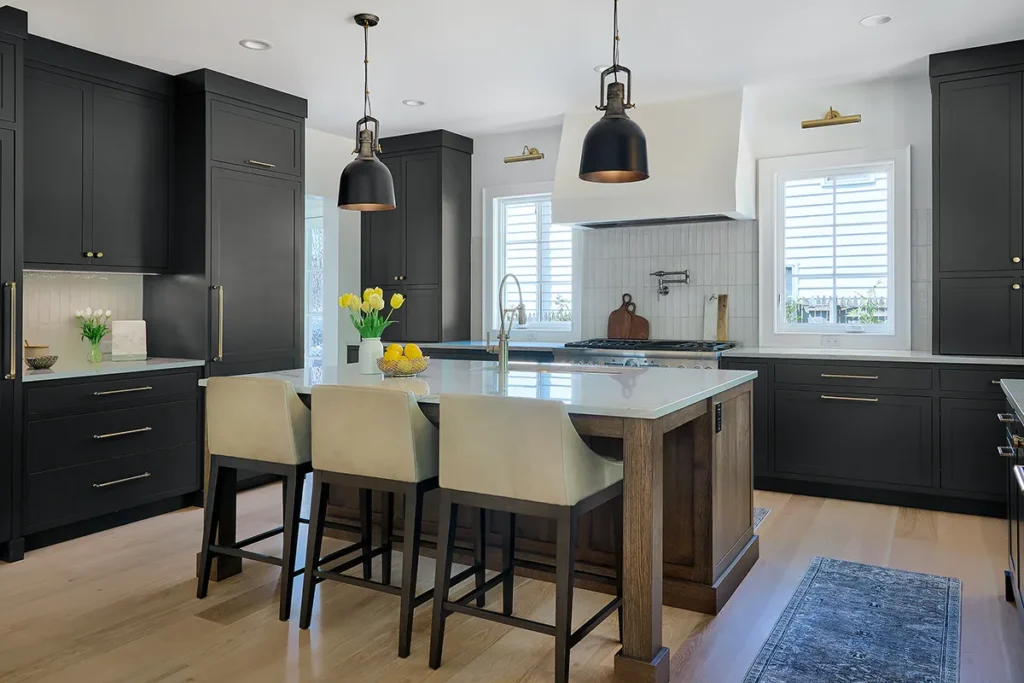
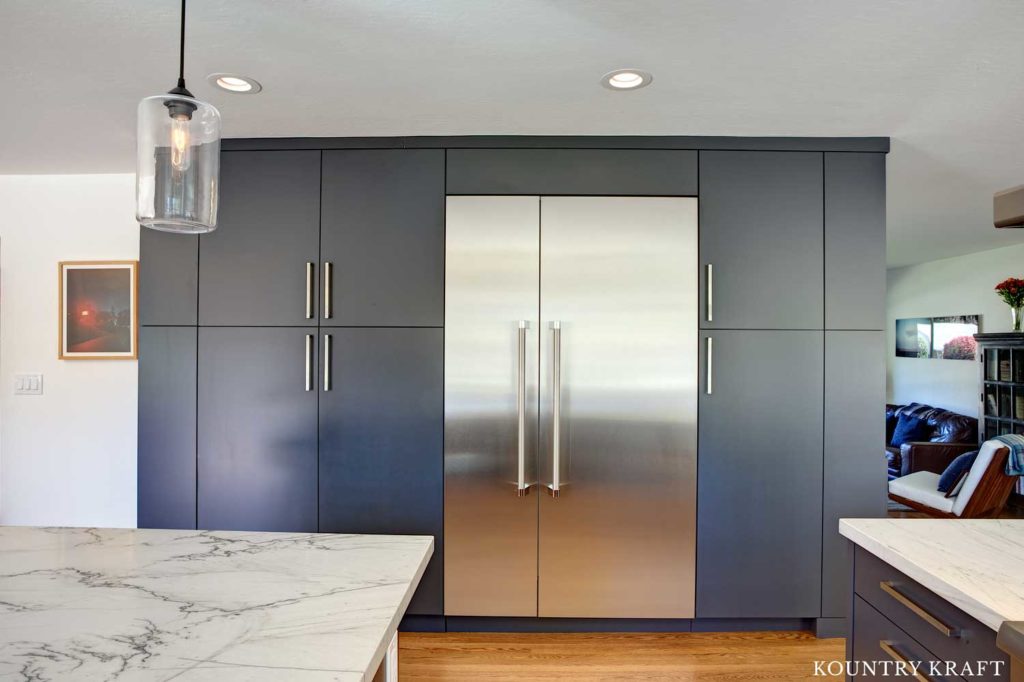
This modern kitchen pairs bold black cabinetry with an inviting island in Rift Cut White Oak. The floor to ceiling cabinetry is a key reason the dark finish feels modern and intentional rather than heavy. When cabinets stop short, dark colors can make the top portion of the wall feel unfinished. Here, the cabinet run continues upward, so the kitchen reads as a single clean composition.
One of the strongest ideas to borrow from this project is how a floor to ceiling pantry becomes a design feature, not just storage. The tall cabinet storage creates a visually quiet wall that lets the island take center stage. It’s also a smart way to keep the room feeling open. Instead of adding more cabinets across every wall, storage is concentrated vertically, which helps the layout stay airy even with generous cabinetry.
If you are planning a floor to ceiling pantry, this kitchen also shows the value of choosing a door style that stays simple. A low profile recessed panel works well at full height because it keeps the wall from looking too busy. This is a good reminder that custom kitchen cabinet height is not only about going taller. It is also about choosing proportions and details that support the overall design.
Custom Kitchen in Whitney, NJ
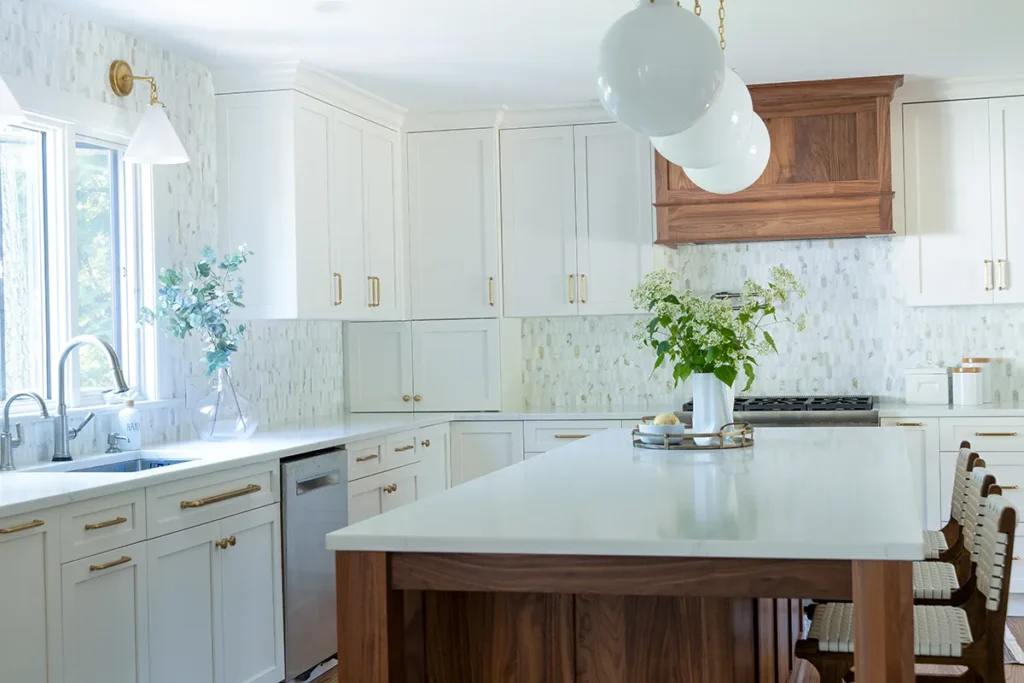
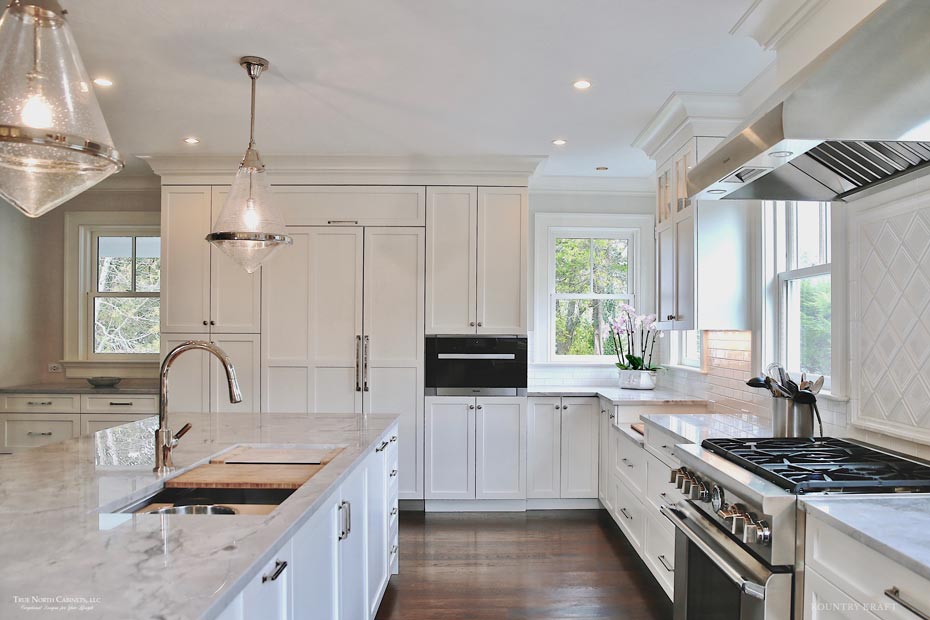
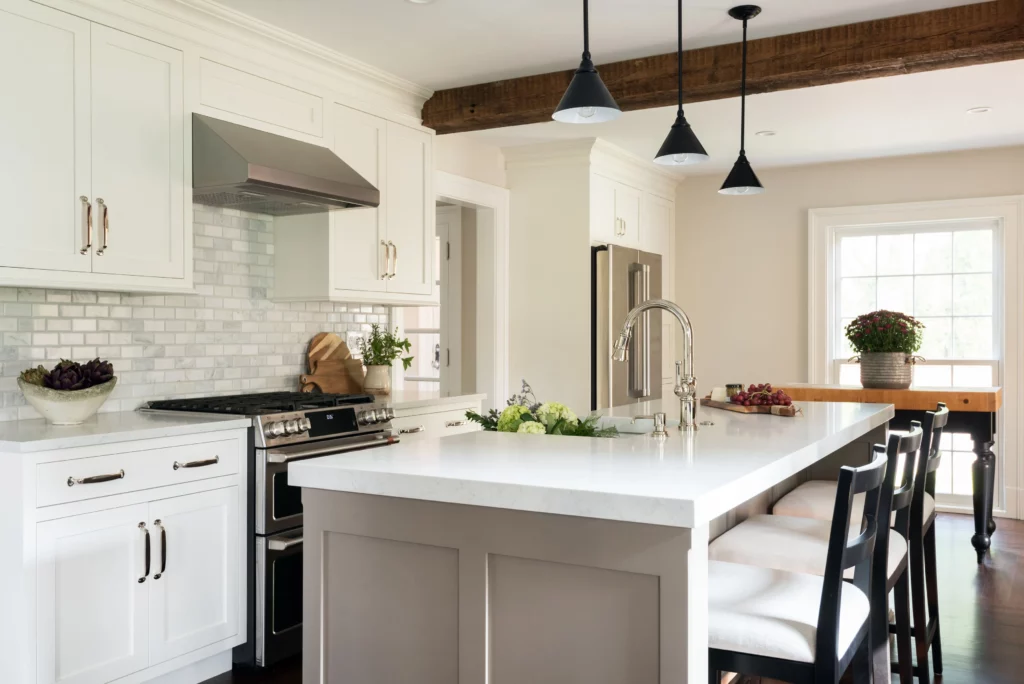
In Whitney, the approach is classic and polished. White Dove cabinetry reaches the ceiling and is finished with crown molding, reinforcing a transitional look that feels refined rather than formal. This is a great example of upper cabinets to ceiling with crown molding being used as a finishing move that ties the entire room together.
The standout takeaway here is how ceiling height cabinets help transitional kitchens reference traditional elements. The crown molding creates a graceful transition at the ceiling line, which makes the cabinetry look built-in and permanent. When you combine that with consistent gold hardware, the tall cabinets become part of the architecture, not just storage boxes on a wall.
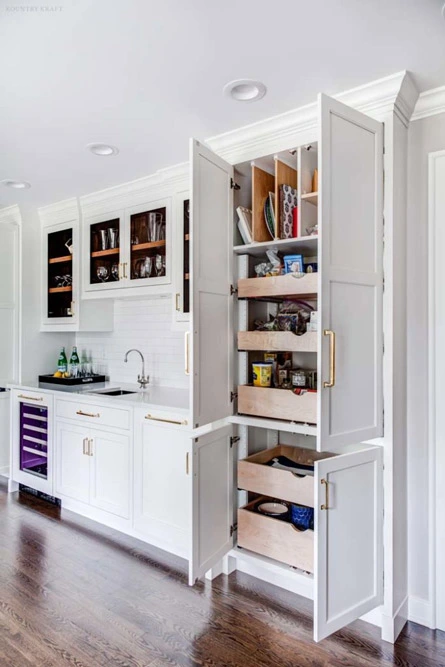
This kitchen also highlights a practical benefit that often gets overlooked: ceiling height cabinets can enhance entertaining zones. The bar nook includes glass inlay cabinets and open walnut shelving, and the full height cabinetry around it makes the nook feel like a destination, not an afterthought. If you are considering a built-in pantry cabinet or beverage area, this project shows how tall cabinetry can frame a specialty zone and make it feel purposeful.
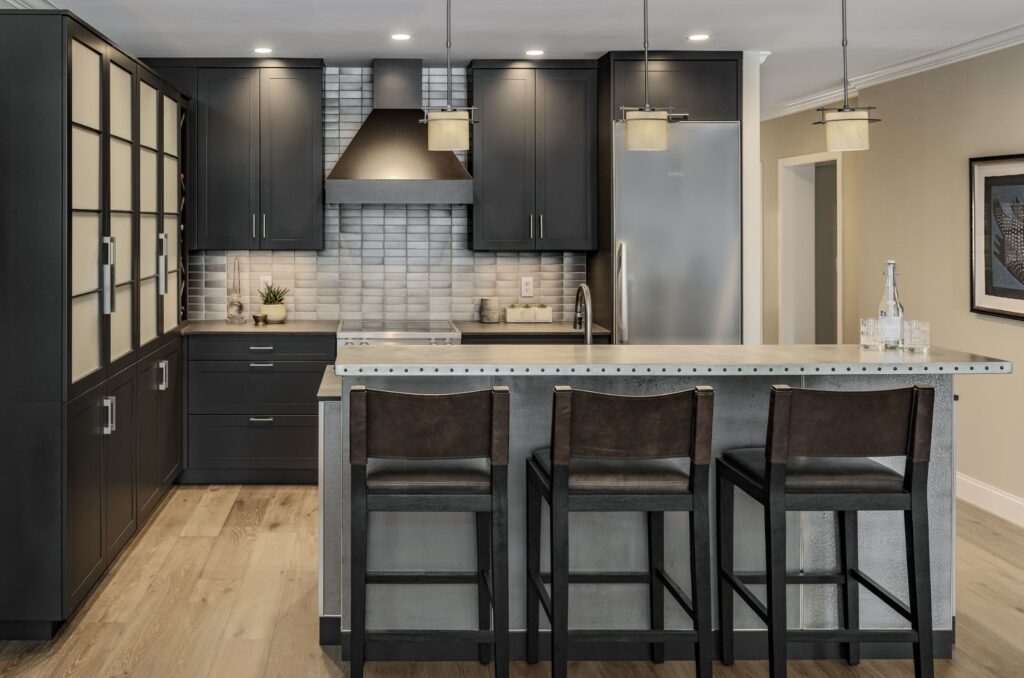
Modern Custom Cabinets in Exeter, NH
This Exeter, New Hampshire kitchen is a bold modern space anchored by sleek black cabinetry and an industrial inspired island. The floor to ceiling glass front pantry is the detail that keeps the dark cabinetry from feeling flat. Instead of a solid wall of black, the frosted glass panels reflect light and add depth, which is especially valuable when a kitchen has fewer color breaks.
From a functionality standpoint, a tall pantry cabinet like this offers a clear advantage: it creates one dedicated storage hub that supports a clean perimeter. In modern kitchens, clutter is the enemy of the design. A floor to ceiling pantry makes it easier to keep counters open and keep the rest of the kitchen looking crisp. This is where tall kitchen cabinet organization becomes important. You can plan shelves for pantry staples, pullouts for small appliances, and zones for baking, snacks, or entertaining items.
Another idea worth borrowing is the way the pantry cabinetry becomes a light balancing element. The glass front helps break up the darkness while still keeping storage concealed. If you want the benefits of tall cabinet storage but you worry about a wall of solid doors feeling too heavy, a floor to ceiling glass front pantry can be a smart compromise.
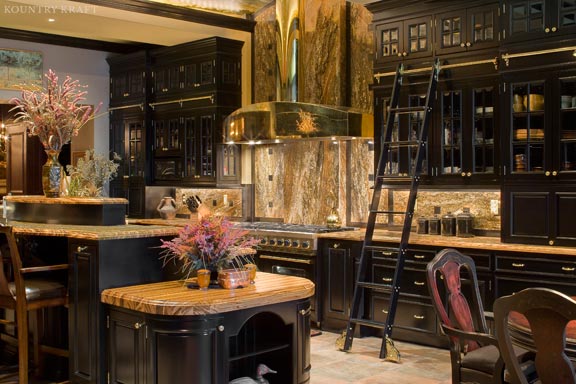
Custom Painted Maple Cabinets in Baltimore, MD
This Baltimore kitchen shows how floor to ceiling kitchen cabinets can support a dramatic, traditional design while still being highly functional. The beaded inset painted maple cabinets are crafted from Hard Maple and finished in black, creating a rich, furniture-like look. With cabinetry on both sides of the range reaching up to the ceiling, the room gains a strong sense of symmetry and presence.
The most distinctive functional feature in this space is the kitchen ladder for tall cabinets. When you invest in ceiling height cabinets, you want the top storage to be usable, not just decorative. A sliding ladder turns upper storage into real, reachable storage, which is ideal for items like serving platters, specialty cookware, or seasonal pieces. It also supports tall kitchen cabinet organization because you can store by frequency of use and still access everything easily.
This project also shows a layout benefit that many homeowners will appreciate: going taller can help you go simpler elsewhere. Instead of filling every wall with cabinetry, the design captures storage vertically around the range area, leaving more free floor space for a table and chairs. That kind of balance matters in kitchens that serve as gathering spaces. Tall cabinet storage helps the kitchen function without making it feel crowded.
Custom Options for Floor to Ceiling Kitchen Cabinets at Kountry Kraft
When floor to ceiling kitchen cabinets are designed as fully custom, the benefits go well beyond added height. Kountry Kraft builds cabinetry to fit the exact dimensions of the home, which allows bringing kitchen cabinets to the ceiling to look seamless and function with purpose.
Here are a few custom options that our customers say make a noticeable difference:
Integrated Lighting
Integrated LED strip lighting can be built into cabinet runs to brighten work zones and create a warm glow in specialty areas like beverage nooks or pantry walls. This is especially helpful when tall cabinet storage reduces the amount of open wall space available for decorative lighting.
Specialized Storage
A tall pantry cabinet can include specialized slide out shelves, pullout trays, or tailored configurations that make deep storage easier to access. A floor to ceiling pantry works best when everything has a place, and customized interior storage helps keep that system tidy over time.
Millwork Details
Kountry Kraft can also provide custom millwork details such as crown molding and pilasters. These elements help the cabinets feel like true built-ins, especially when you want upper cabinets to ceiling with crown molding to match the home’s trim style.
Custom Configurations
There is no single correct custom kitchen cabinet height. Some homes benefit from full height kitchen cabinets across multiple walls. Others work best with one tall focal wall, like a pantry run. With custom cabinetry, you can choose where to go full height and how to balance it with windows, hood designs, and other architectural features.
When Floor to Ceiling Cabinets May Not Be the Right Choice
Floor to ceiling kitchen cabinets are not always the best solution for every kitchen. In spaces with very low ceilings, excessive height can feel heavy. In highly decorative kitchens, leaving space above cabinets can allow for layered design elements. Budget can also be a factor, as full height cabinetry requires more material and installation detail.
Explore More About Floor to Ceiling Kitchen Cabinets
Kountry Kraft is a custom cabinetry manufacturer known for building high-quality cabinets that are designed for the way people actually live. From fully customized floor to ceiling kitchen cabinets to tailored pantry solutions, every detail is crafted to maximize vertical storage, enhance the feeling of room height, and eliminate awkward gaps that collect dust and require extra cleaning.
To further explore how floor to ceiling kitchen cabinets can transform your space, contact one of our design experts or use our Find a Dealer Tool to locate an authorized Kountry Kraft Dealer near you. We can’t wait to hear your ideas!
Key Takeaways
- Floor to ceiling kitchen cabinets maximize vertical storage without increasing kitchen size
- Full height cabinets create a built in, architectural appearance
- Tall pantry cabinets improve organization by separating daily and seasonal storage
- Ceiling height cabinets reduce dust collecting gaps above cabinetry
- Custom cabinet height allows better alignment with ceilings, trim, and design style
- Glass front or mixed material tall cabinets can reduce visual heaviness
- Kitchen ladders or step access make upper storage usable in tall cabinet designs
Conclusion
Floor to ceiling kitchen cabinets can help a kitchen feel more complete while improving storage in a practical, lasting way. The best results come from choosing where height matters most, planning the interior storage carefully, and pairing the cabinetry with details that fit the style of the home. When designed well, ceiling height cabinets support cleaner counters, better organization, and a more architectural look without making the kitchen feel crowded.
FAQ: Floor to Ceiling Kitchen Cabinets
Should kitchen cabinets go all the way to the ceiling?
Yes, if you want the most storage and the most finished, built-in look. If you prefer lighter visuals or need budget flexibility, stopping below the ceiling can still work.
Going to the ceiling removes the “in between” zone that often becomes décor space or a dust shelf. It also lets you reserve higher storage for items you use less often, while keeping daily essentials at comfortable reach.
What are the pros and cons of floor to ceiling kitchen cabinets?
The biggest pros are added storage, a taller looking room, and a cleaner, more custom appearance. The main cons are higher cost and the need to plan access to upper storage.
You are essentially trading extra cabinet materials and installation detail for long term function and a more architectural finish. If you commit to ceiling height, it is worth designing the top sections intentionally so they do not become awkward, wasted space.
Do ceiling height cabinets make a kitchen look bigger?
Often, yes, because they draw the eye up and reduce visual breaks. They can also make the kitchen feel more tailored and cohesive.
The effect is strongest when door styles and finishes are kept consistent and the cabinet layout feels balanced. In a smaller kitchen, using vertical storage can also free up counter space, which makes the whole room feel less crowded.
Are floor to ceiling cabinets harder to clean and maintain?
Floor to ceiling kitchen cabinets are usually easier to keep clean overall because you eliminate the top ledge area above cabinets. The tradeoff is that higher doors and trim details may need an occasional wipe down.
Most maintenance comes down to reach. If you have tall ceilings, plan for a step stool or a safe access solution so you can clean upper doors, adjust shelves, and keep everything looking sharp.
How do you handle uneven ceilings, soffits, or bulkheads when running cabinets to the ceiling?
You plan for it from the start with careful measuring and a finish detail that can absorb small variations. Most kitchens need some combination of trim, fillers, or a scribed panel for a clean fit.
Older homes rarely have perfectly level ceilings, so the goal is not perfection, it is intention. A well designed top treatment makes the cabinetry look like it belongs there, even when the ceiling line is not perfectly straight.
What is the best height for upper cabinets and how do you choose cabinet height with different ceiling heights?
The best height is the one that fits your ceiling, your proportions, and how you use the kitchen, not a one size rule. Start with a comfortable reach for everyday storage, then use upper space for occasional items.
With taller ceilings, you may choose a taller cabinet, a stacked cabinet look, or a dedicated top section for seasonal storage. The right choice depends on whether you want a clean modern wall or a more traditional, layered look.
Do you need crown molding or a filler panel at the top, and what looks best?
You do not always need crown molding, but you do need a deliberate finish at the top. What looks best depends on your style and your ceiling conditions.
Traditional kitchens often look most complete with crown molding because it ties cabinetry to the home’s trim. Modern kitchens often look better with a clean, flat finish or minimal trim, especially when you want the cabinetry to read as simple architecture.
How do you organize tall cabinets so the top storage is actually usable?
Use a “frequency” system: daily items in the easiest reach zone, occasional items above, and heavy items lower. Labeling and grouped categories make high storage far easier to maintain.
Tall cabinets work best when you avoid turning them into miscellaneous drop zones. Treat each section like a pantry aisle, baking zone, entertaining zone, or small appliance zone, and you will keep the kitchen functional long after the remodel is done.
How do installers put cabinets to the ceiling in place, and what installation constraints matter?
Installers need accurate measurements, a solid mounting plan, and a top finish strategy that accounts for ceiling variation. Constraints usually include ceiling level, wall flatness, and how appliances and ventilation are integrated.
Ceiling height runs often involve taller, heavier boxes or stacked sections, so anchoring and alignment matter. Planning ahead for lighting, crown or trim, and any clearance issues helps the installation look crisp instead of forced.
Are floor to ceiling kitchen cabinets worth the added cost, and do they increase resale value?
Floor to ceiling kitchen cabinets are worth it when you truly need the storage and want a more custom, built-in finish. They can support resale appeal because they read as an upgraded, higher quality kitchen.
The value is not only in “more cabinets,” it is in the overall impression: a kitchen that looks complete, feels organized, and minimizes clutter. If the budget is tight, you can still get a similar effect by taking key areas to the ceiling, like a pantry wall or a main cabinet run, instead of doing every wall.
About Kountry Kraft
Founded in 1959 in Newmanstown, Pennsylvania, Kountry Kraft has grown from a small family shop to a nationwide leader in custom cabinetry. Known for craftsmanship, attention to detail, and American-made values, the company serves homeowners across the U.S. through authorized dealers and designers.
Every project reflects Kountry Kraft’s philosophy: cabinetry should not only be beautiful but also make life easier. With decades of experience and thousands of unique projects, Kountry Kraft continues to prove the power of true customization.
Homeowners ready to begin their journey can reach out via the Kountry Kraft Contact Form or by calling 610-589-4575. The team, based at 291 S. Sheridan Rd, Newmanstown, PA, looks forward to creating cabinetry that transforms kitchens, baths, and beyond. Visit our Find a dealer page to locate a custom cabinetry dealer near you.
Recent Blog Articles
-
Top Trending Features of Custom Kitchen Cabinets
The Appeal of Custom Kitchen Cabinets Most conversations about a kitchen remodel eventually circle back to the same question: “Where is everything going to go?” Cabinets are where that answer really takes shape. They determine how easy it is to unload groceries, put dishes away, plug in a mixer, or clear the counters at […]
Read the Full Article -
Finding the Best Kitchen Designer Near Me & How to Choose the Right Pro
Finding the Best Kitchen Designer Near Me When you search for the “best kitchen designer near me”, what you’re really looking for is someone who understands your goals for the space along with the daily rhythms that define how you use your kitchen. A kitchen remodel is one of the biggest investments you can make […]
Read the Full Article -
Space-Saving Small Kitchen Design Ideas
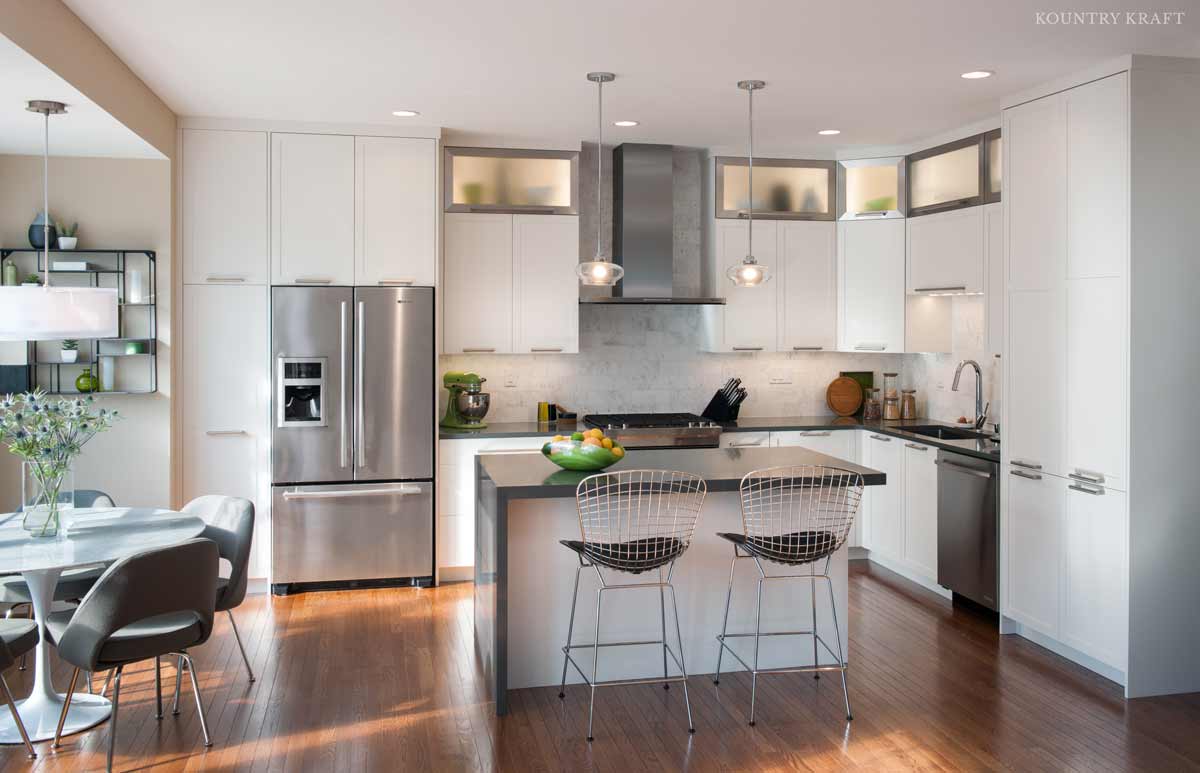
Looking for Space-Saving Small Kitchen Design Ideas? Look no further! Designing a beautiful kitchen in a smaller footprint starts with smart planning, and that’s where space-saving small kitchen design really shines. By combining custom cabinetry with thoughtful details, you can turn even a compact room into a highly functional, welcoming hub. The projects below […]
Read the Full Article -

Bathroom Design Ideas from Our Favorite Designers
Bathroom Design Ideas for Your Next Remodel Sourcing bathroom design ideas is the first step towards crafting a spa-like retreat right in the comfort of your own home. Today, we’re sharing unique bathroom renovation ideas from three collaborations with some of our favorite designers—each one showcasing how cabinetry, materials, and layout choices work together. Whether […]
Read the Full Article